 Chiang Mai Guide
Top
Stay first. Then what to do.
Most first-timers do best in the Old City. Tap an area, or if you're not sure, use the quick picker below.
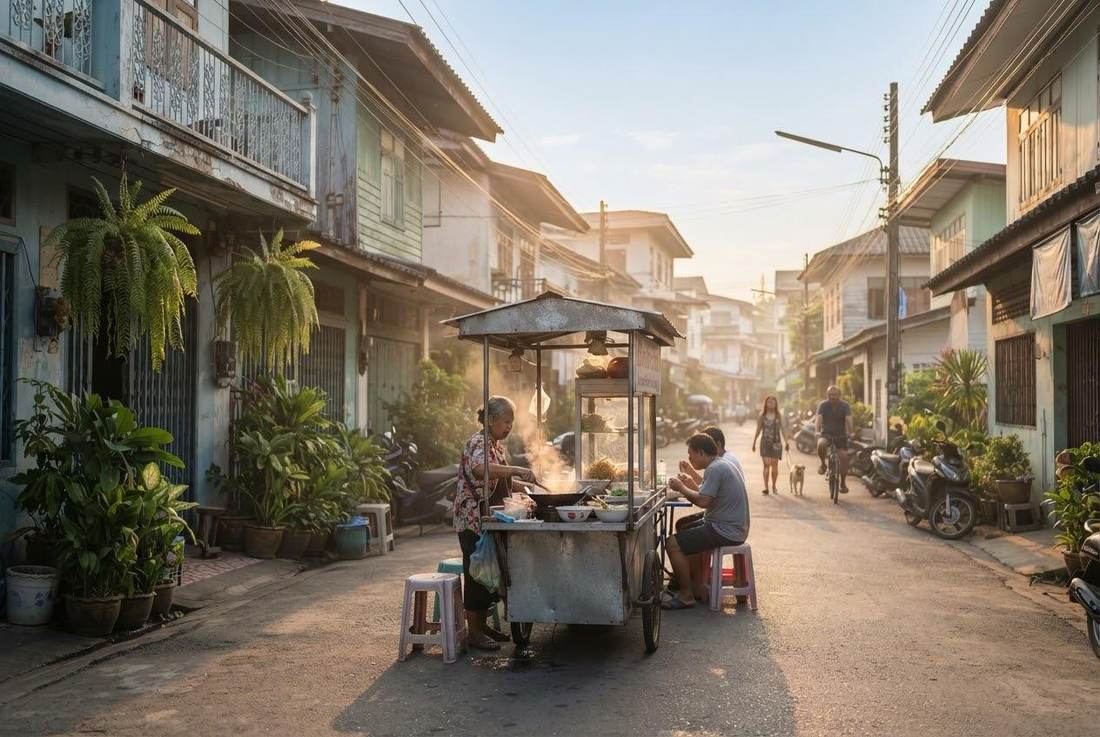
Two quick taps and we’ll match you to the right part of the city.
A simple solo plan for Chiang Mai: stay in the Old City for the first nights, move to Nimman or Santitham if you want a calmer, local feel, and book a cooking class or trek to meet people.
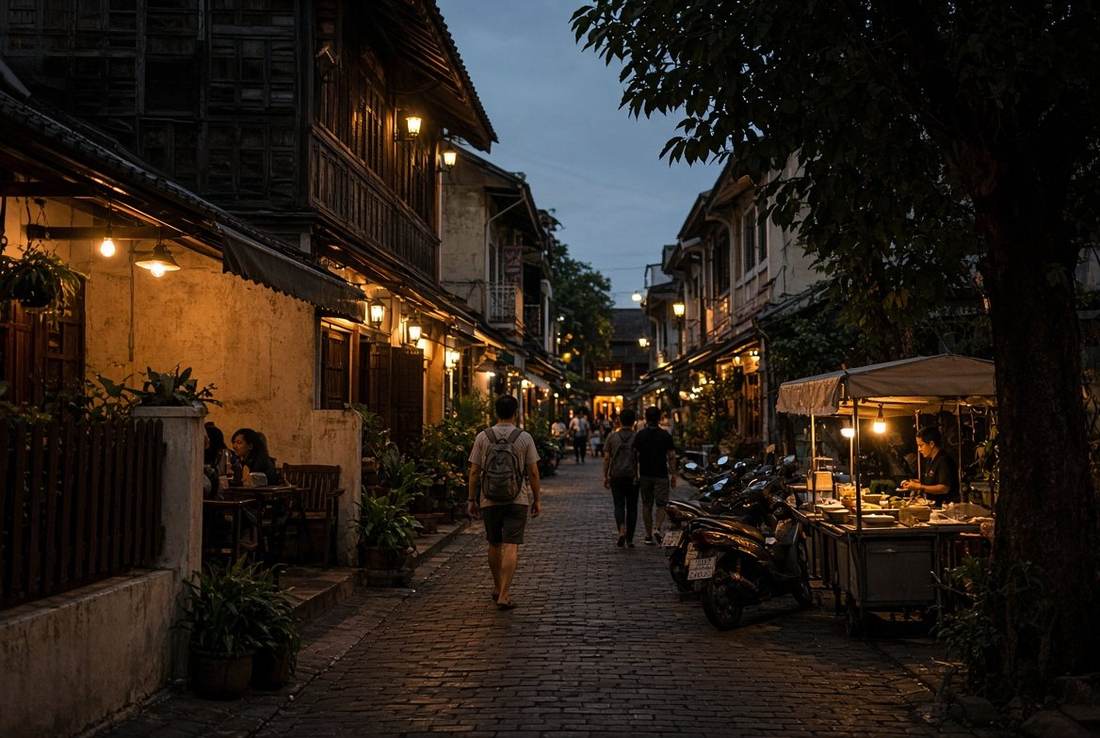
The easiest landing spot. The Old City is compact and walkable, with guesthouses, cafés and street food on every lane. Drop your bags and you can explore on foot straight away.
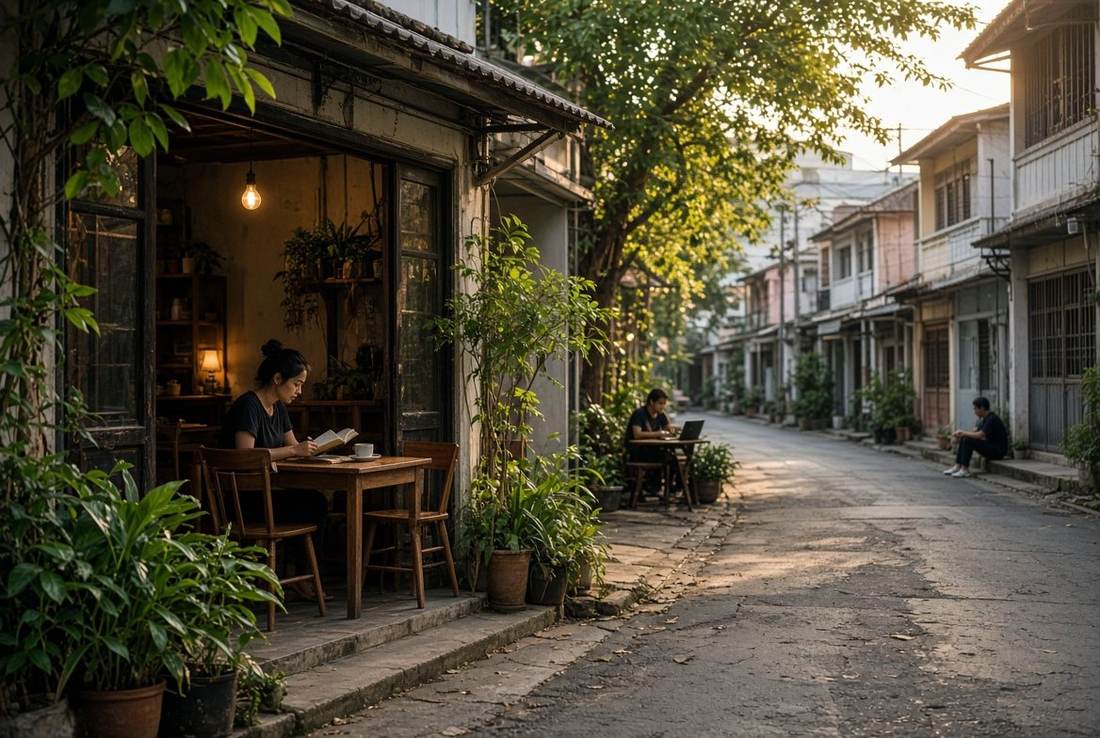
Santitham is a relaxed local neighbourhood with cheap food and quiet lanes, while Nimman’s higher-numbered sois are calm but close to great cafés. Both are only 10 minutes from the Old City by Grab.
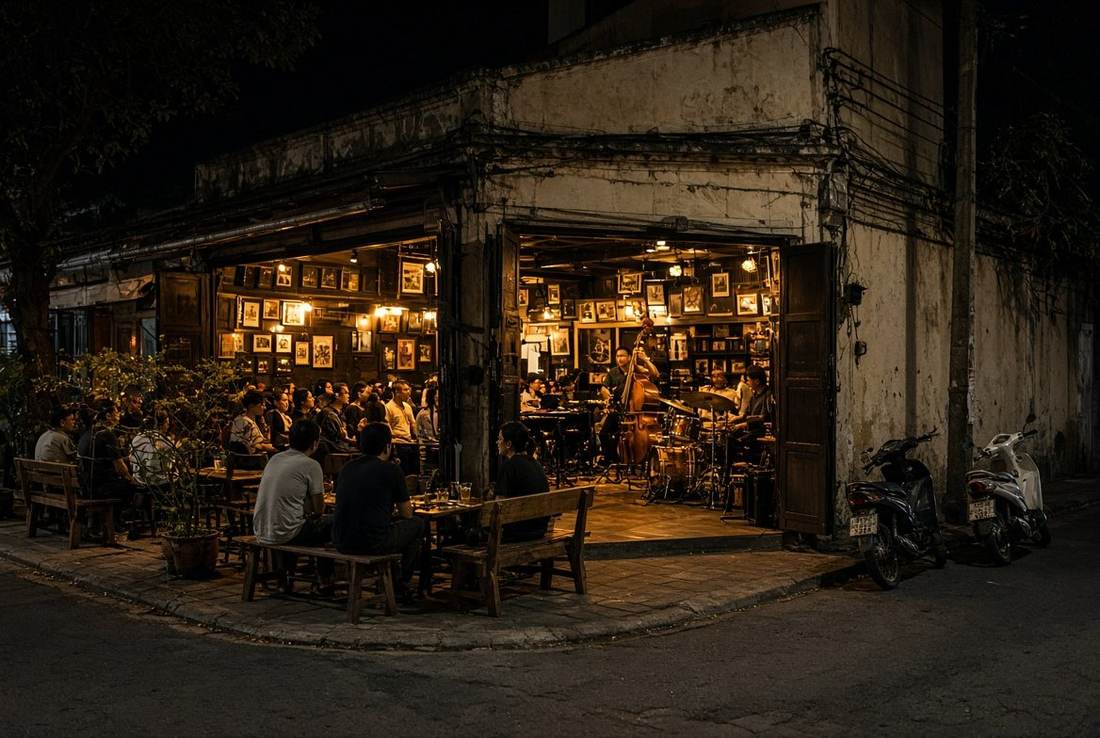
Chiang Mai’s nightlife is friendly and easy on your own. Try live jazz at the North Gate Jazz Co-Op, bands and a club at Warm Up Café in Nimman, or the busy bars at Zoe in Yellow.
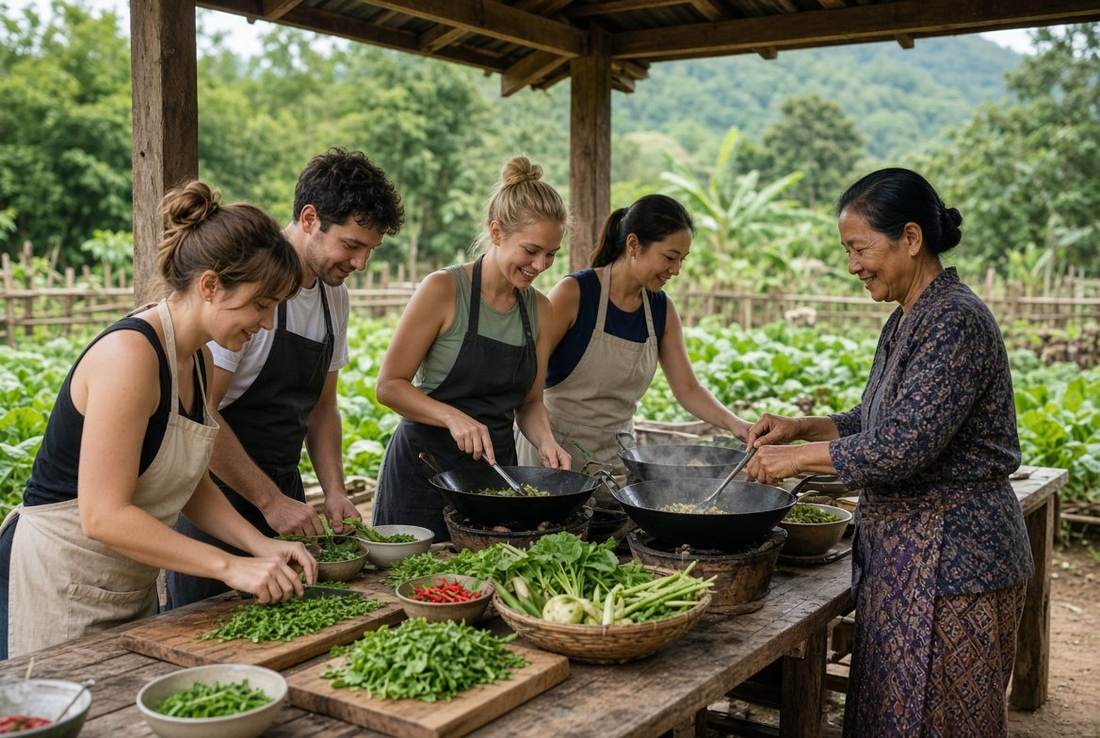
Chiang Mai is the easiest city in Thailand for group activities. A farm cooking class, an elephant sanctuary visit or a Doi Inthanon day trip gives you a ready-made group for the day.
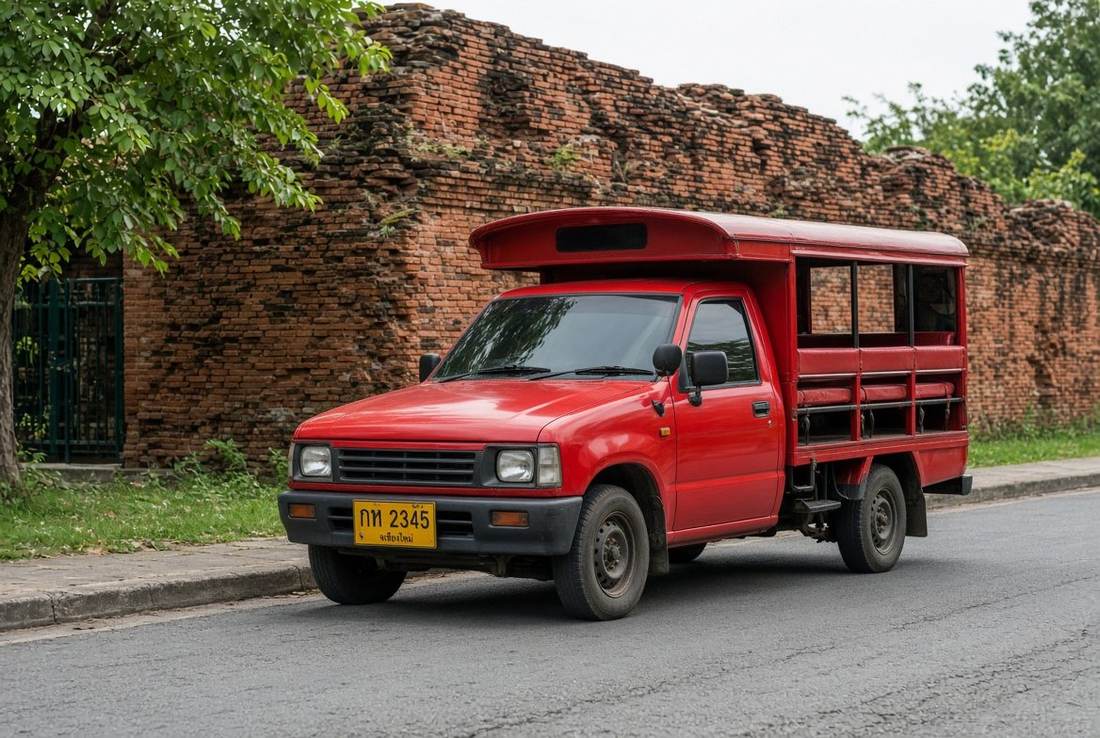
Use the Grab or Bolt app for fixed prices with no haggling. Red songthaews (shared pick-up trucks) are cheap for short hops: tell the driver where you’re going and agree the price first. The airport is only about 15 minutes from the Old City.
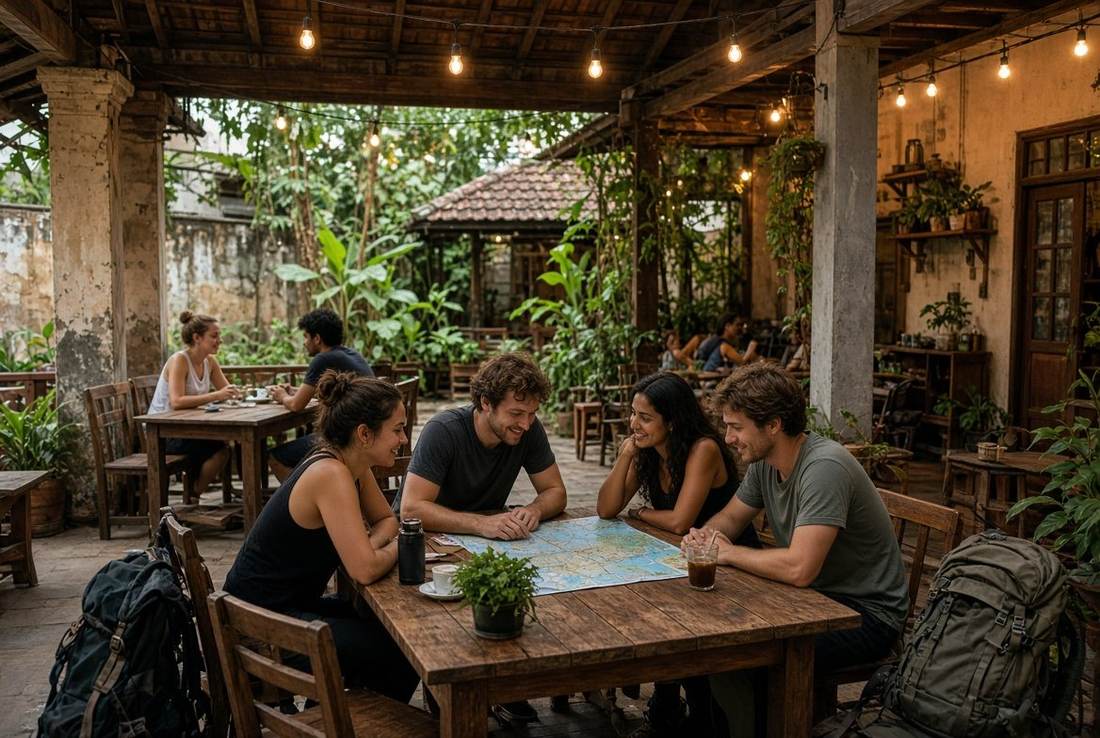
The Old City has lots of friendly, well-run hostels where it’s easy to meet people, plus cheap private rooms. Santitham has great-value guesthouses for longer stays.
Lots of solo travellers make Chiang Mai one stop on a bigger trip. Bangkok is great for meeting people too, and the islands have social beach towns.
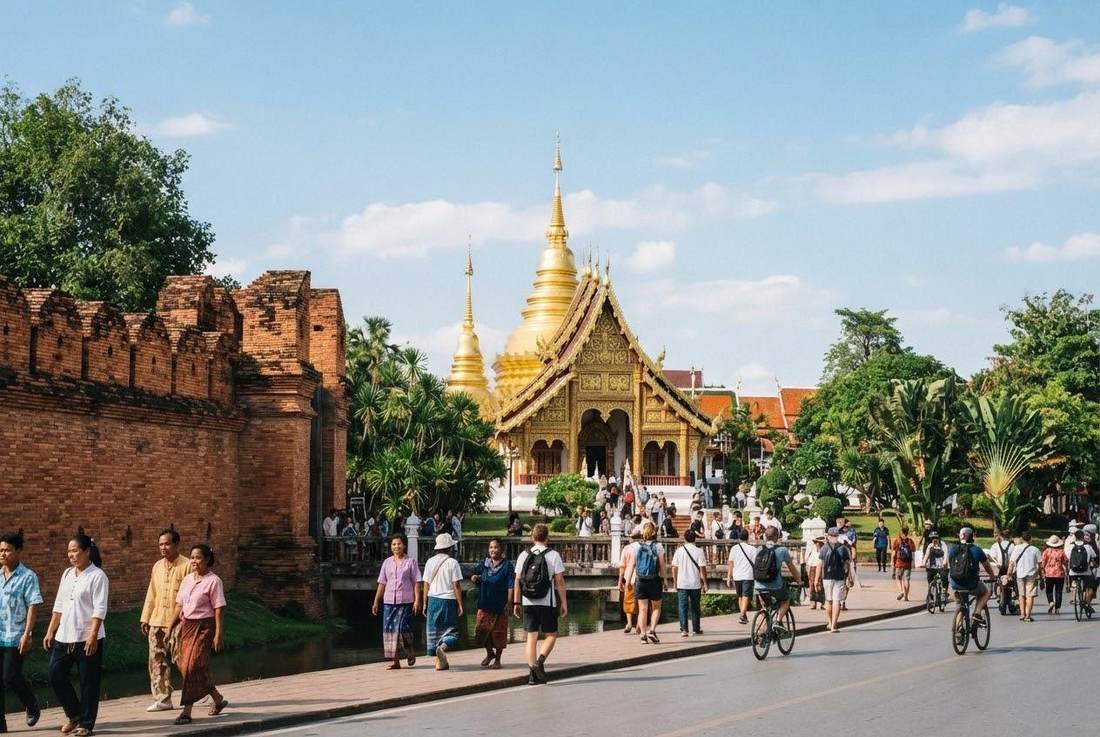
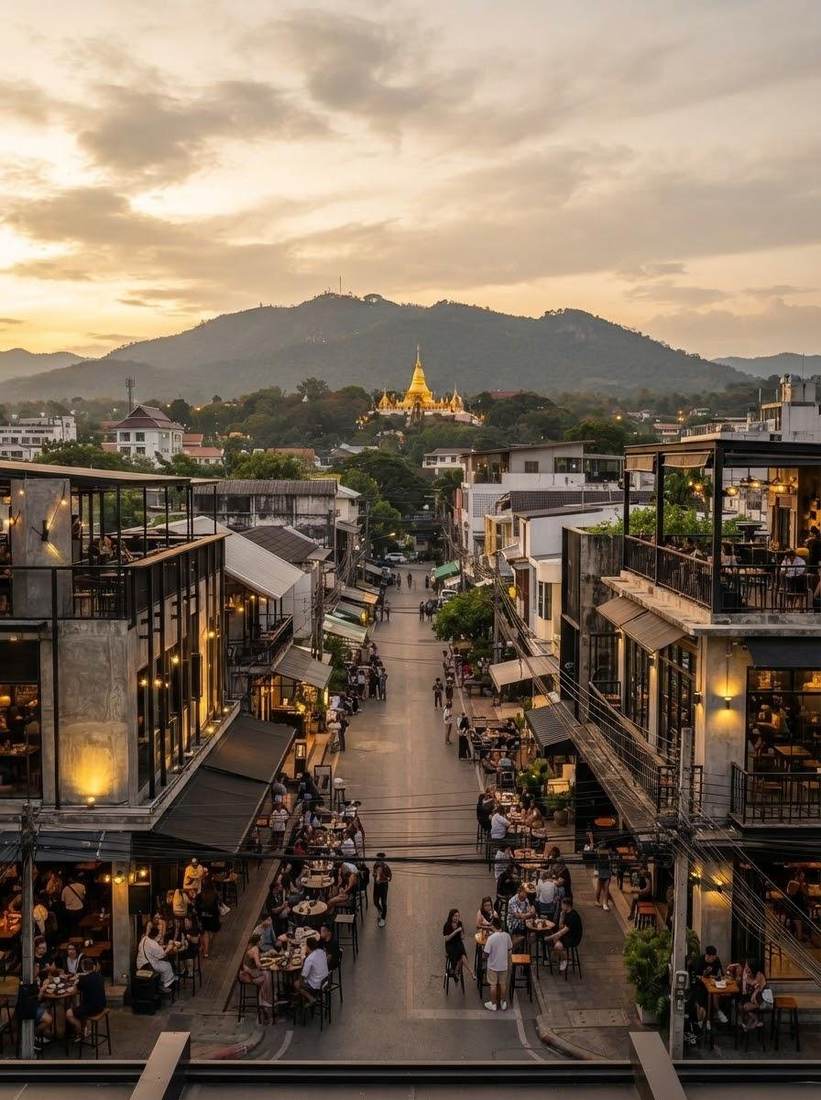
The Old City is Chiang Mai’s strongest all-round base for a first visit. The square, moated centre holds more than thirty temples, including Wat Phra Singh and Wat Chedi Luang, plus the famous Sunday Walking Street, cafés, massage shops and guesthouses on every lane. Almost everything is walkable, and Tha Phae Gate on the east side is the easiest landmark to get your bearings from.
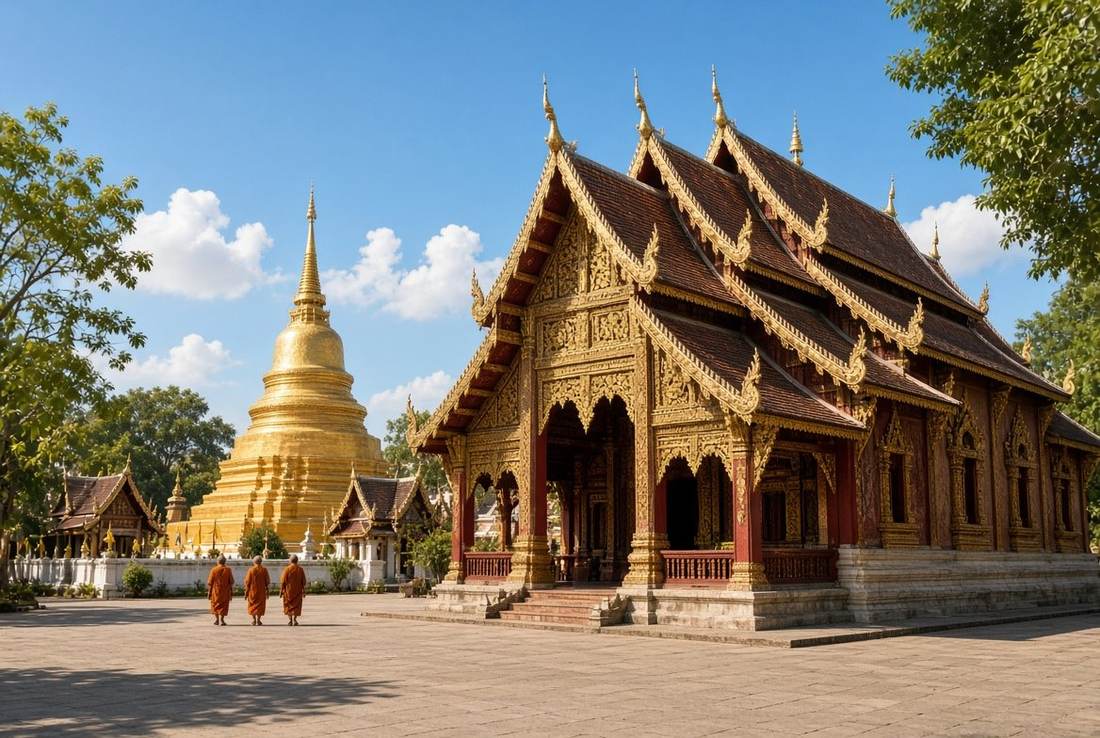
The Old City’s most important temple, home of the revered Phra Buddha Sihing image and the beautifully carved Viharn Lai Kham. Gold chedis, calm courtyards and monks going about their day.
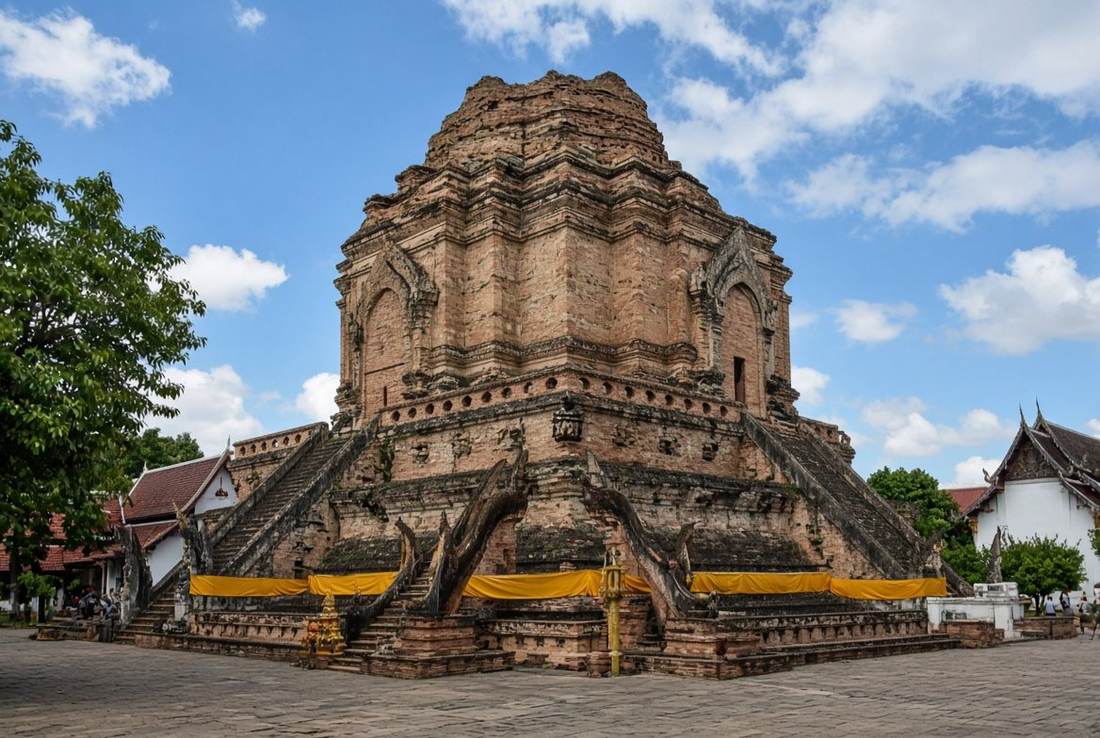
A huge 14th-century brick chedi, partly ruined by an earthquake centuries ago, right in the centre of the Old City. Impressive by day and beautifully lit at night.
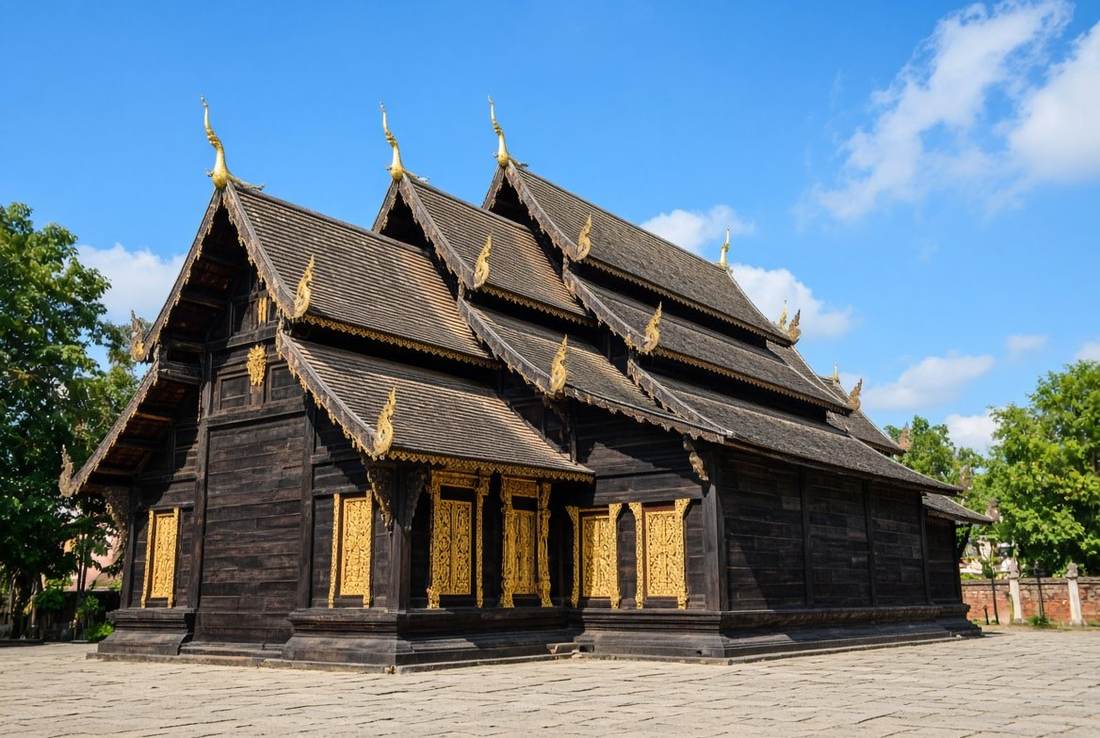
A small, dark teak-wood temple hall right next to Wat Chedi Luang, one of the prettiest in the city. Easy to miss, and worth five quiet minutes.
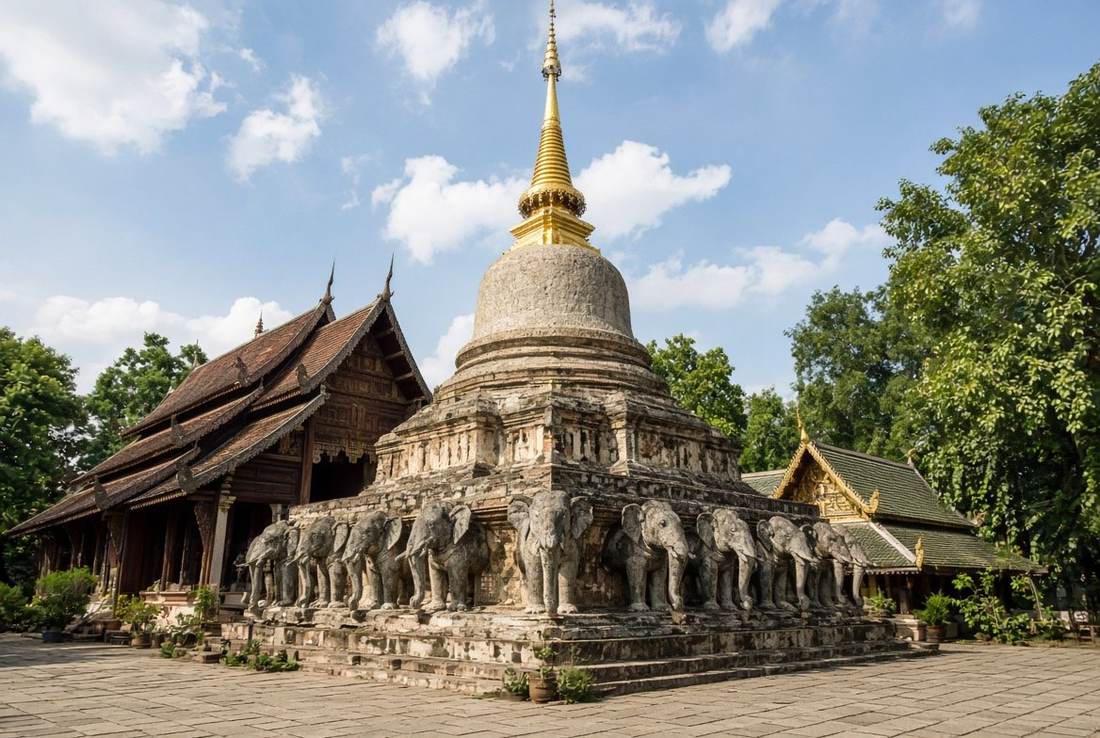
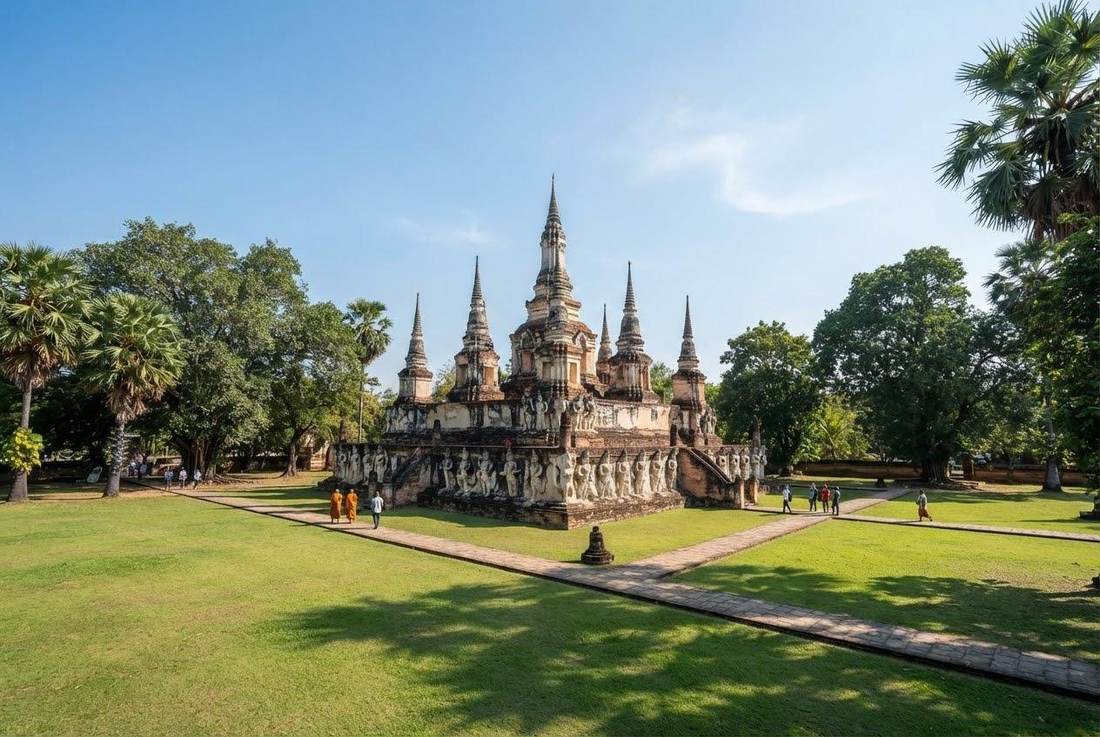
The oldest temple in Chiang Mai, founded when the city itself was built in 1296. Its chedi is ringed by stone elephants.
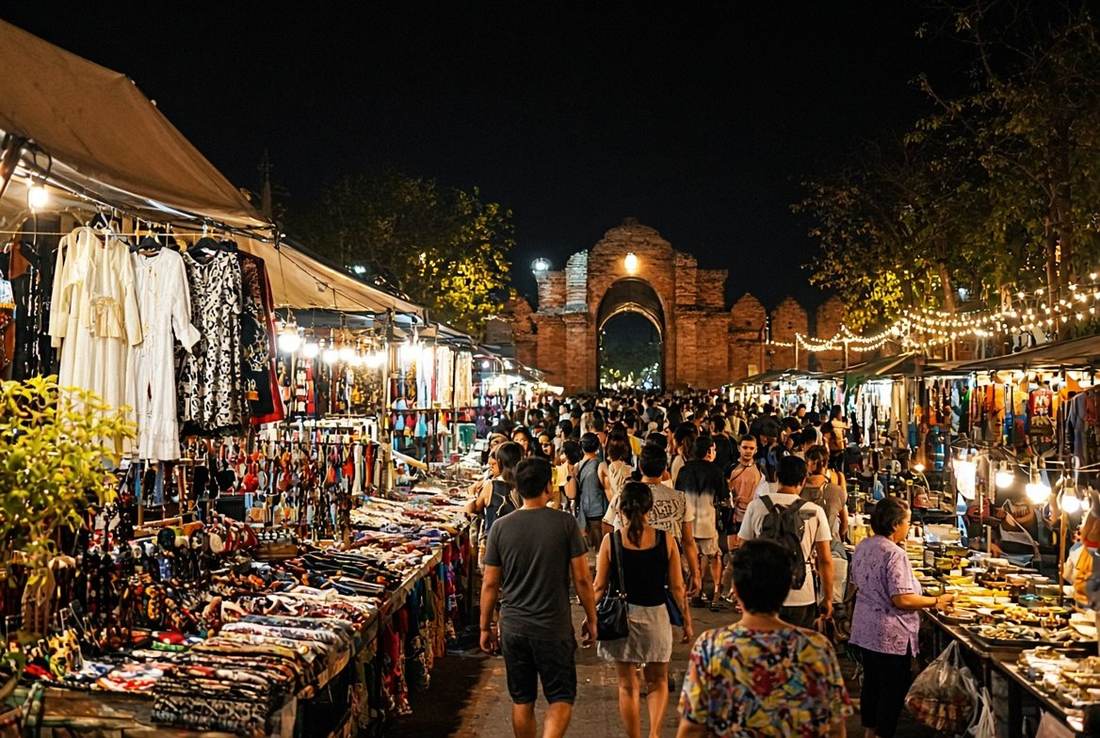
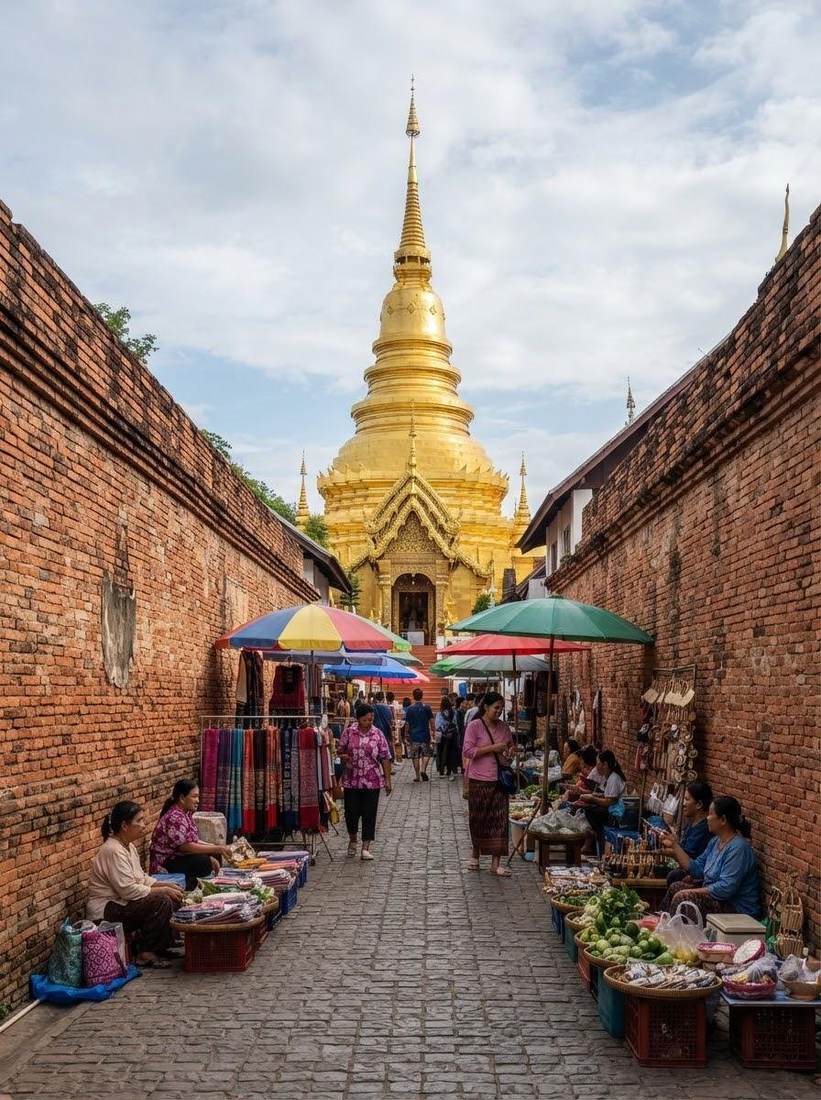
Every Sunday evening, Ratchadamnoen Road from Tha Phae Gate turns into a huge market of crafts, clothes and street food, with temple courtyards turned into food courts.
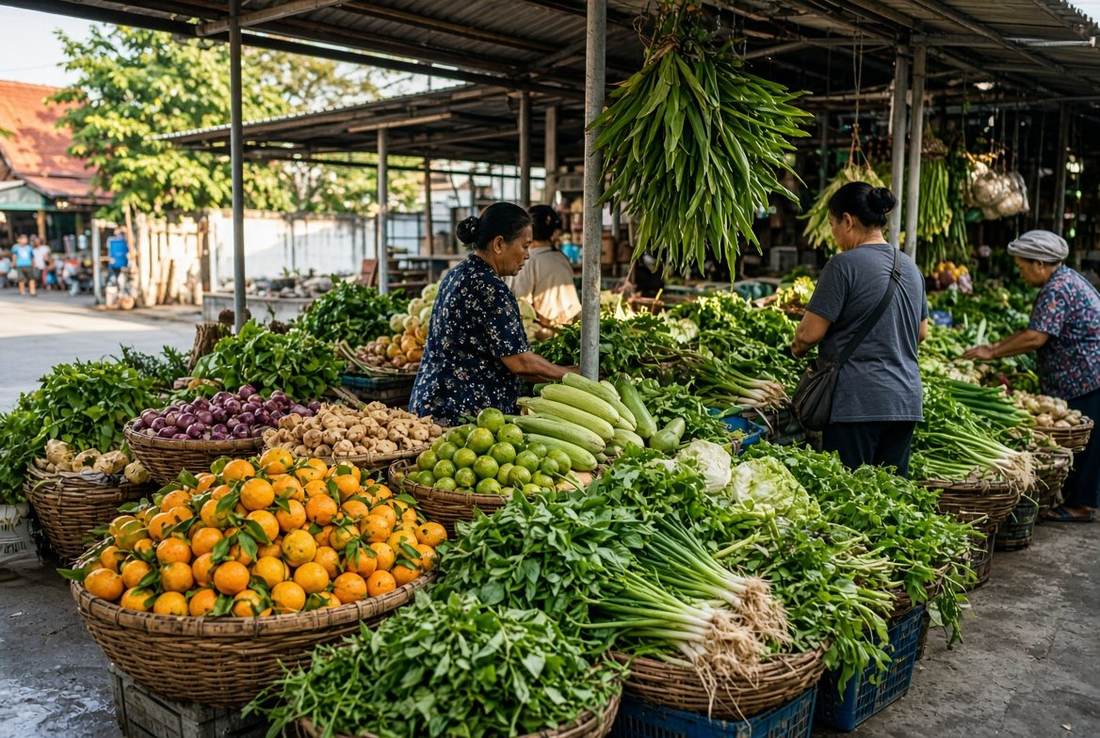
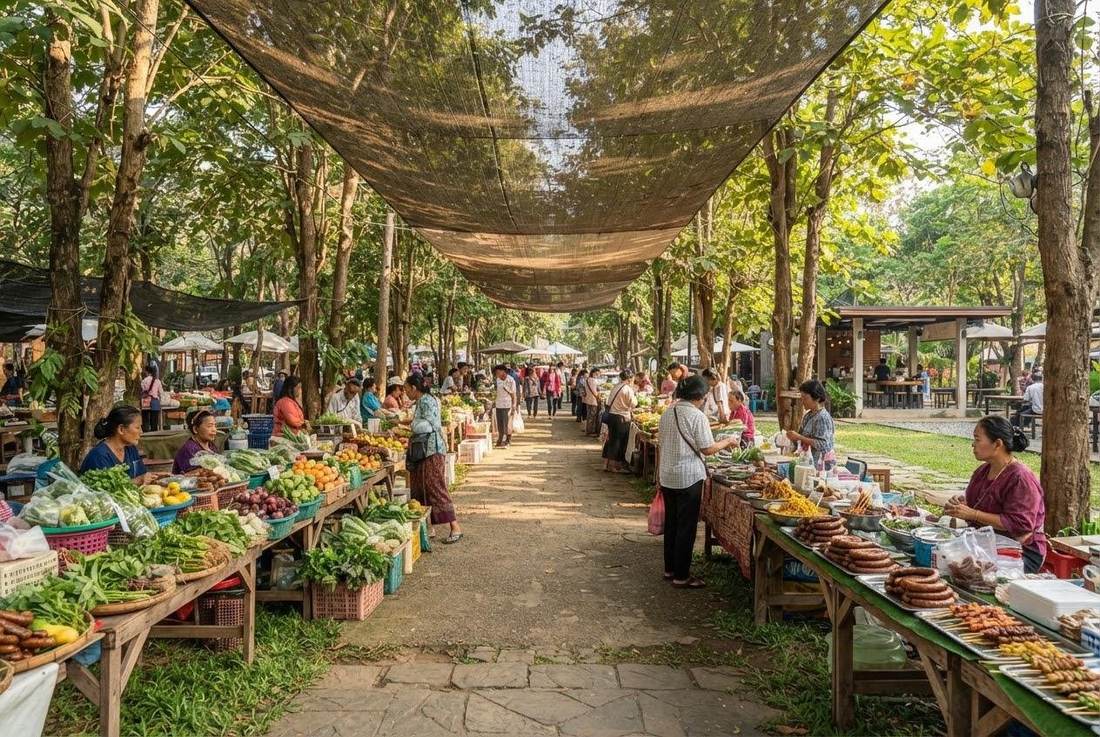
A small local fresh market near the north-east corner of the moat. Several cooking schools start their market tours here.
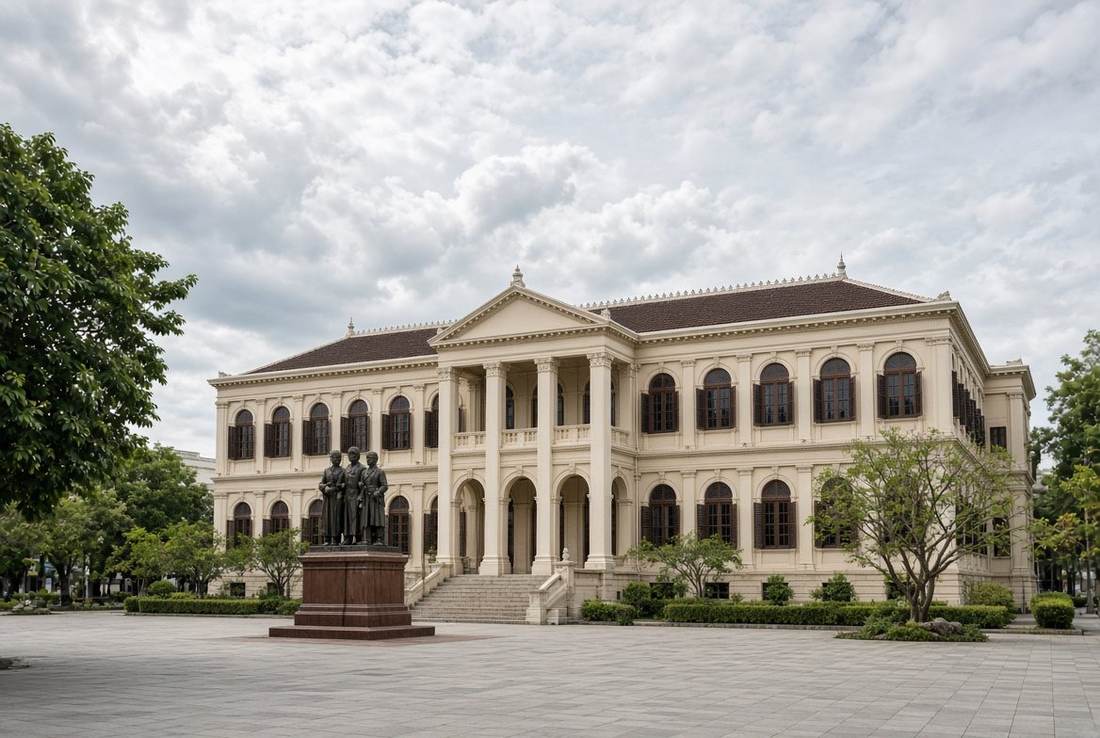
A good introduction to the city’s history, set in the old provincial hall right behind the Three Kings Monument.
A tiny, open-air jazz bar beside Chang Phueak Gate, with live music most nights and a crowd spilling out onto the pavement.
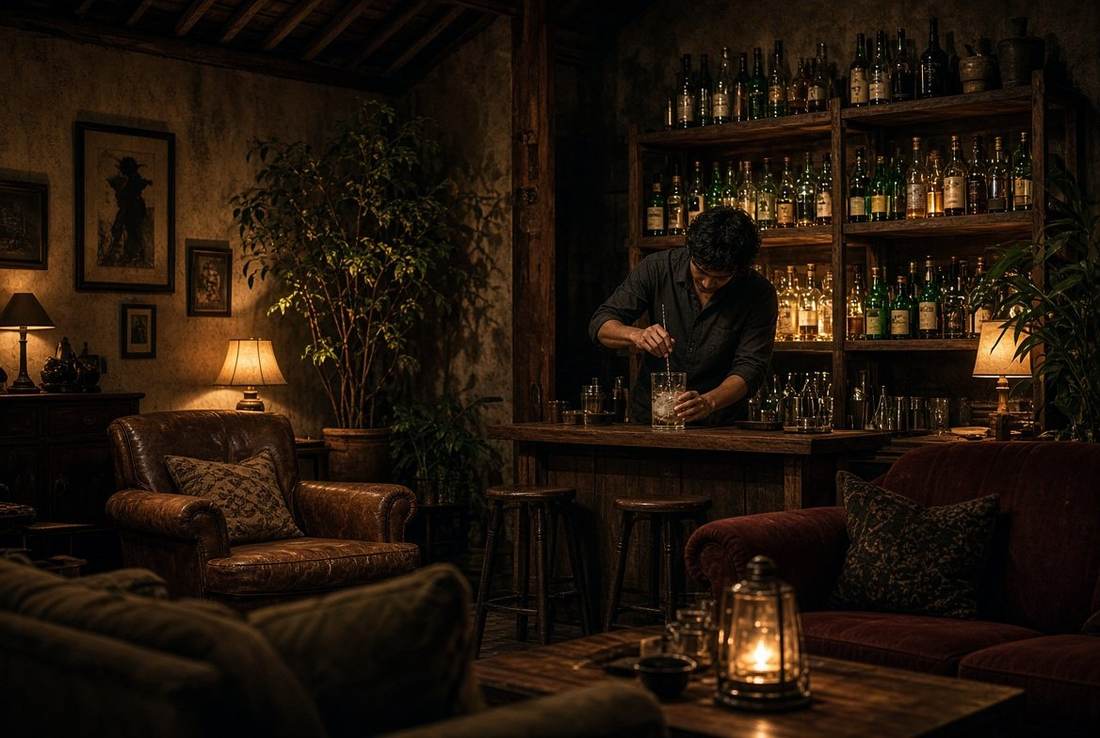
An intimate, living-room-style cocktail bar on Samlarn Road, known for friendly service and some of the best mixed drinks in the city.
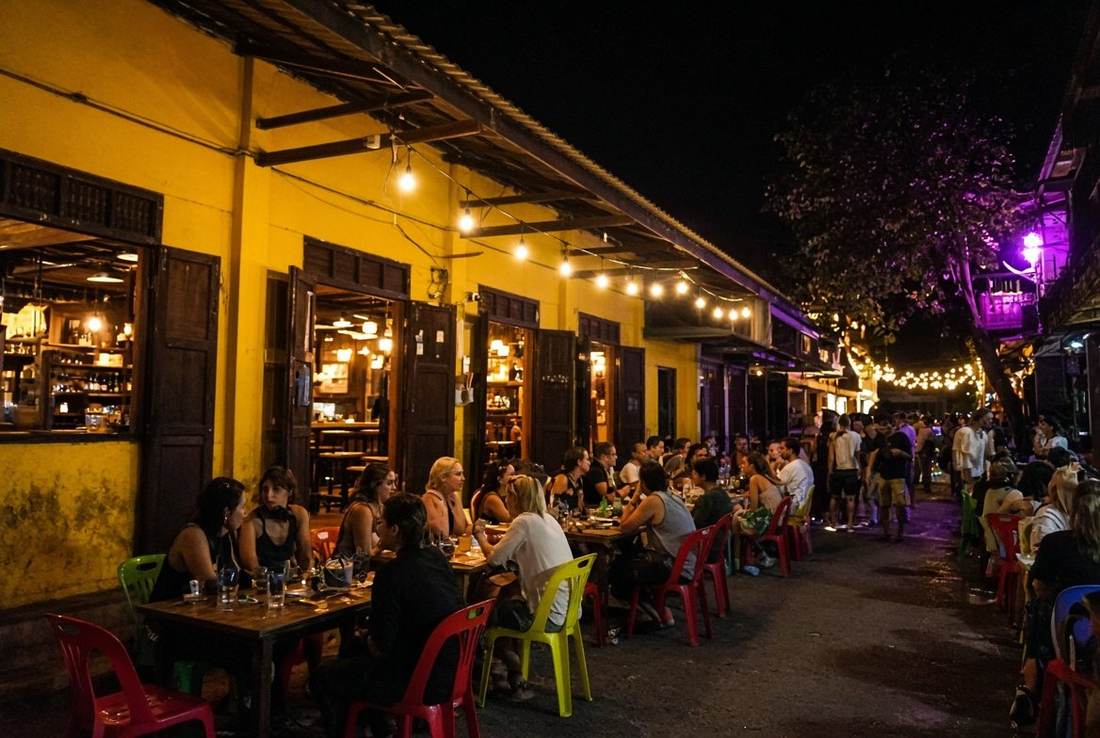
The Old City’s backpacker party corner: a cluster of open-air bars on Ratvithi Road that gets loud and lively late at night.
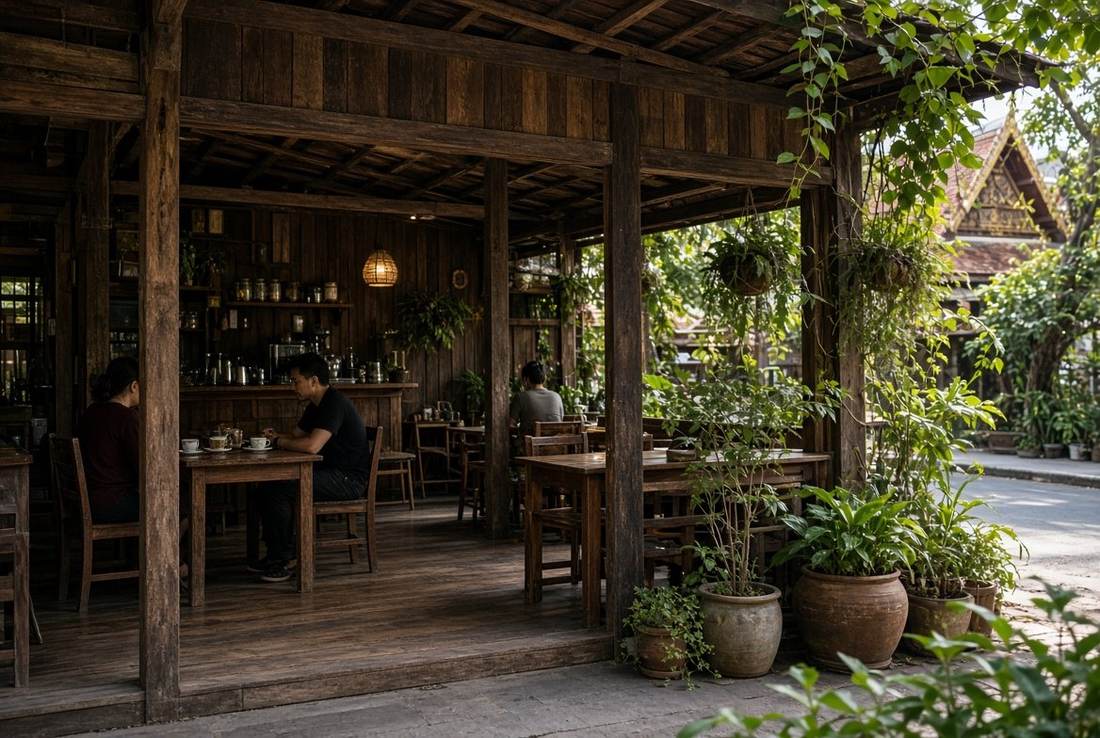
Specialty coffee from a hill-tribe farming family, served in a lovely old building near Wat Phra Singh. One of the best-known coffee names in Chiang Mai.
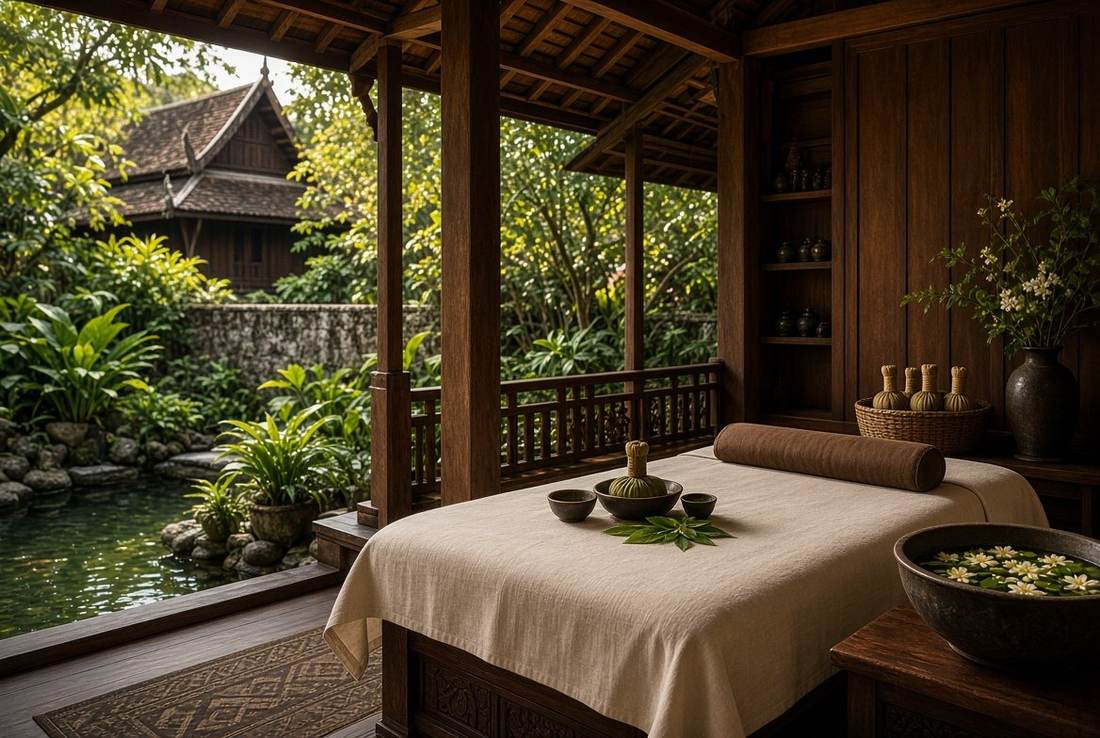
A Lanna-style garden spa inside the Old City, one of the best-known in Chiang Mai for traditional Thai massage and longer treatments.
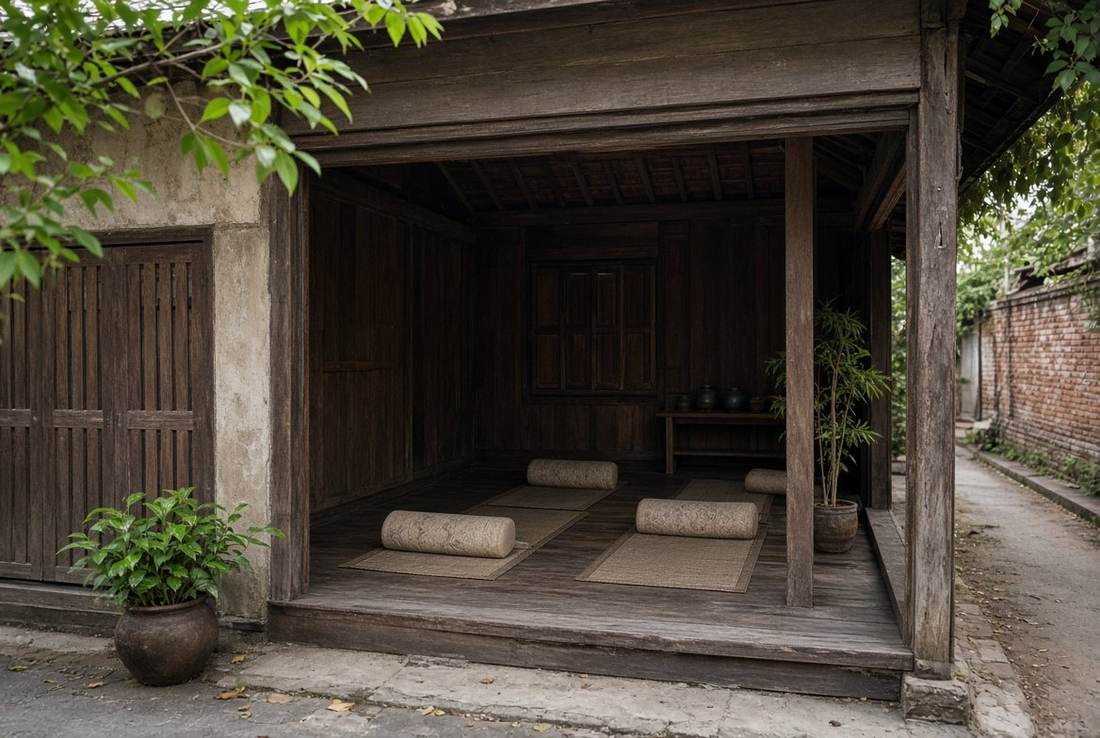
Traditional Thai massage from therapists trained through a programme for women leaving prison. Several small branches around the Old City.
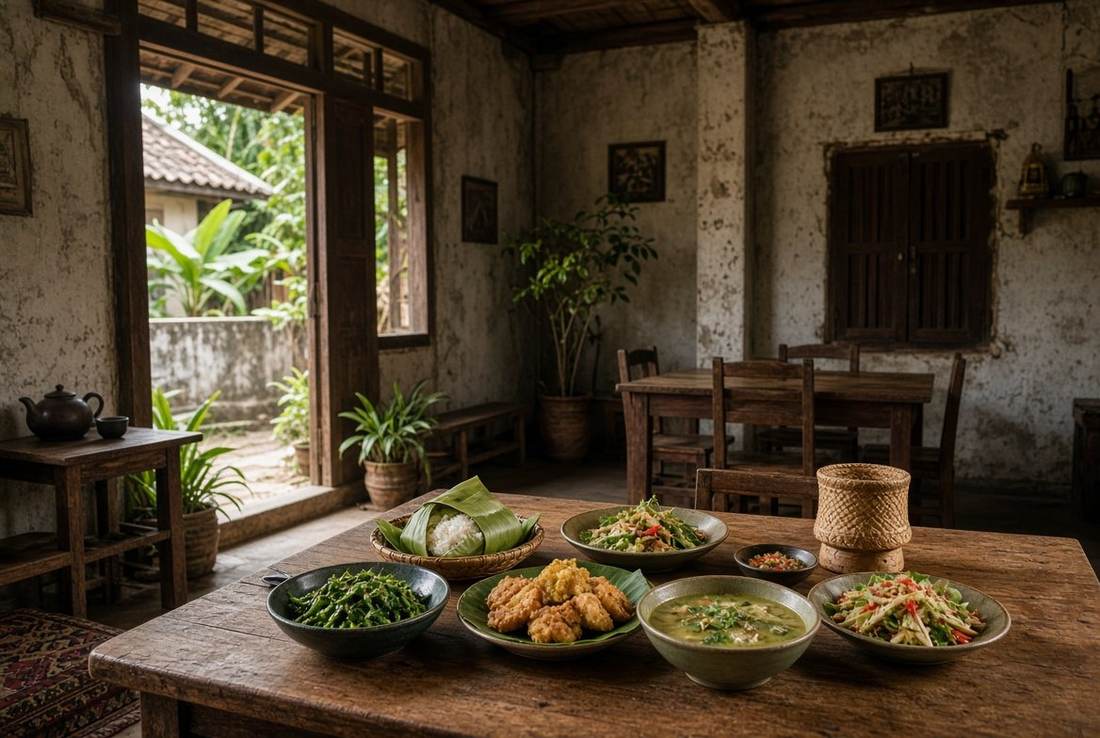
A century-old family restaurant just south of the moat on Wua Lai Road, serving classic northern Thai recipes. MICHELIN Bib Gourmand.

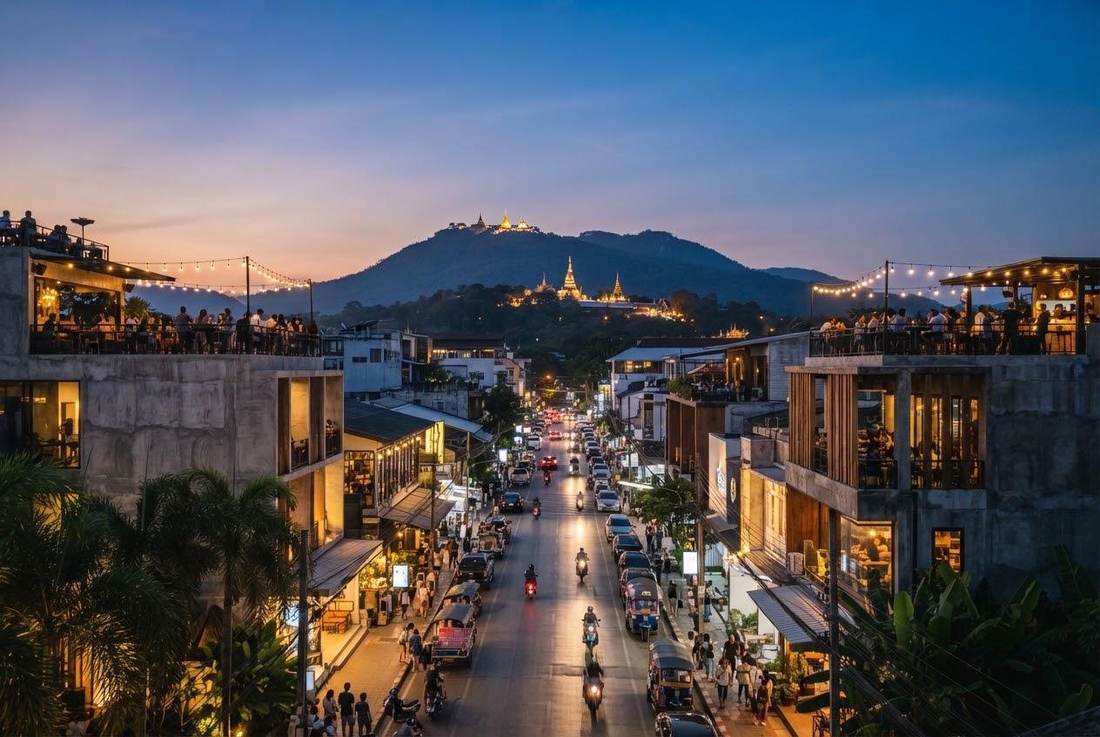
Nimman (Nimmanhaemin Road) is Chiang Mai’s modern, trendy side, next to Chiang Mai University and at the foot of Doi Suthep. The numbered side streets (sois) are packed with specialty coffee shops, restaurants, cocktail bars and boutiques, with MAYA and One Nimman malls at the top. It feels more like a young, creative city district than an old town.
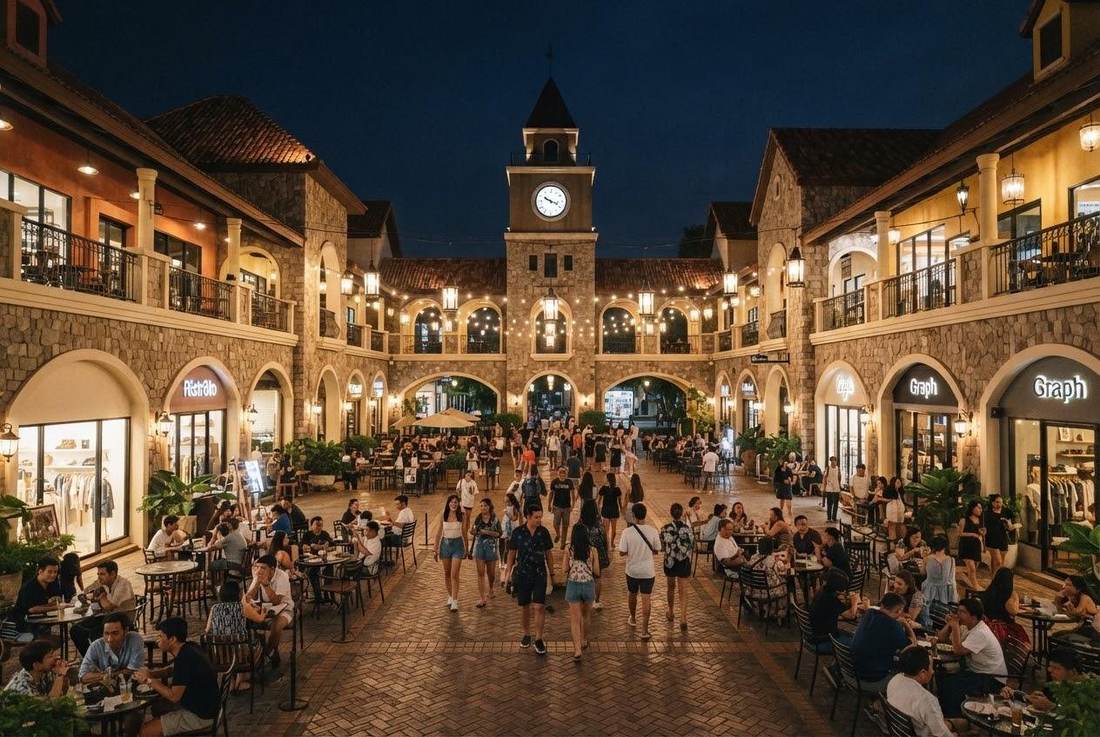
A European-style open-air complex at the top of Nimman Road, with shops, cafés, restaurants and weekend events.
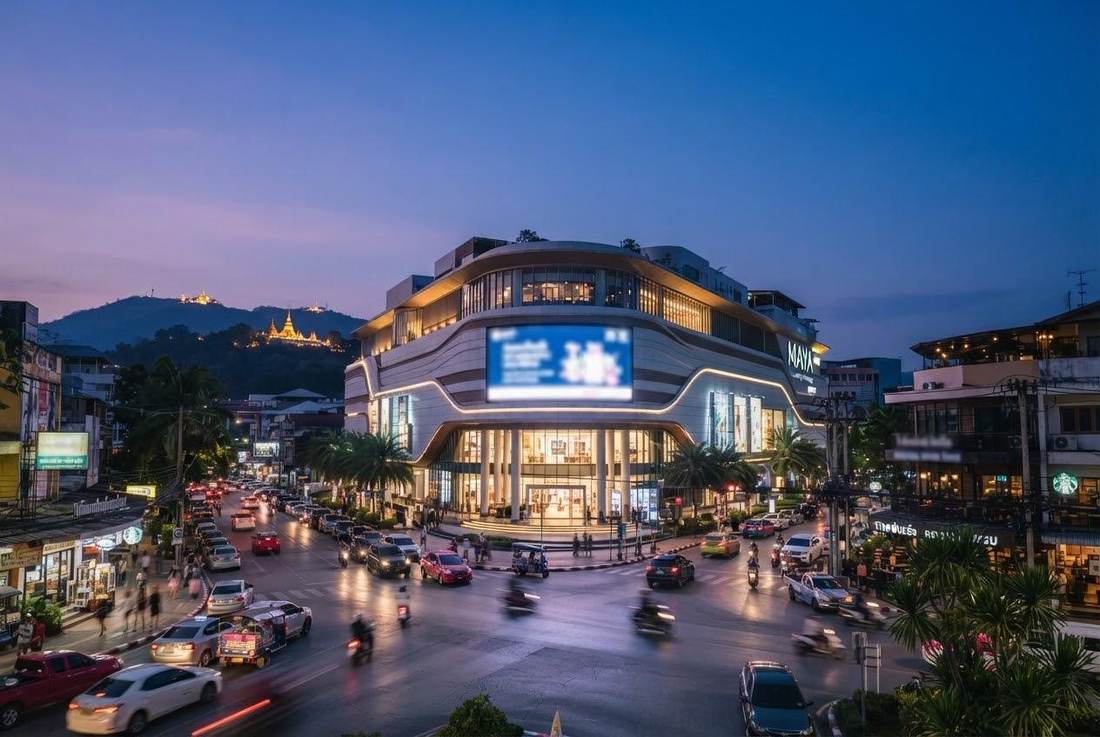
The big mall at the Nimman junction, with a cinema, supermarket, food court and co-working space.
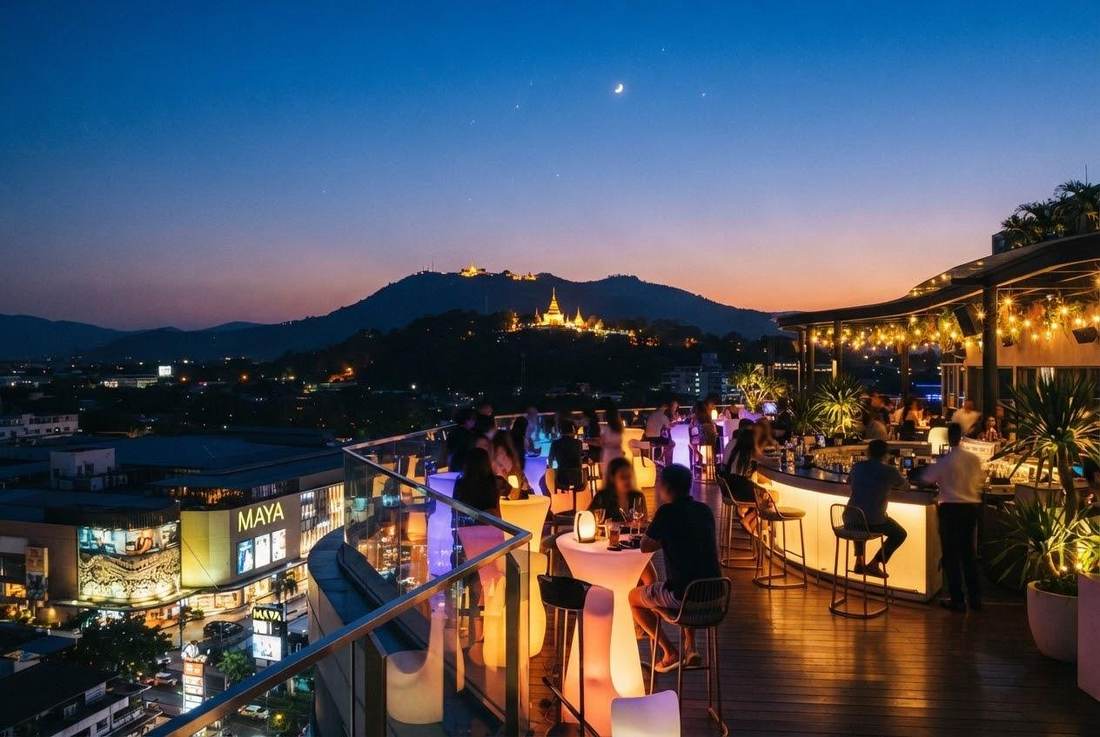
A rooftop bar on top of MAYA with views across the city and towards Doi Suthep mountain.
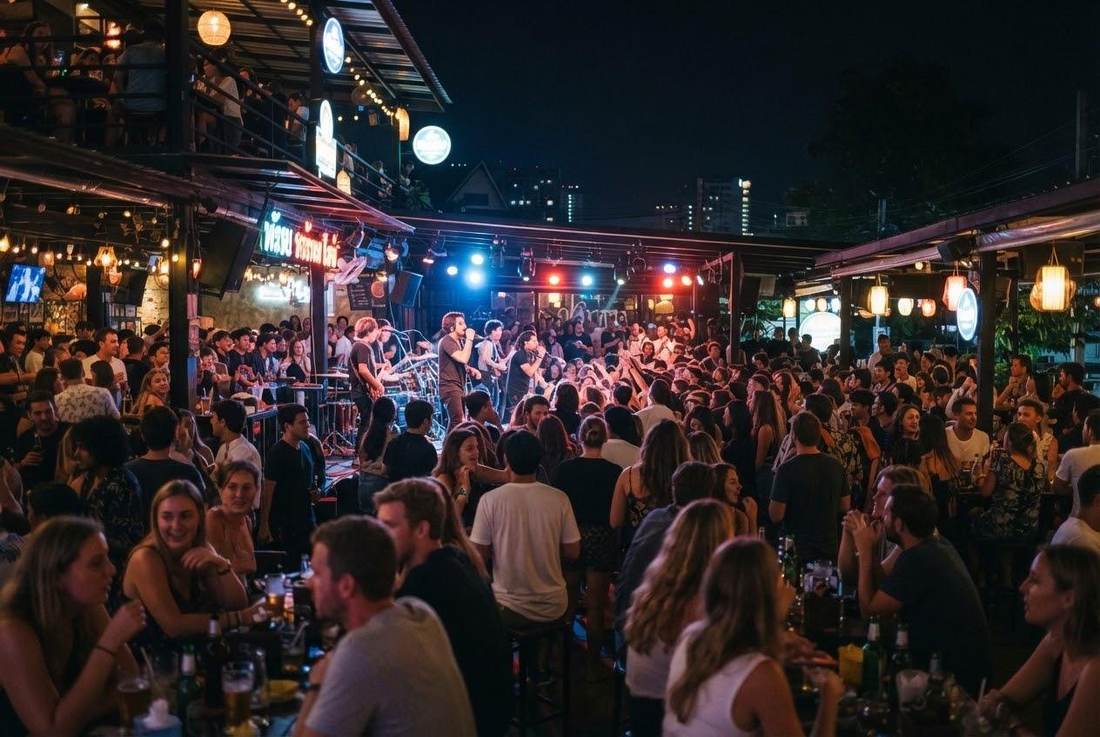
Nimman’s best-known night spot: an outdoor area, a live-band stage and a club room that fills up after midnight.
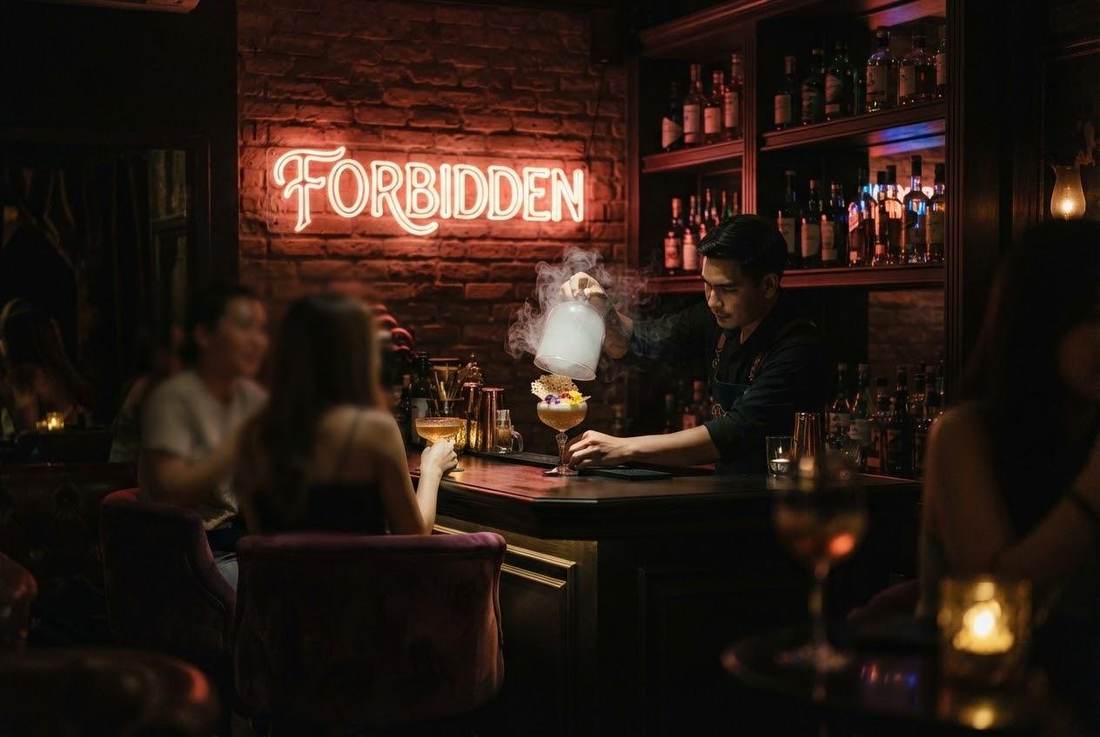
A small speakeasy above an ice-cream shop on Nimman Soi 5, with dessert-inspired cocktails like a Mango Sticky Rice.
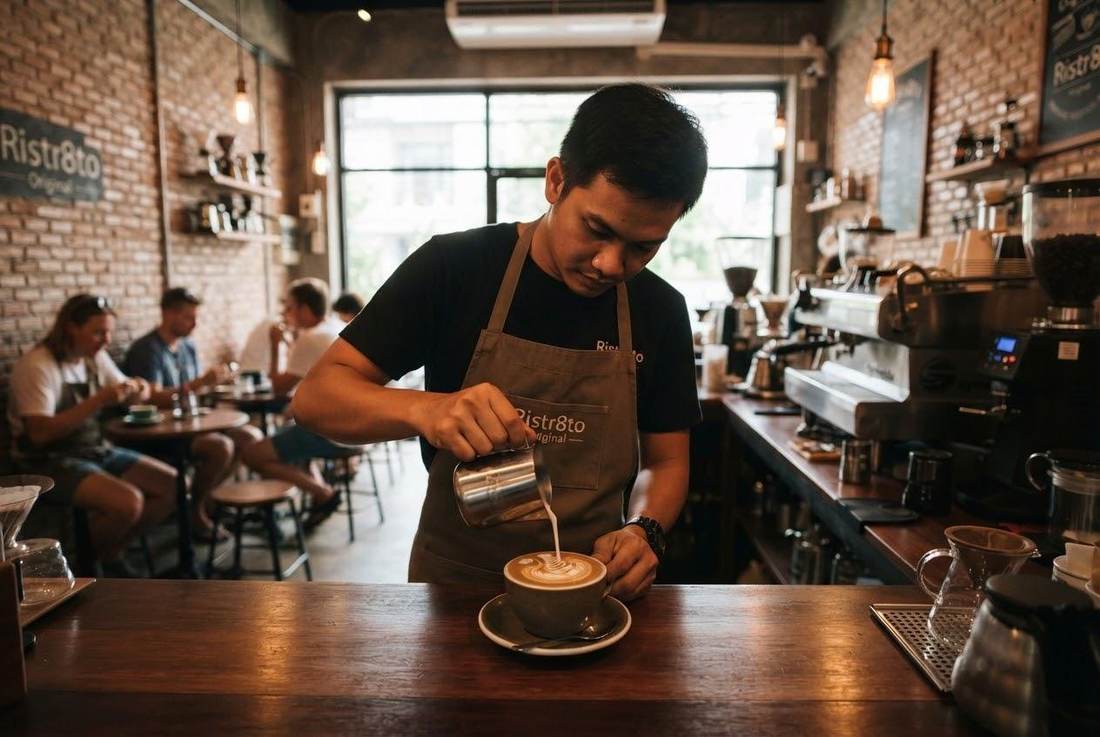
The café that started Nimman’s coffee scene back in 2011, famous for award-winning latte art.
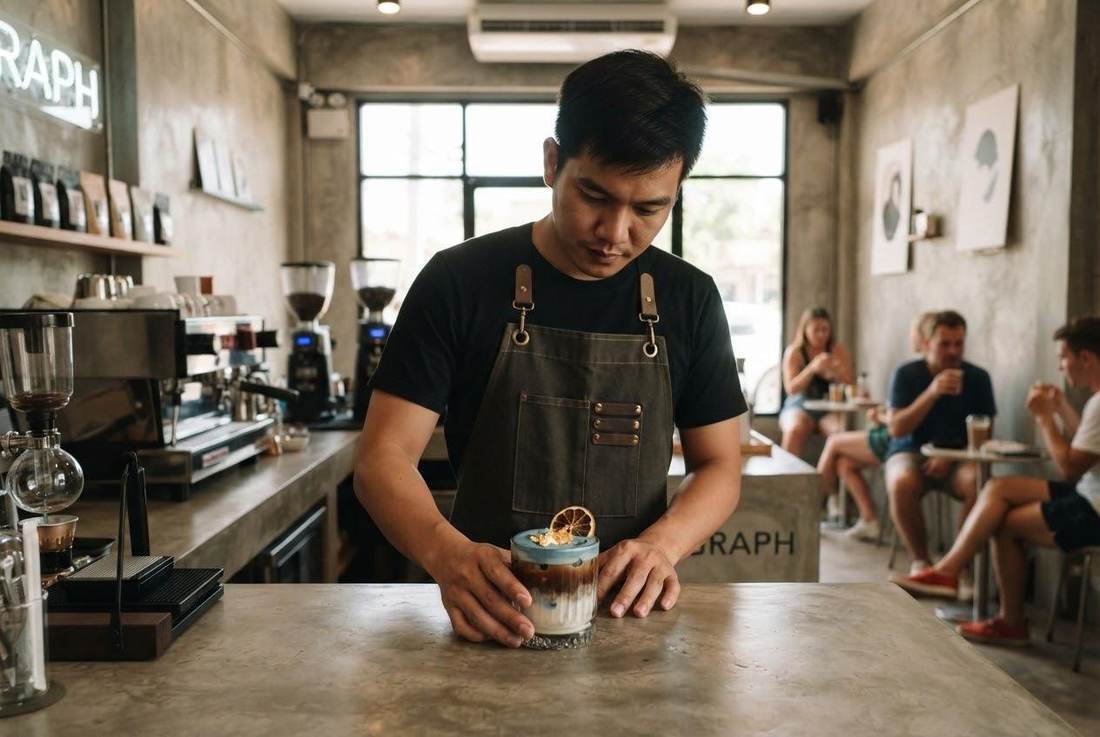
A branch of one of Chiang Mai’s most respected roasters, with creative signature drinks, inside One Nimman.
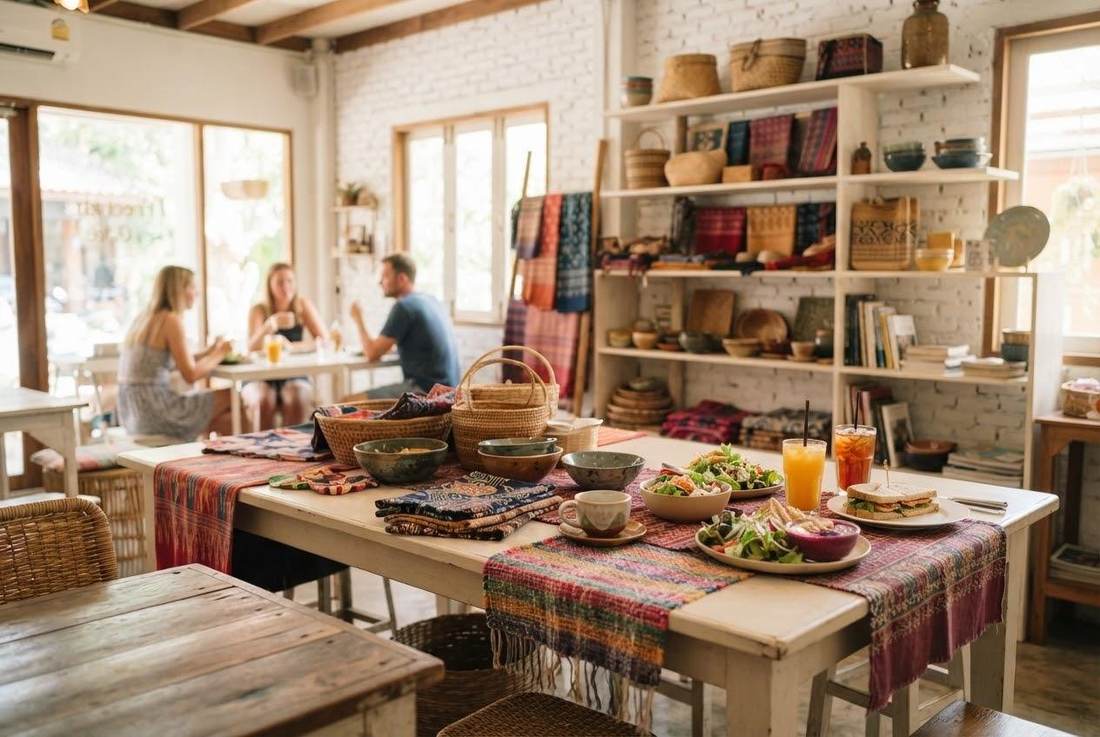
A not-for-profit café supporting refugees and indigenous communities, with a shop selling their crafts.
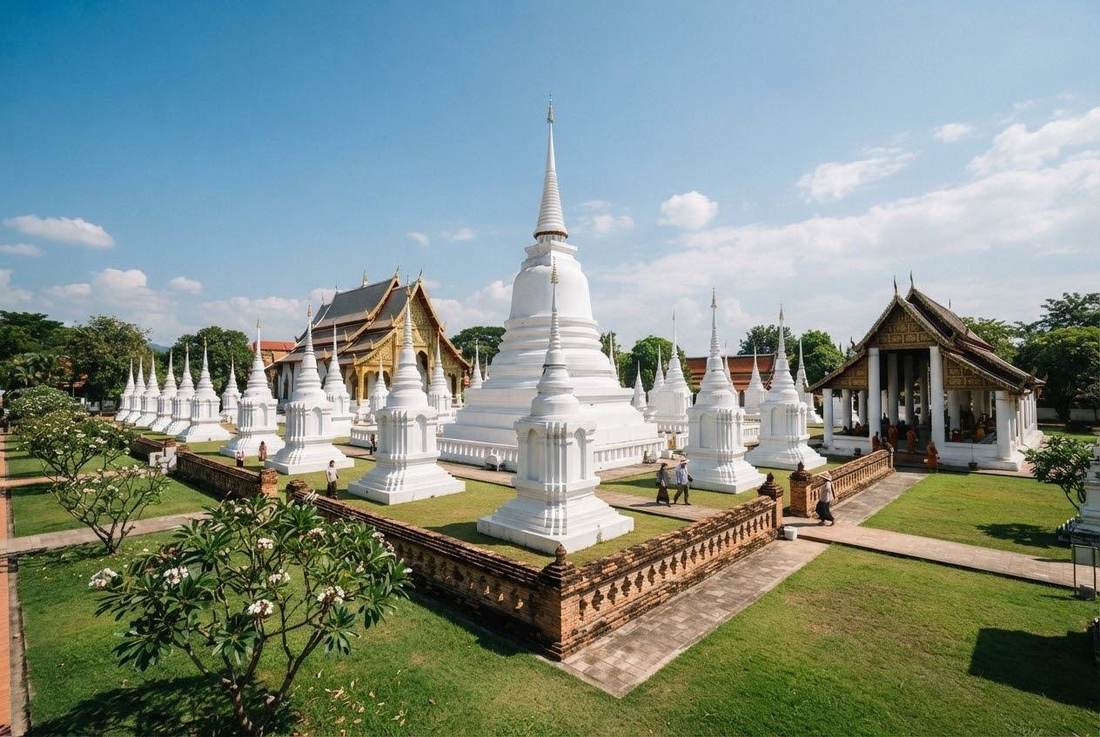
A large temple with gleaming white chedis holding royal ashes, a short ride south of Nimman. Runs a well-known “monk chat”.
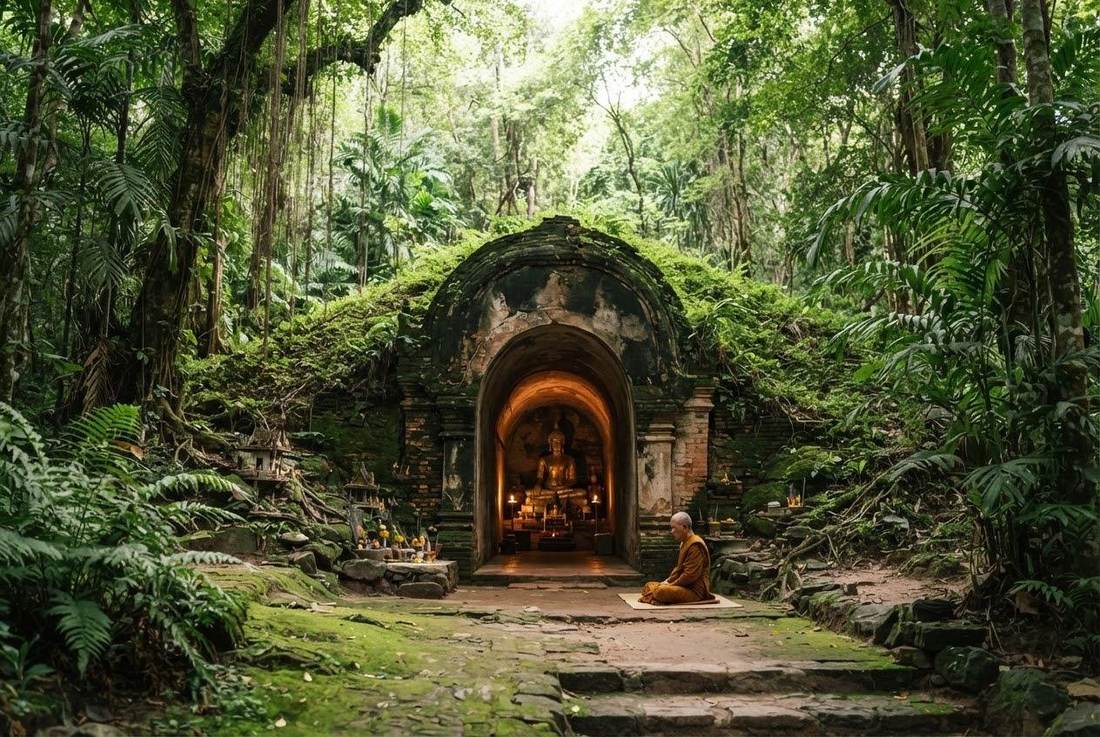
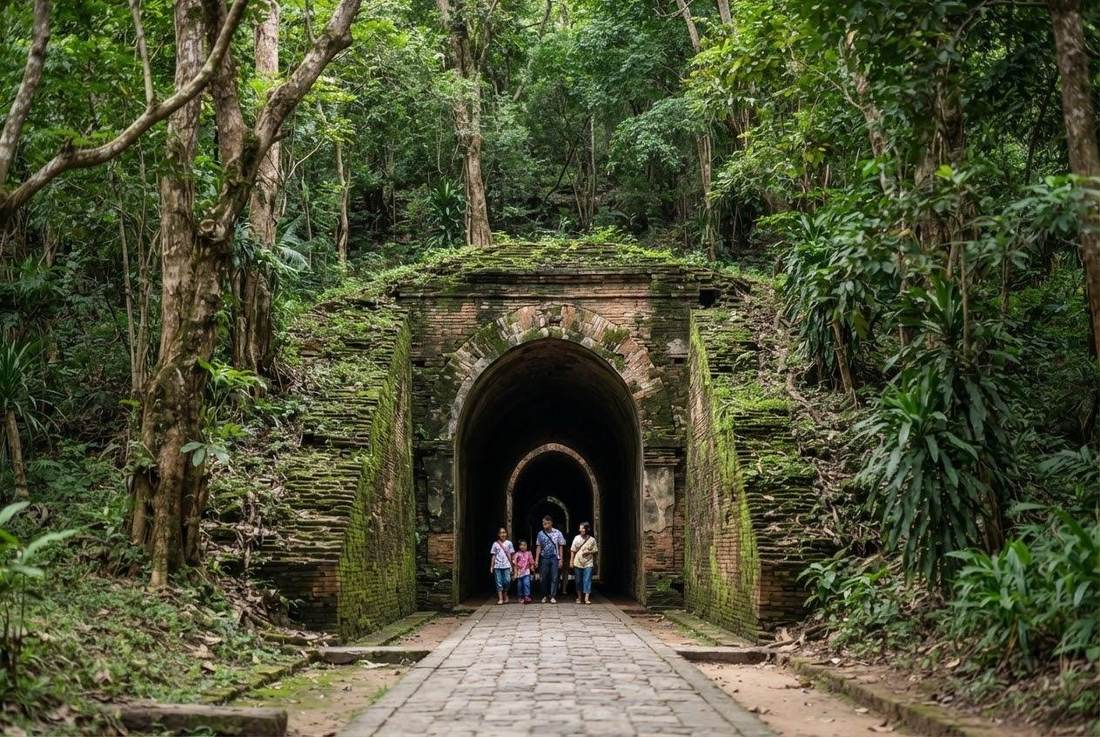
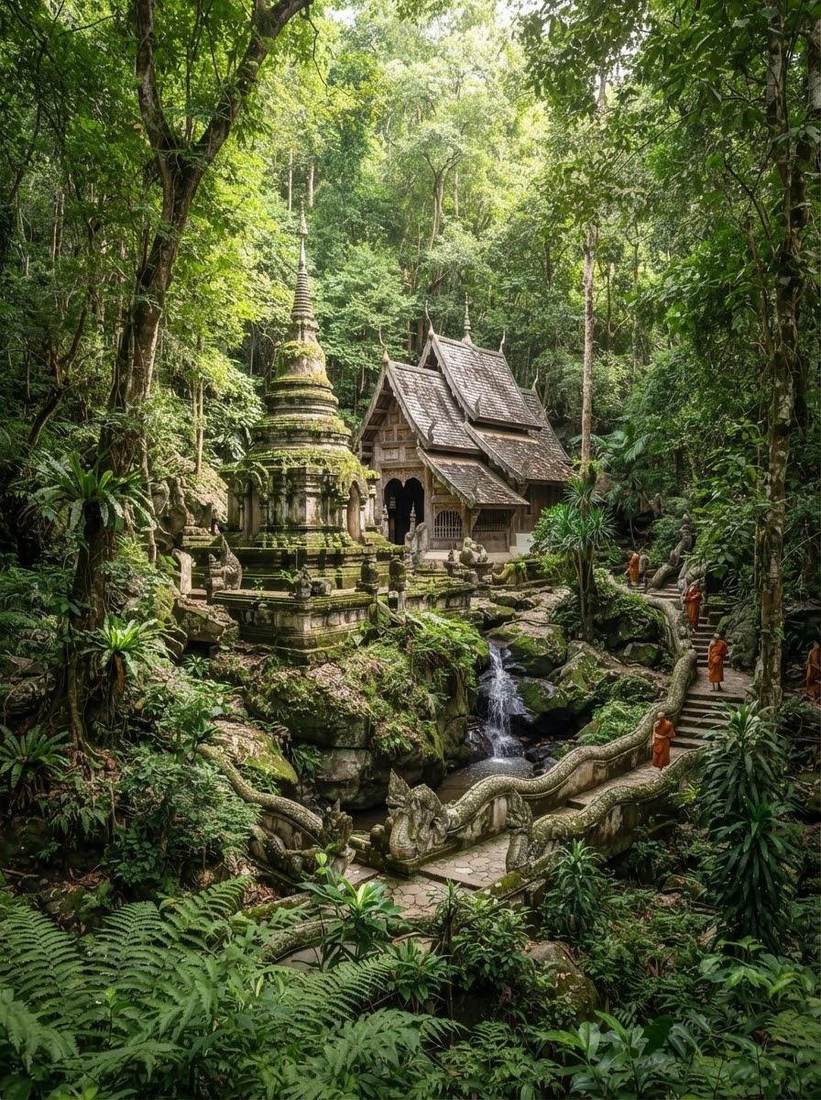
A peaceful forest temple with ancient tunnels built into a hillside, around 10 minutes from Nimman.
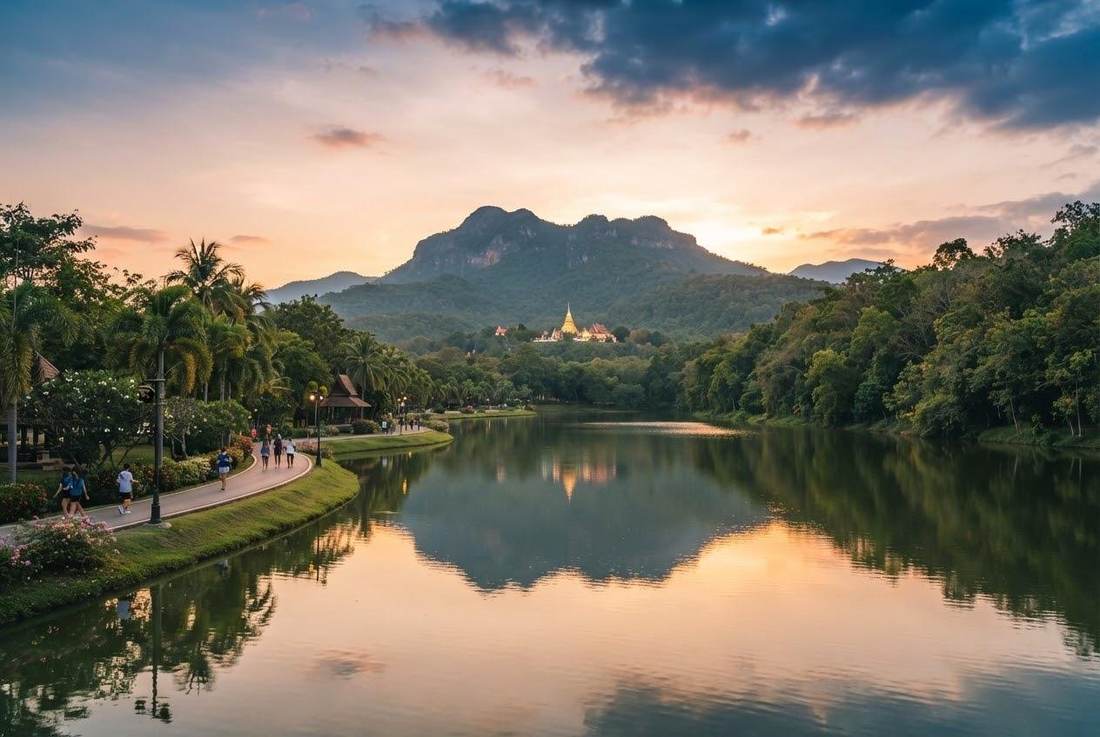
The university campus next to Nimman has a reservoir with a walking path and views of Doi Suthep.
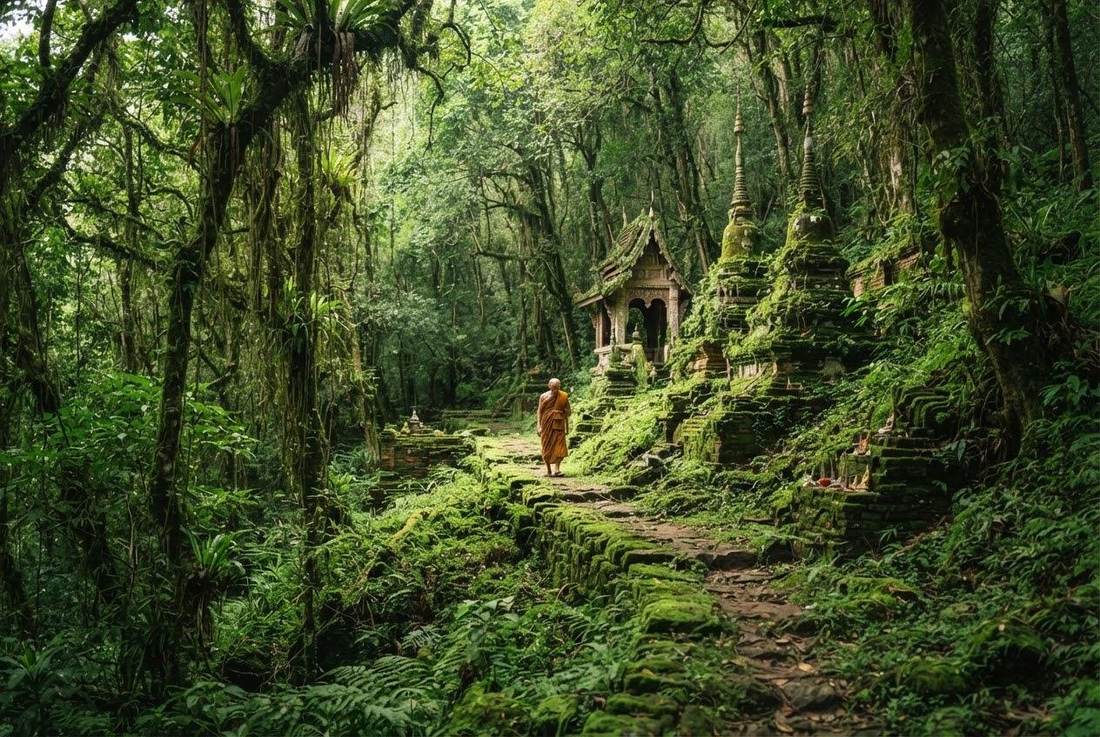
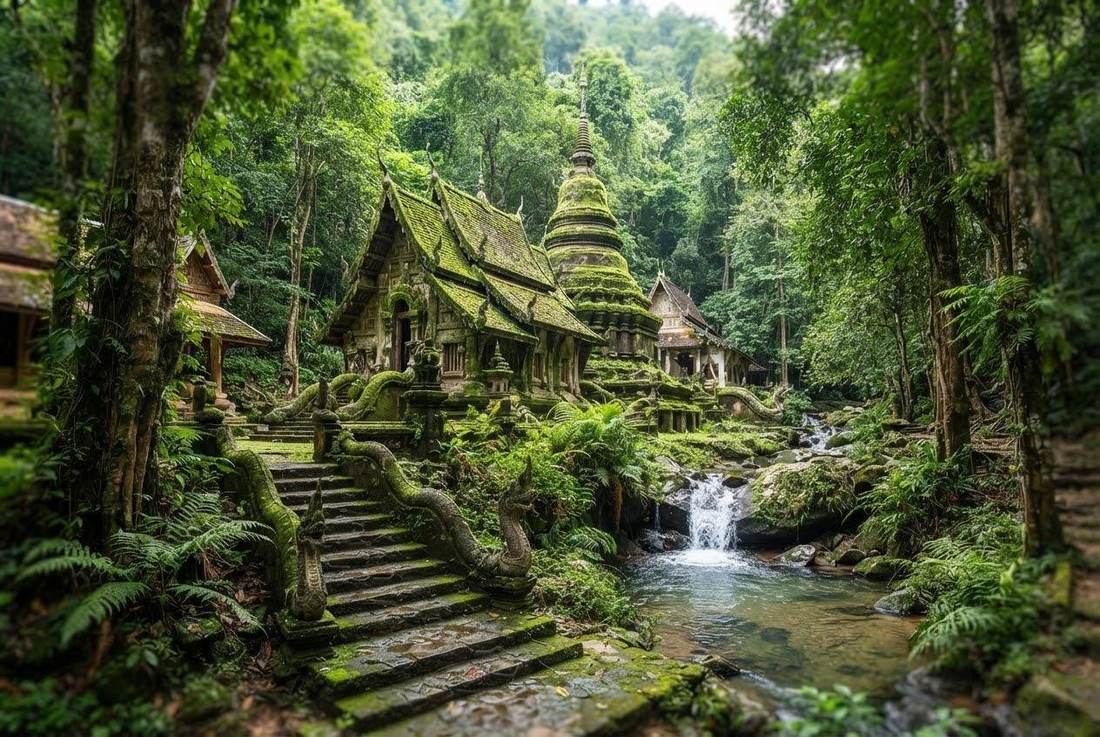
A shaded jungle trail from behind the university up to Wat Pha Lat, a mossy temple beside a waterfall.
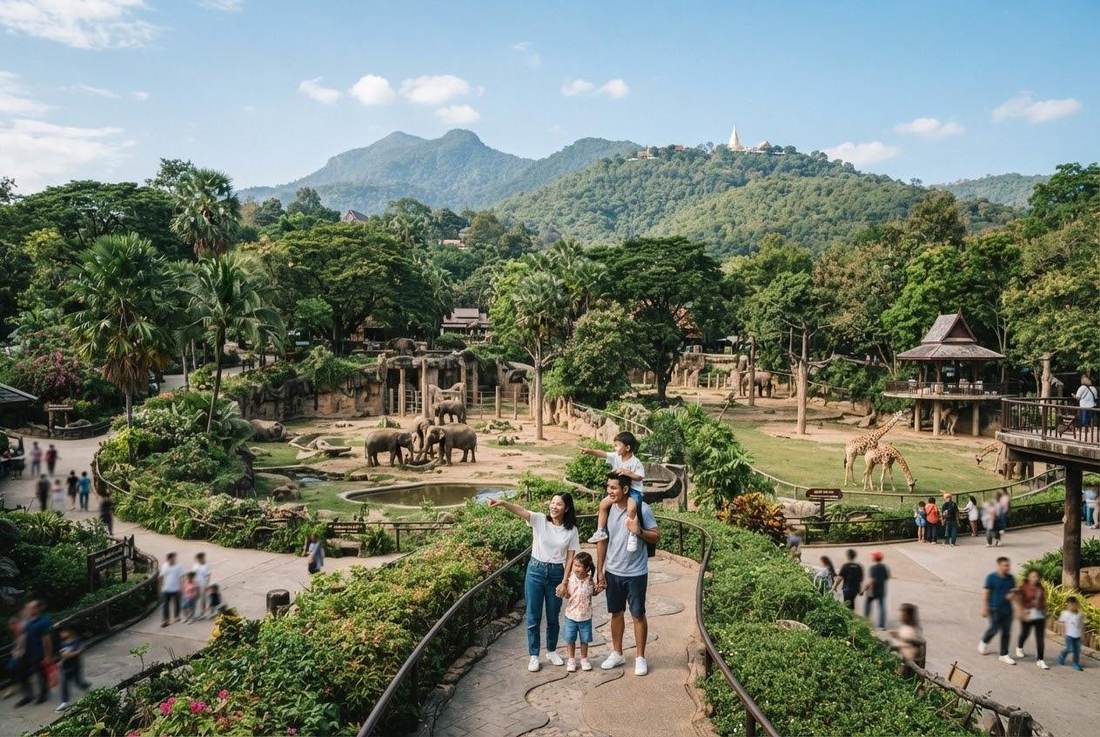
A large, hilly zoo at the foot of Doi Suthep, with pandas, an aquarium and plenty of shade.
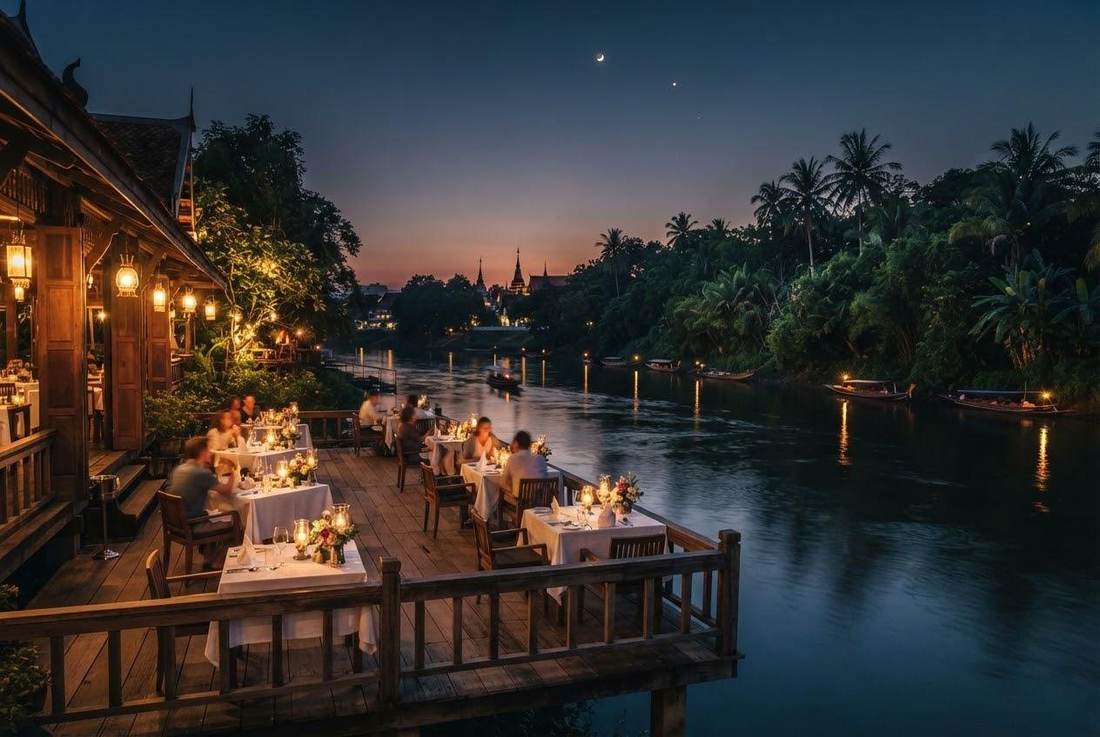
The Riverside runs along the Ping River just east of the Night Bazaar. It’s home to some of Chiang Mai’s most beautiful hotels, like 137 Pillars House, Anantara and Na Nirand, with gardens, pools and river views. The Wat Ket side (east bank) has a relaxed old-town feel with riverside restaurants, live music and small cafés.
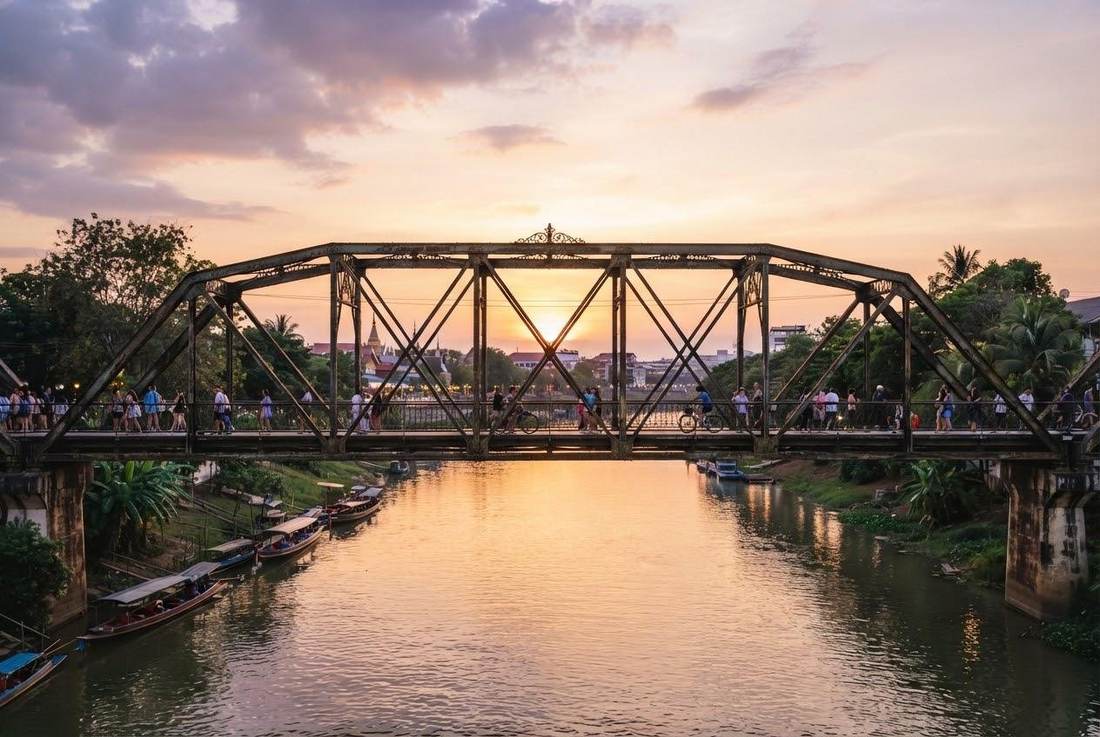
An old pedestrian bridge over the Ping River, lovely at sunset and one of the main spots for floating krathongs during Loy Krathong.
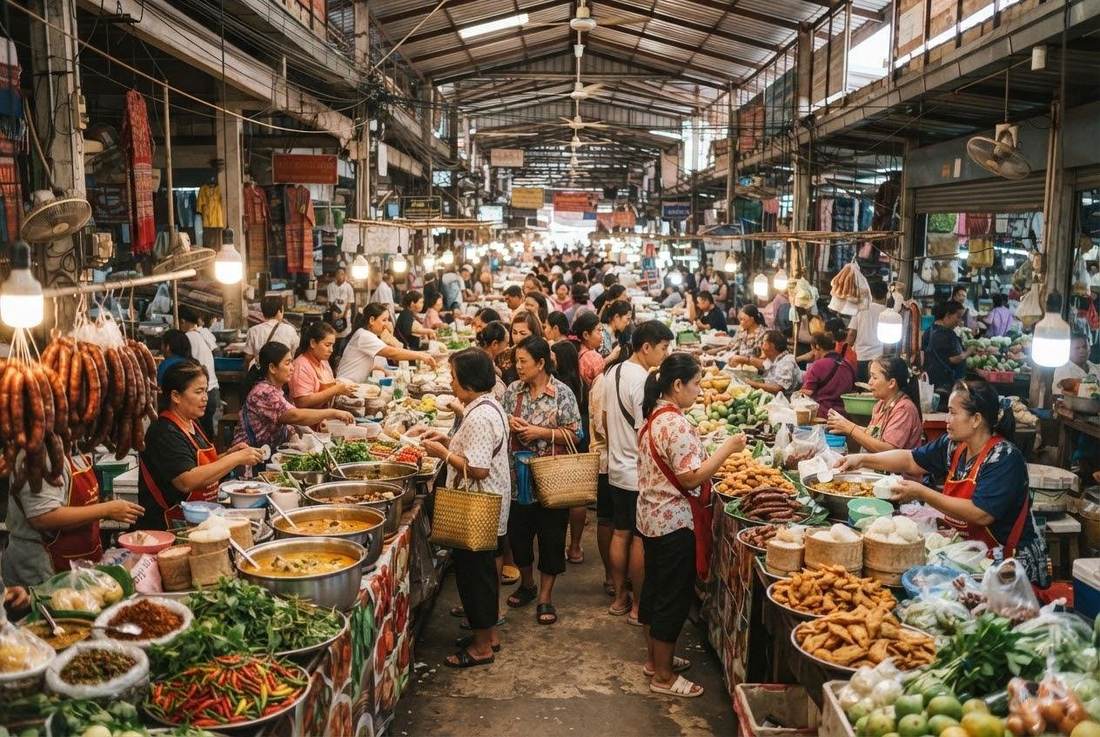
Chiang Mai’s big old market beside the river, full of northern Thai snacks, sai oua sausage, dried goods and fabrics.
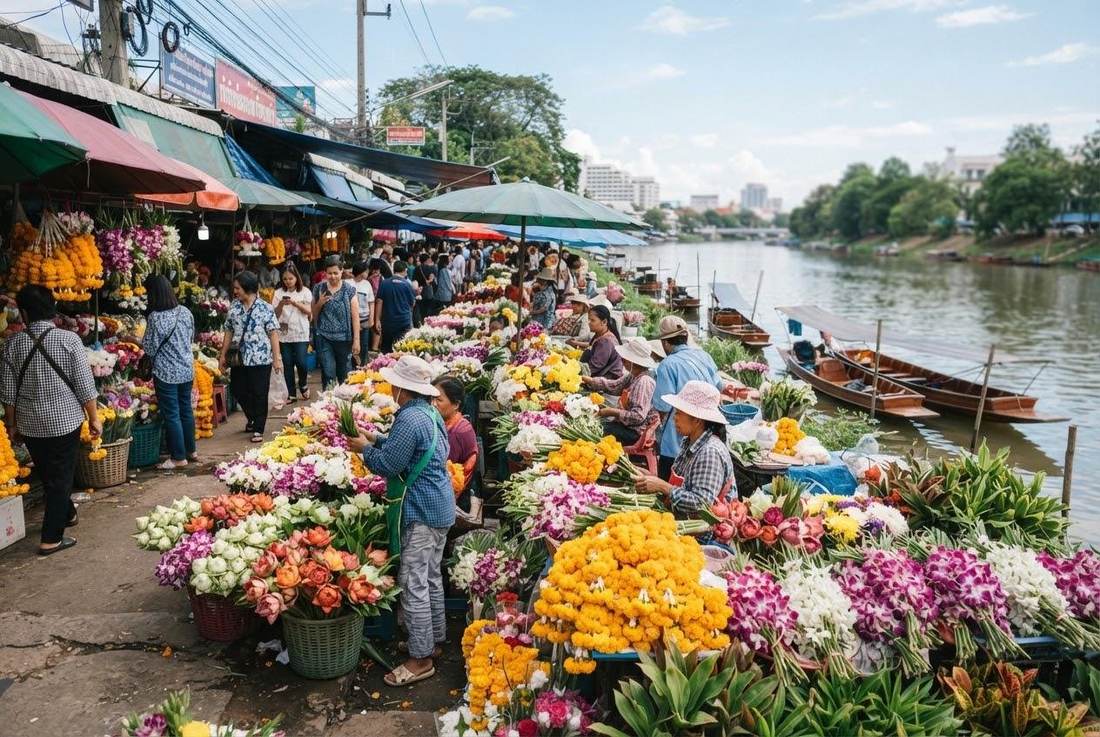
A riverside flower market next to Warorot, busiest early in the morning and late at night.
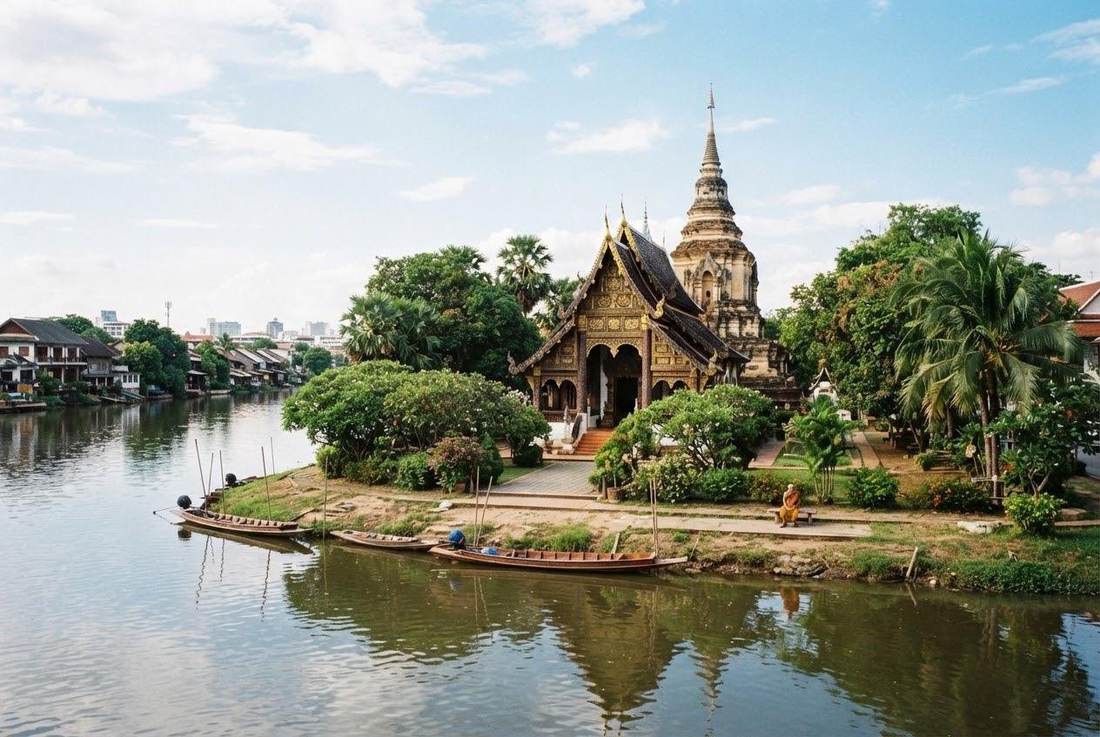
A riverside temple on the east bank with a quirky museum of old Chiang Mai photos and objects collected by a local family.
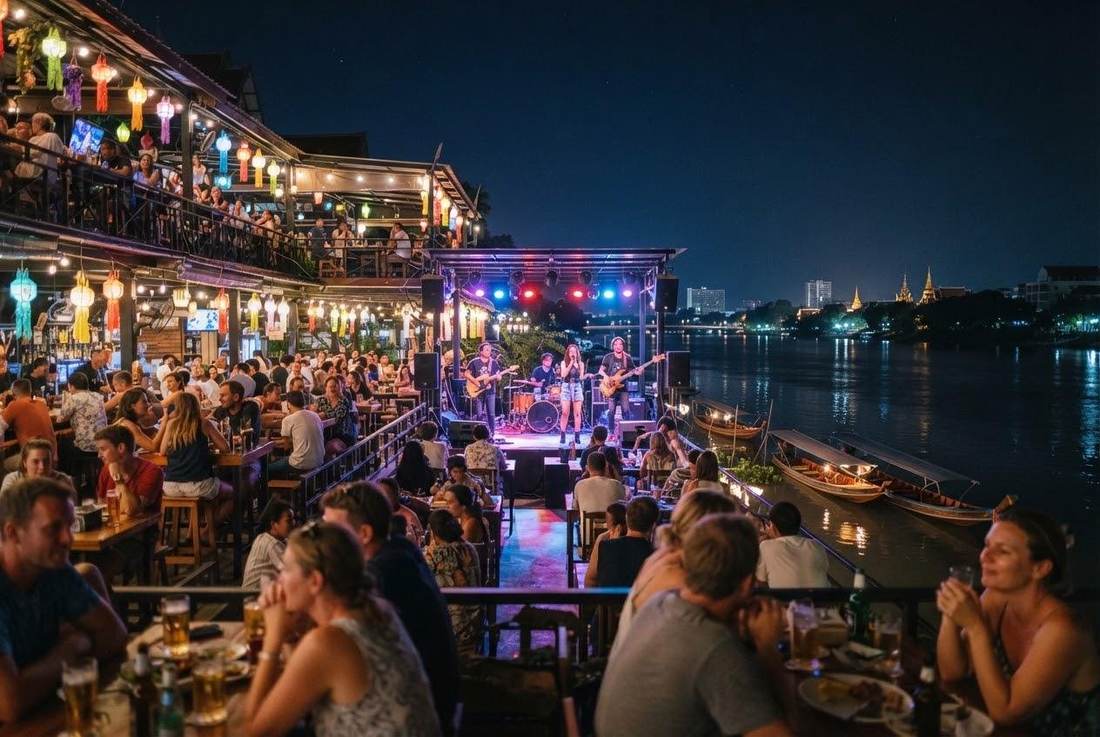
A big riverside restaurant with open-air tables and live bands most evenings.
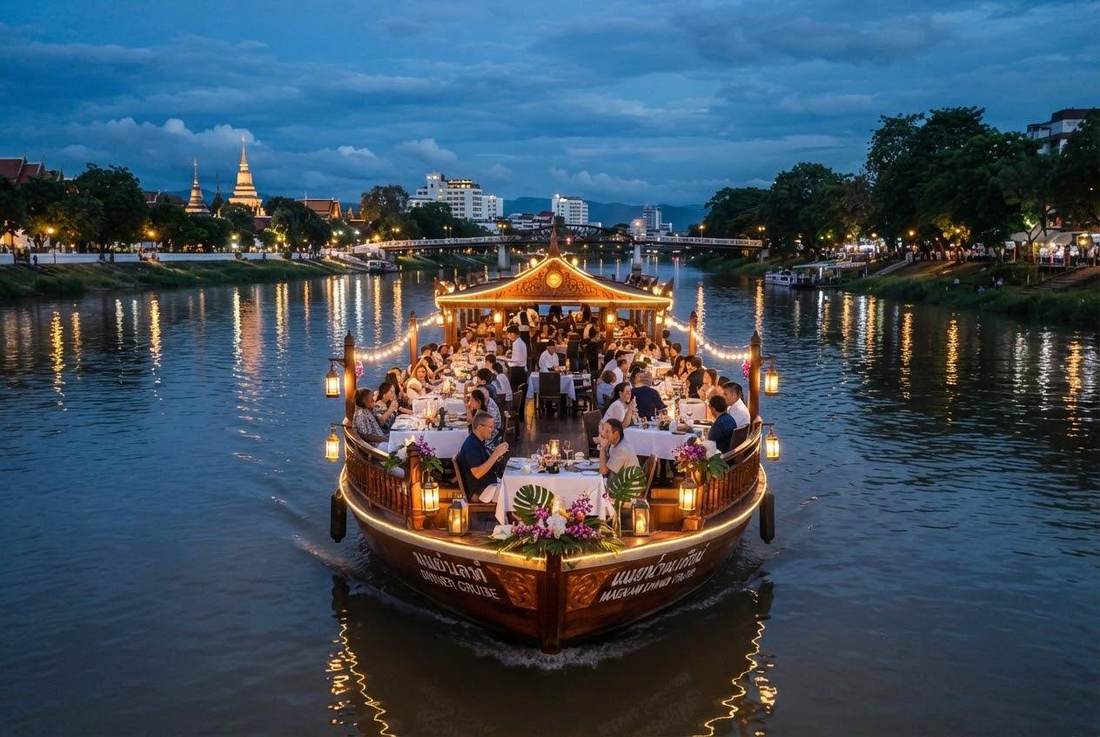
The long-running Riverside restaurant runs an evening dinner cruise on the Ping River, with food and drinks on board.
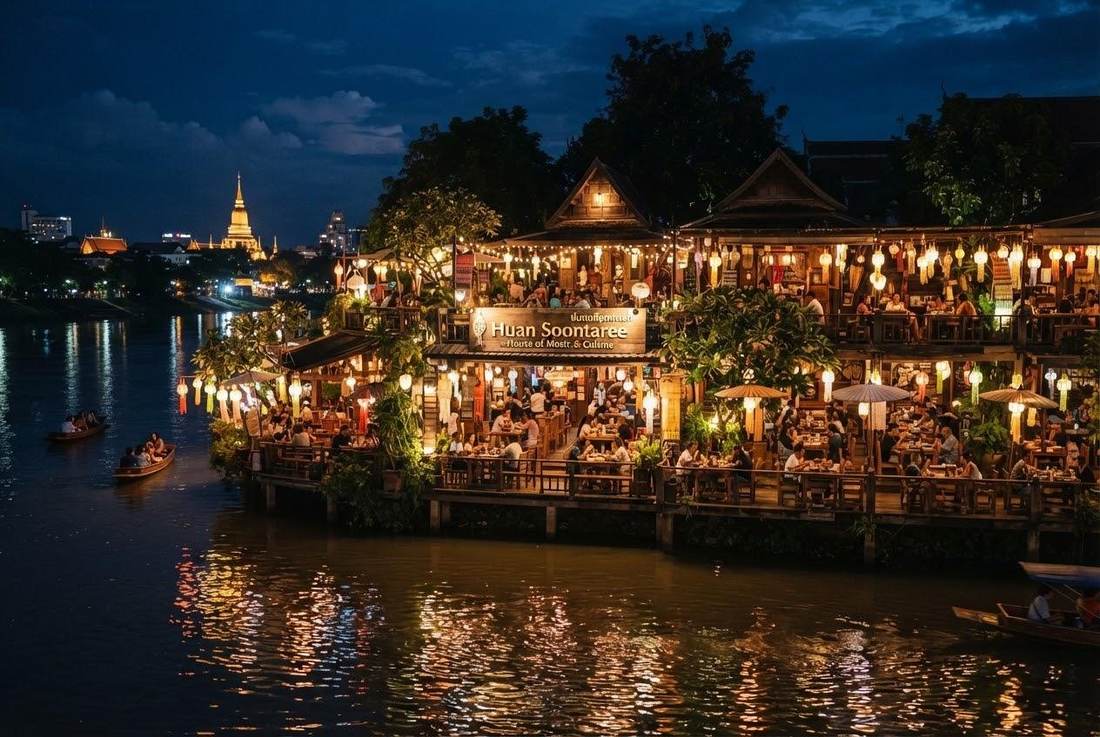
An open-air riverside restaurant run by a well-known Thai singer, who performs most nights. MICHELIN Bib Gourmand for its stuffed fish.
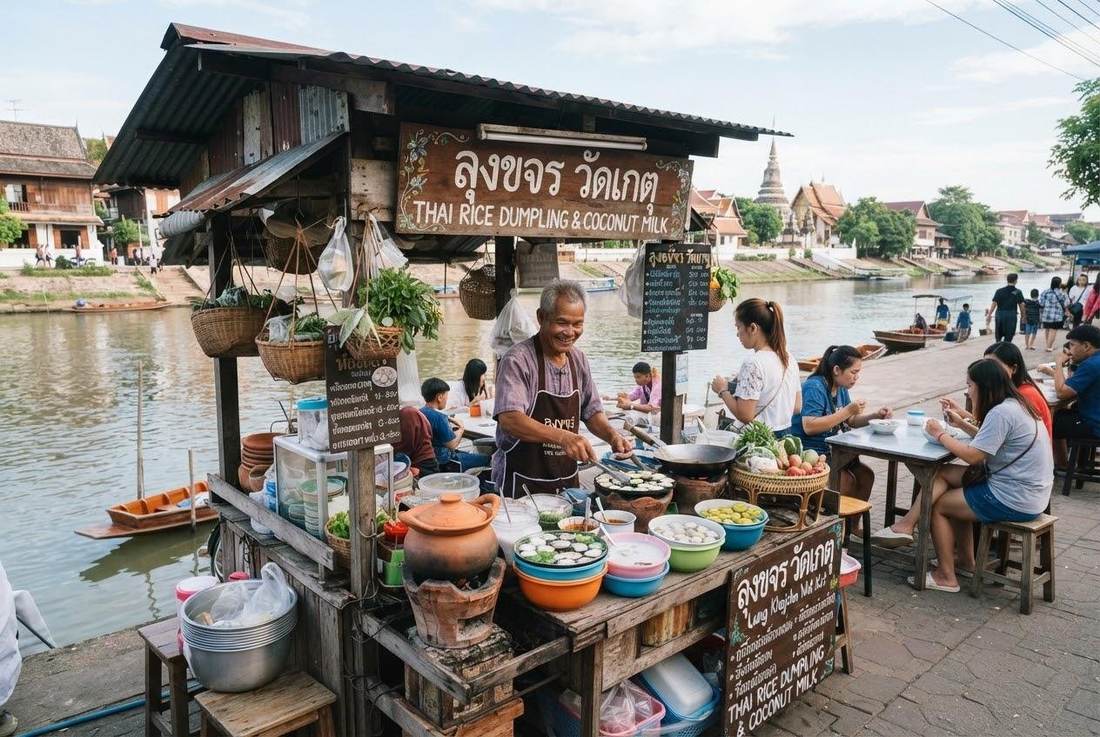
A humble morning shop famous for steamed rice dumplings with fresh coconut milk. MICHELIN Bib Gourmand.
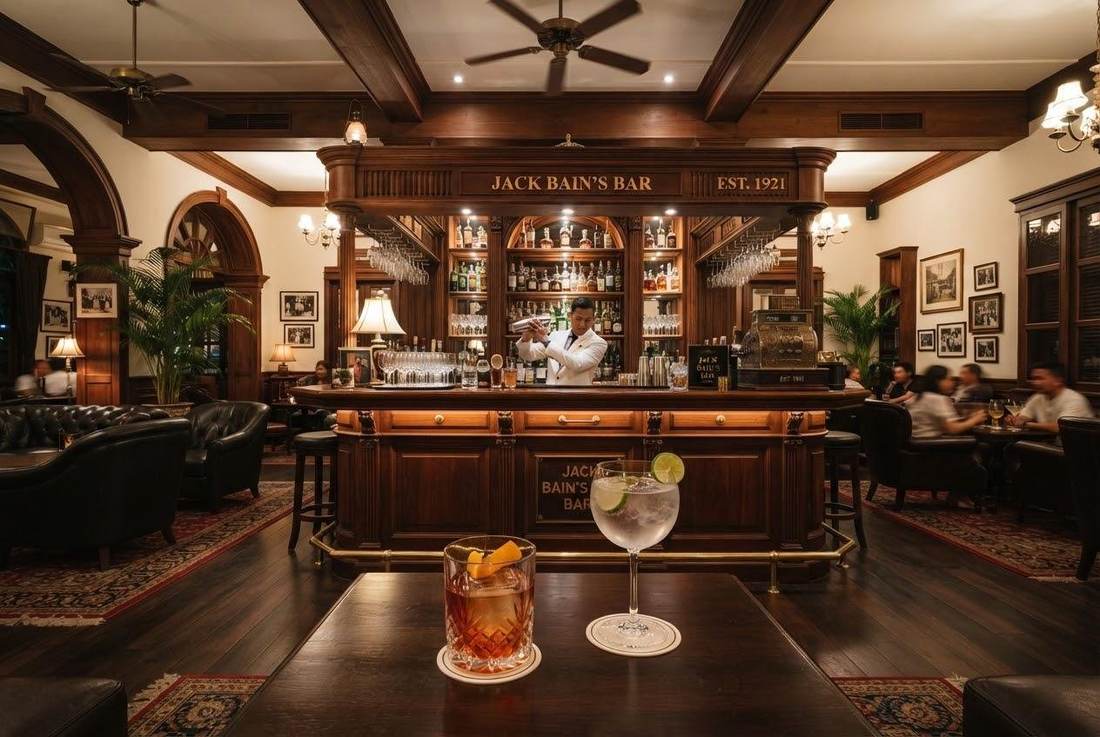
An elegant colonial-style bar inside 137 Pillars House, with classic cocktails given Thai twists.
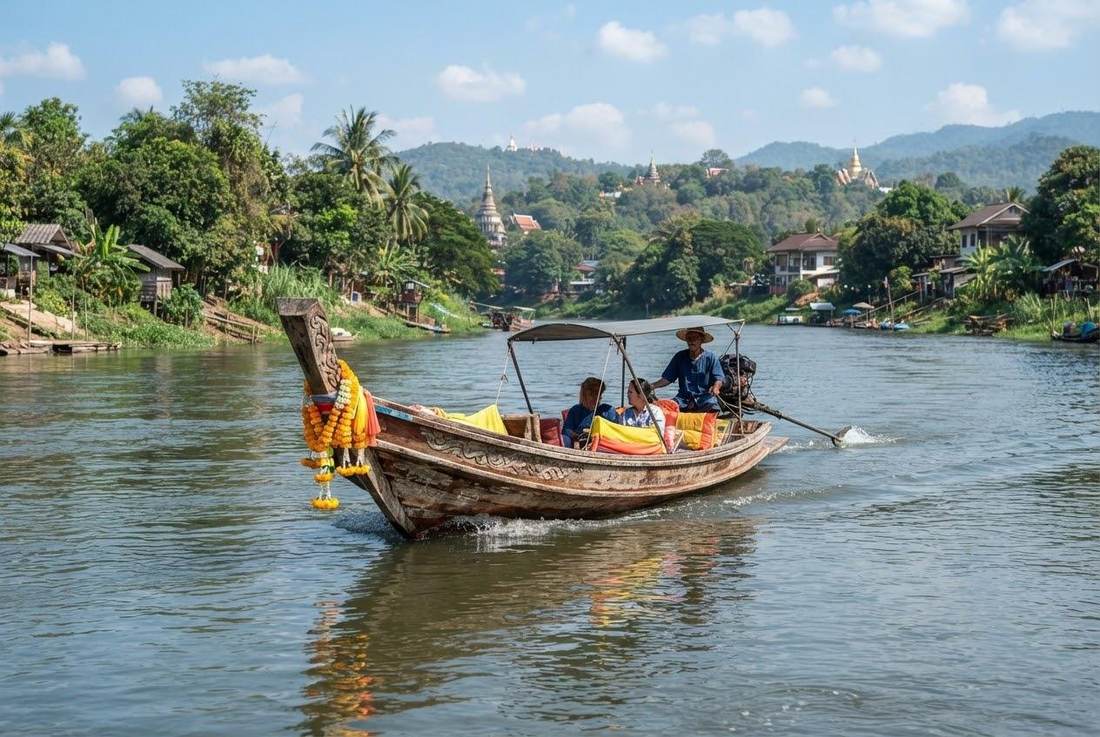
Slow boat trips along the Ping River, with daytime and dinner options, passing old houses and temples.
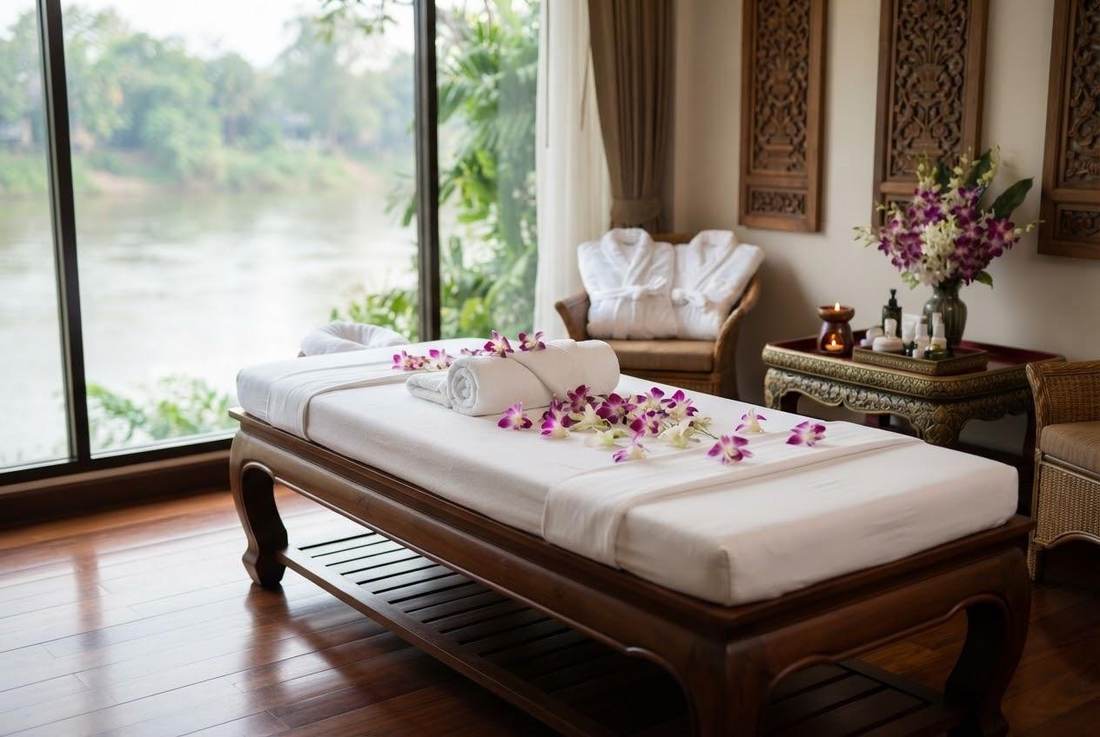
Most of the big riverside hotels, like Anantara and 137 Pillars, have excellent spas open to non-guests.
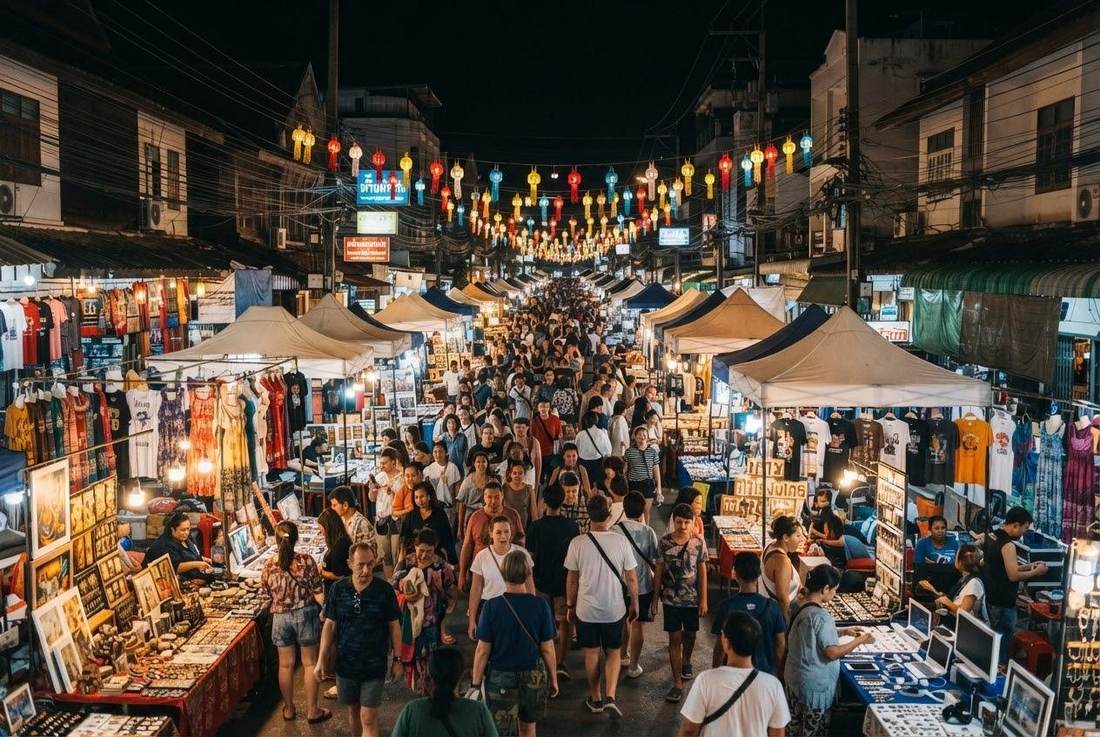
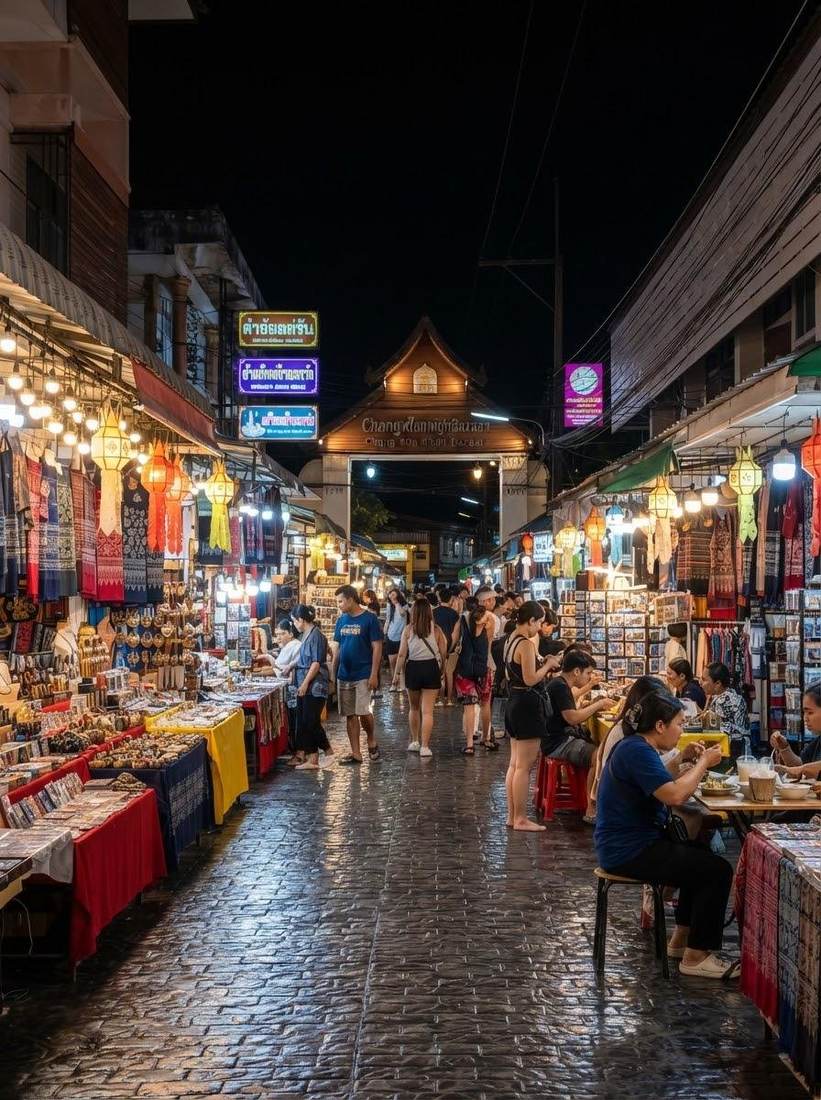
The Night Bazaar area around Chang Klan Road is Chiang Mai’s shopping and evening-market hub, halfway between the Old City and the river. Every night the pavements fill with stalls, and the food halls, bars and big hotels keep it lively. It has the widest spread of hotels in the city, from 5-star towers to cheap, clean rooms.
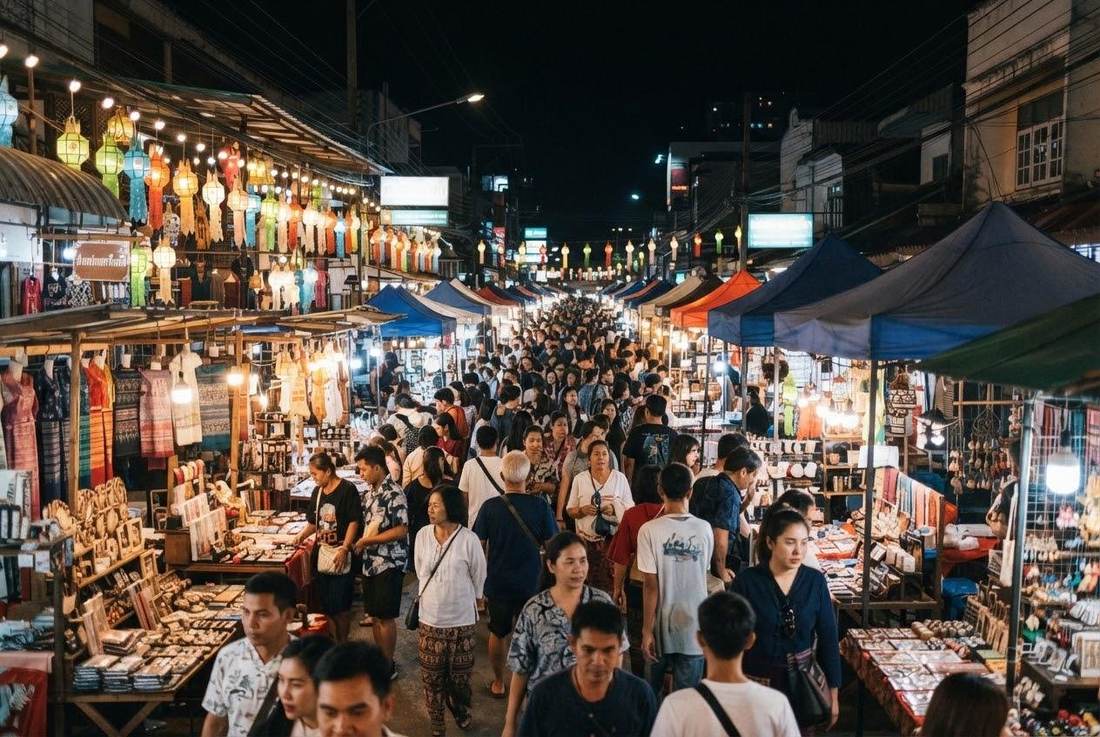
The nightly market that fills Chang Klan Road and the buildings along it with stalls selling crafts, clothes and souvenirs.
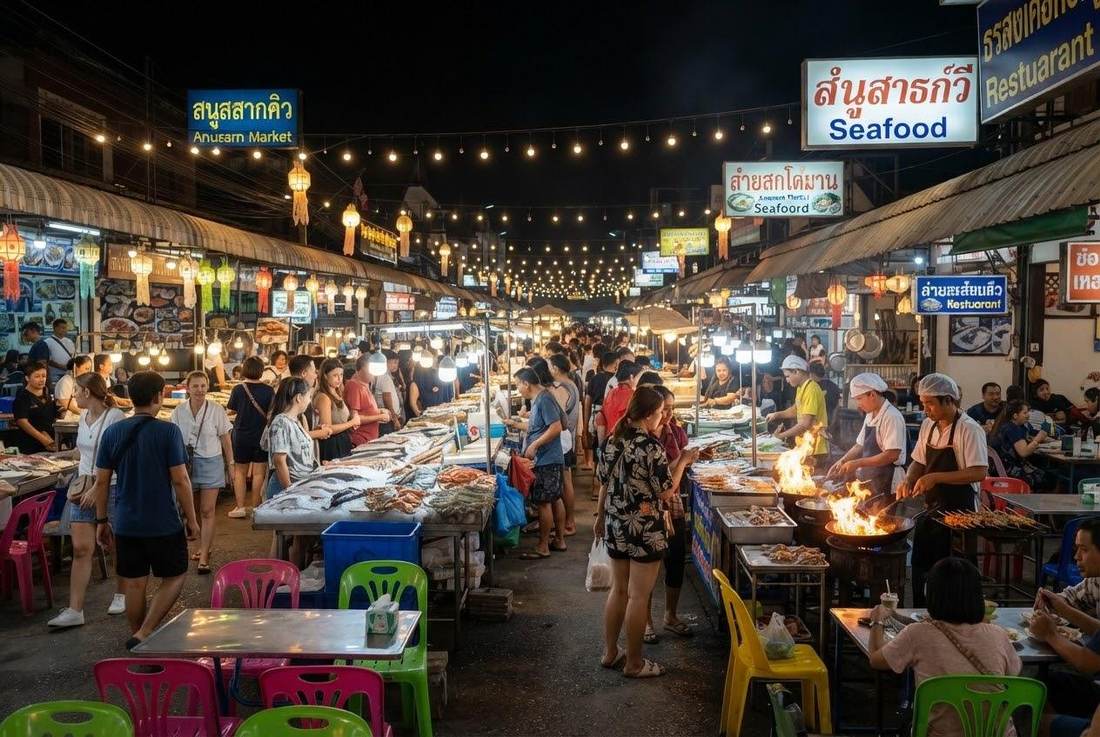
A market zone within the bazaar area, known for its food stalls and seafood restaurants.
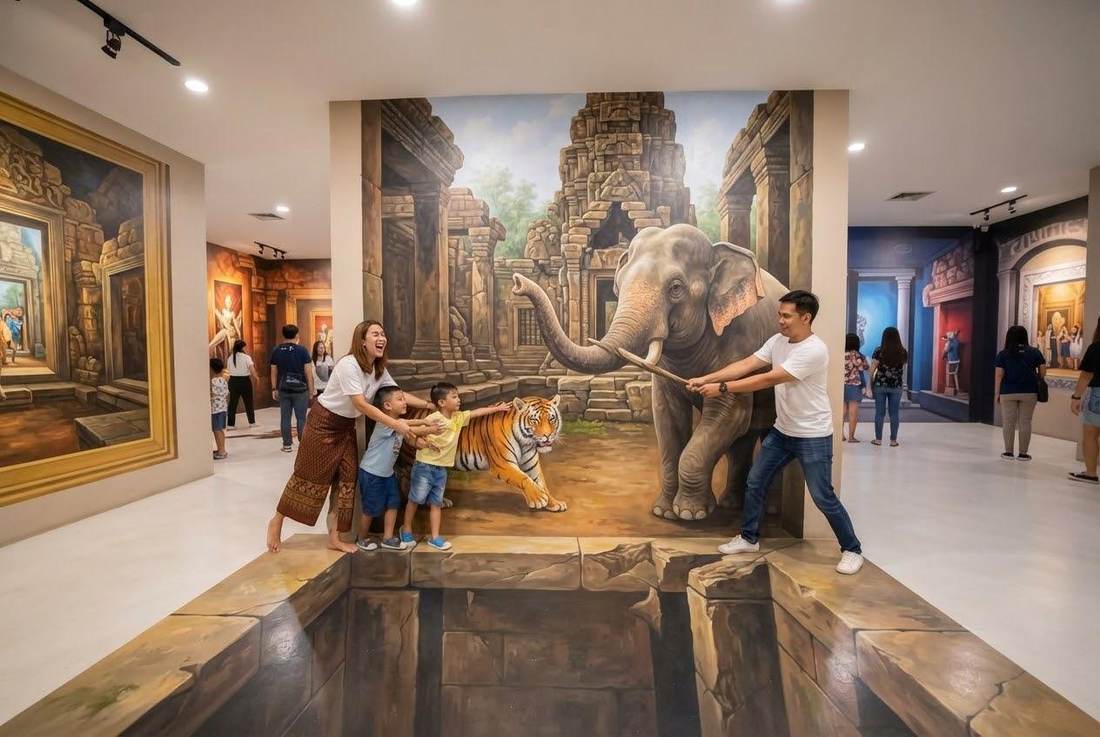
A 3D illusion art museum where you pose inside huge painted scenes for photos. A big hit with kids.
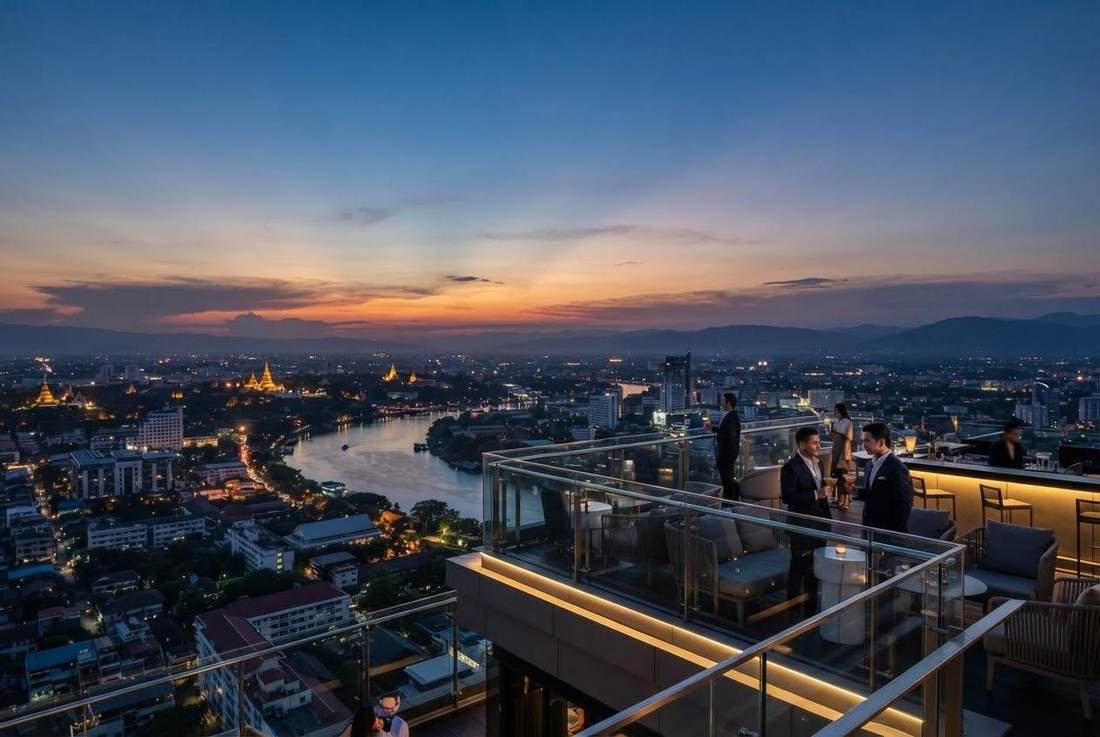
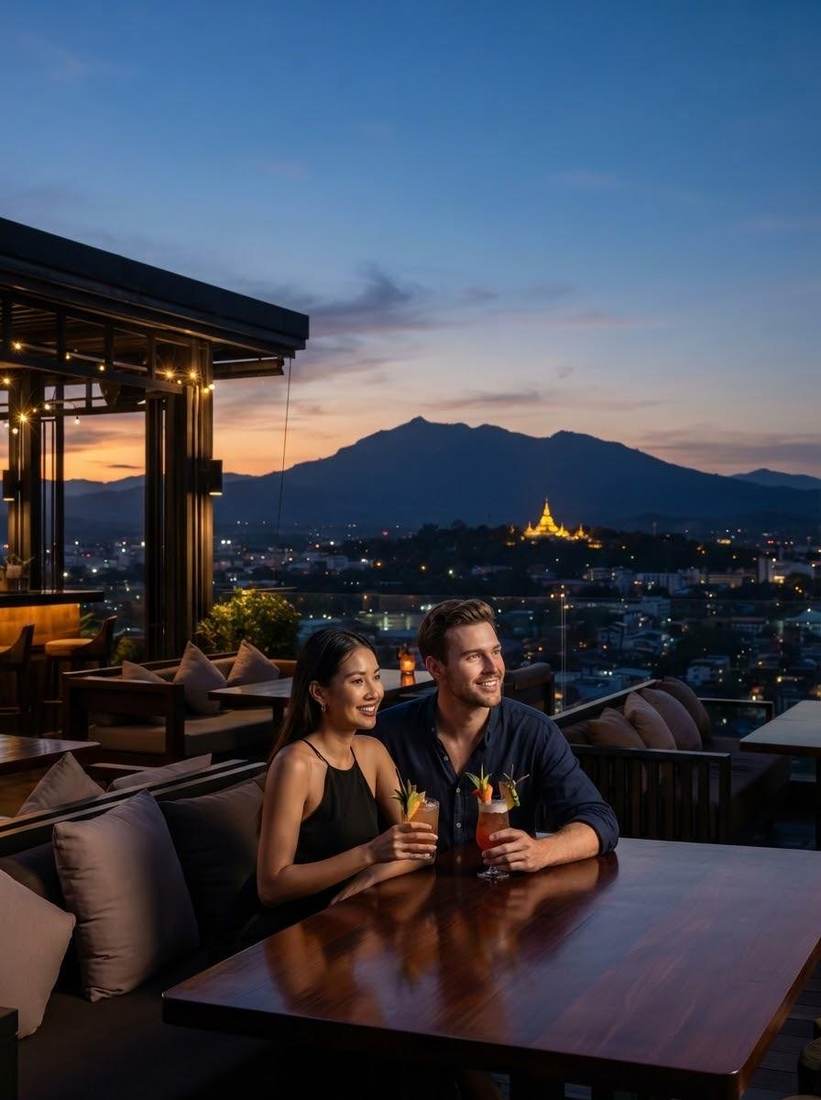
The tallest rooftop bar in Chiang Mai, on top of the Meliá hotel, with 360-degree views over the city and river.
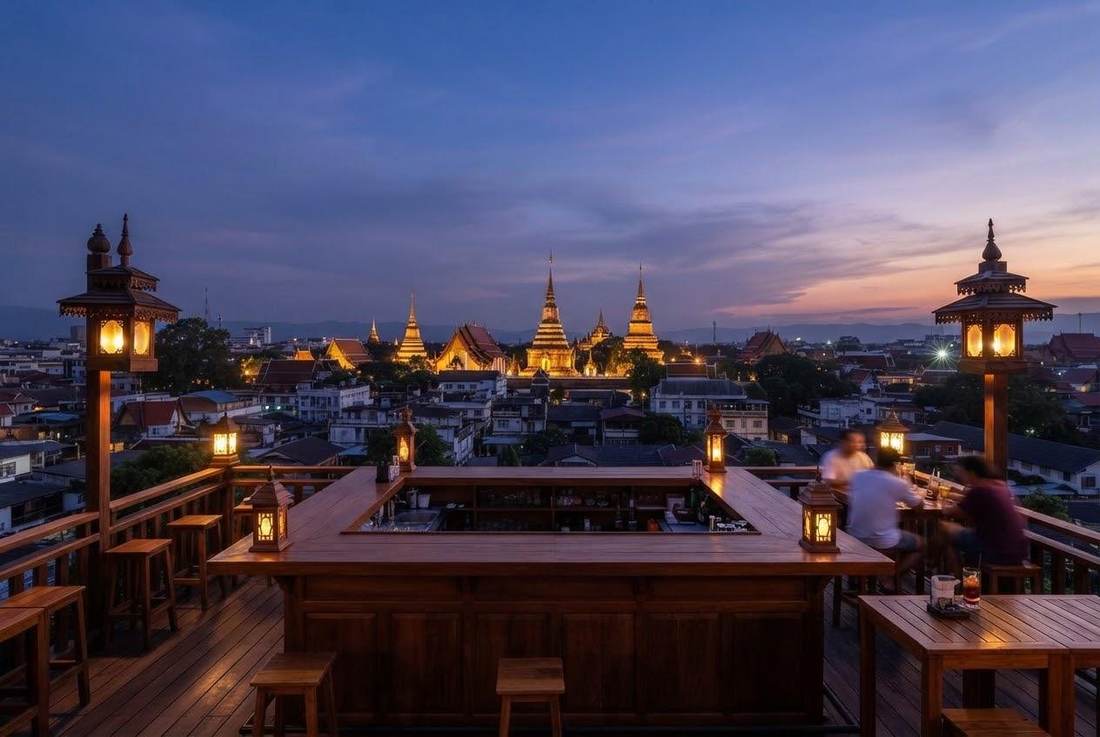
A stylish rooftop bar at the InterContinental The Mae Ping, with cocktails and views of the old town.
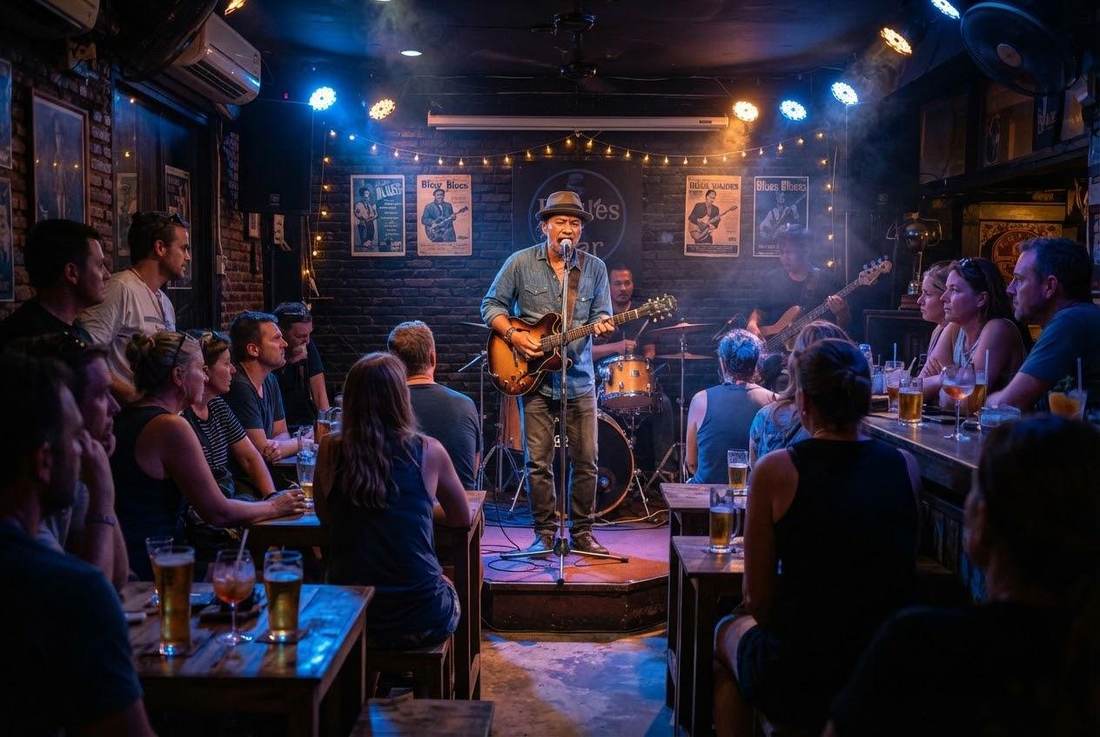
A relaxed live blues and rock bar in the bazaar area, with bands most evenings and an easy-going crowd.
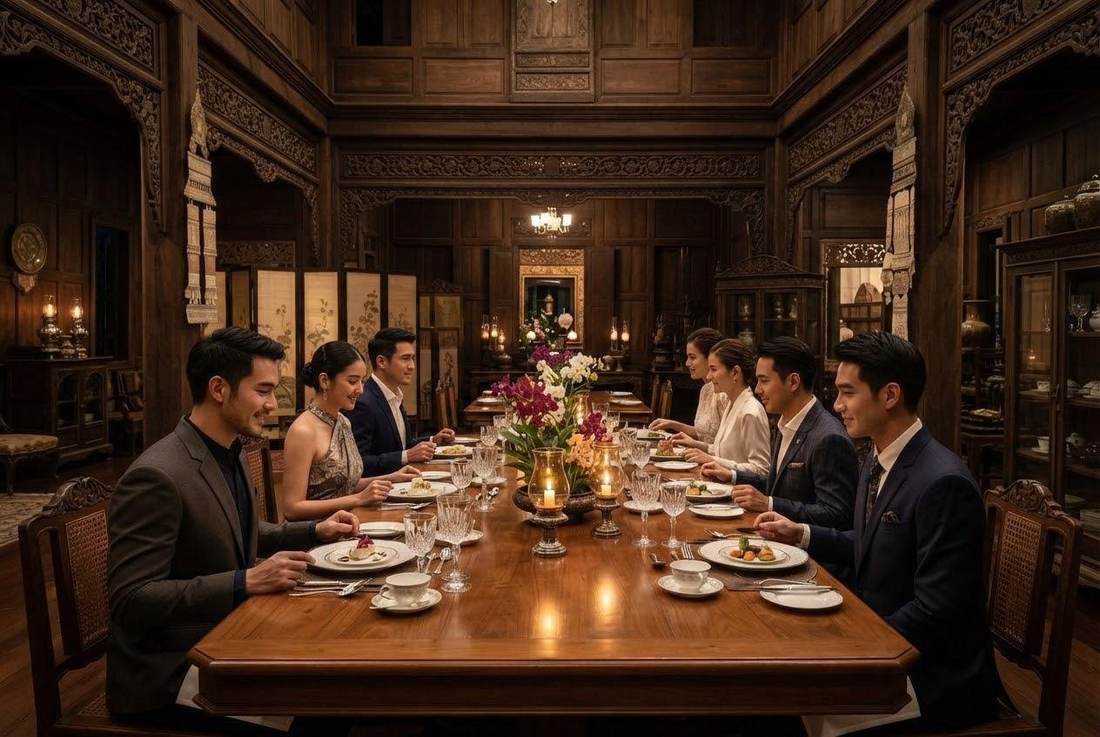
Refined northern Thai cooking in a beautiful 1880s mansion on Tha Phae Road. Recommended in the MICHELIN Guide.
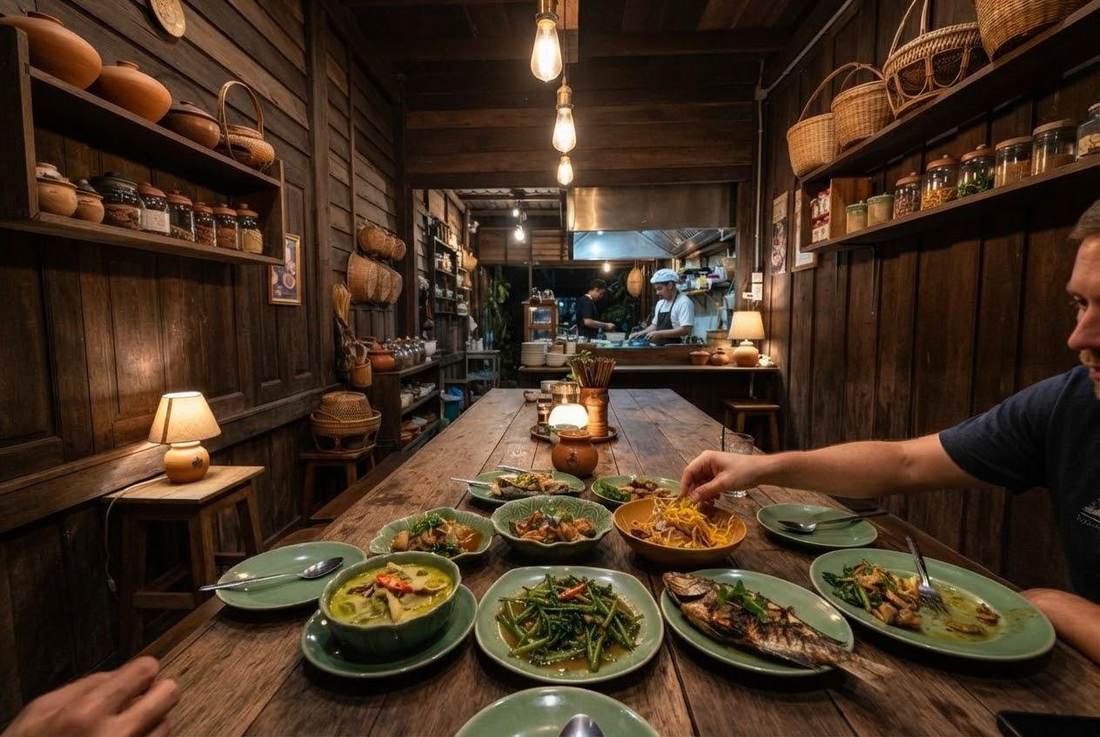
A tiny, wood-lined restaurant with a thoughtful take on Thai food and only around 15 seats. MICHELIN Bib Gourmand.
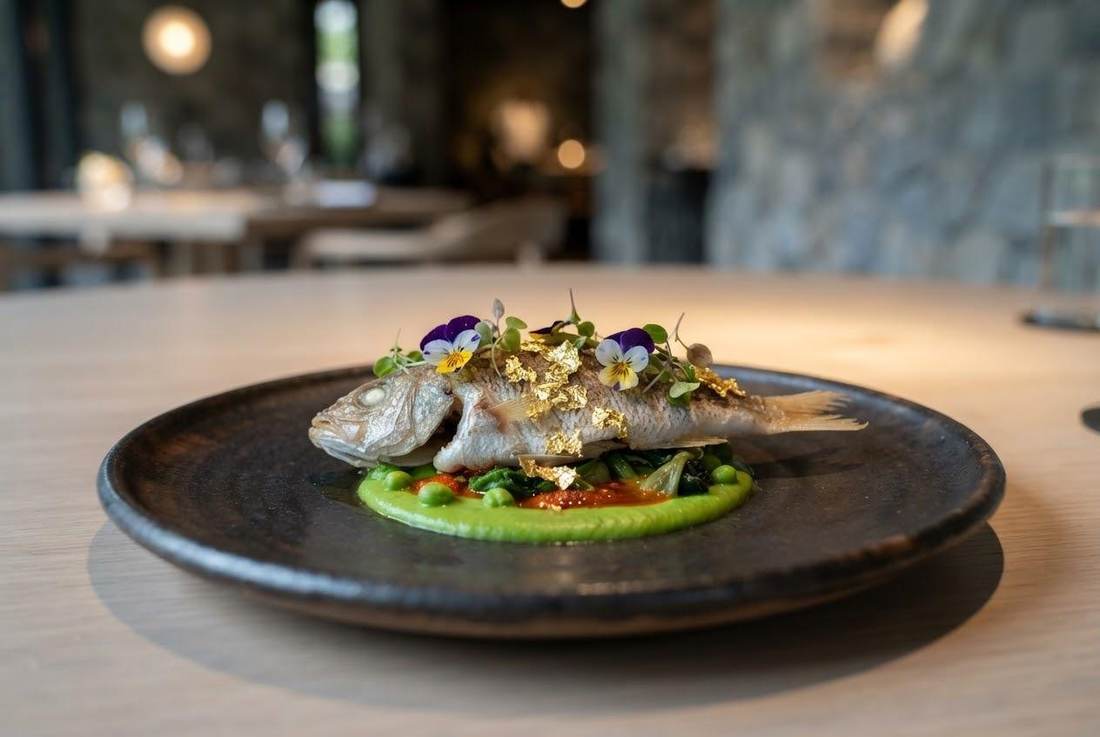
Creative European tasting menus using local Thai ingredients, inside the InterContinental. Recommended in the MICHELIN Guide.
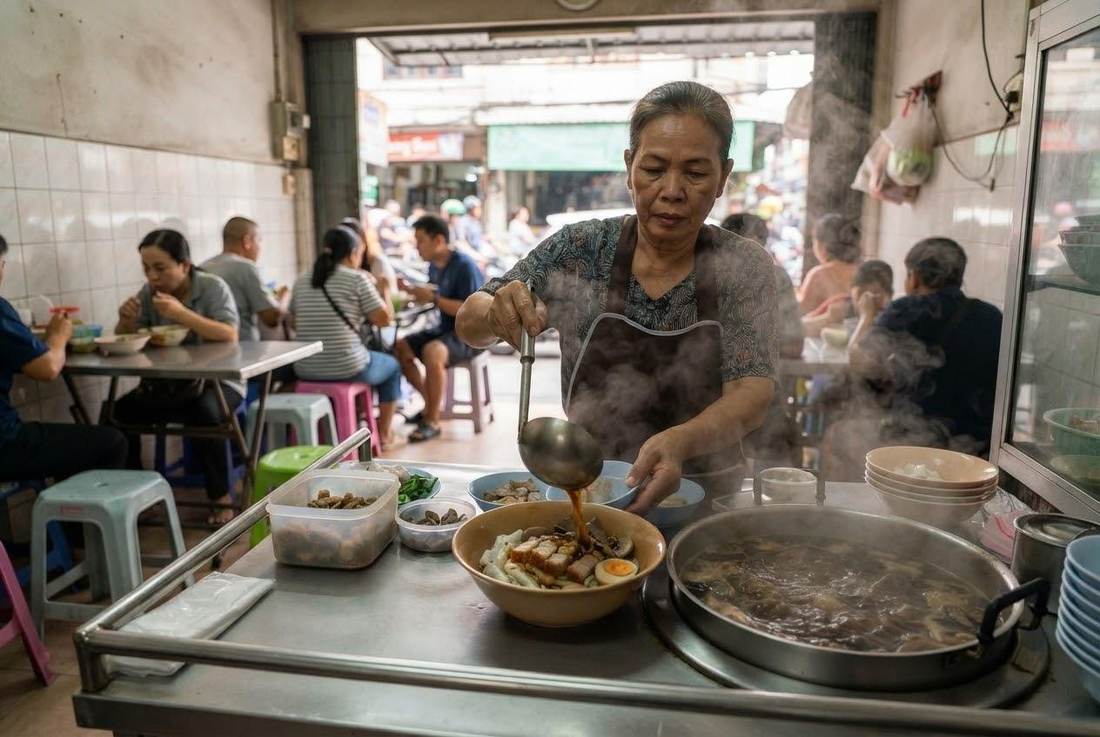
A lunchtime noodle shop serving peppery guay jub soup with northern sausage and crispy pork. MICHELIN Bib Gourmand.
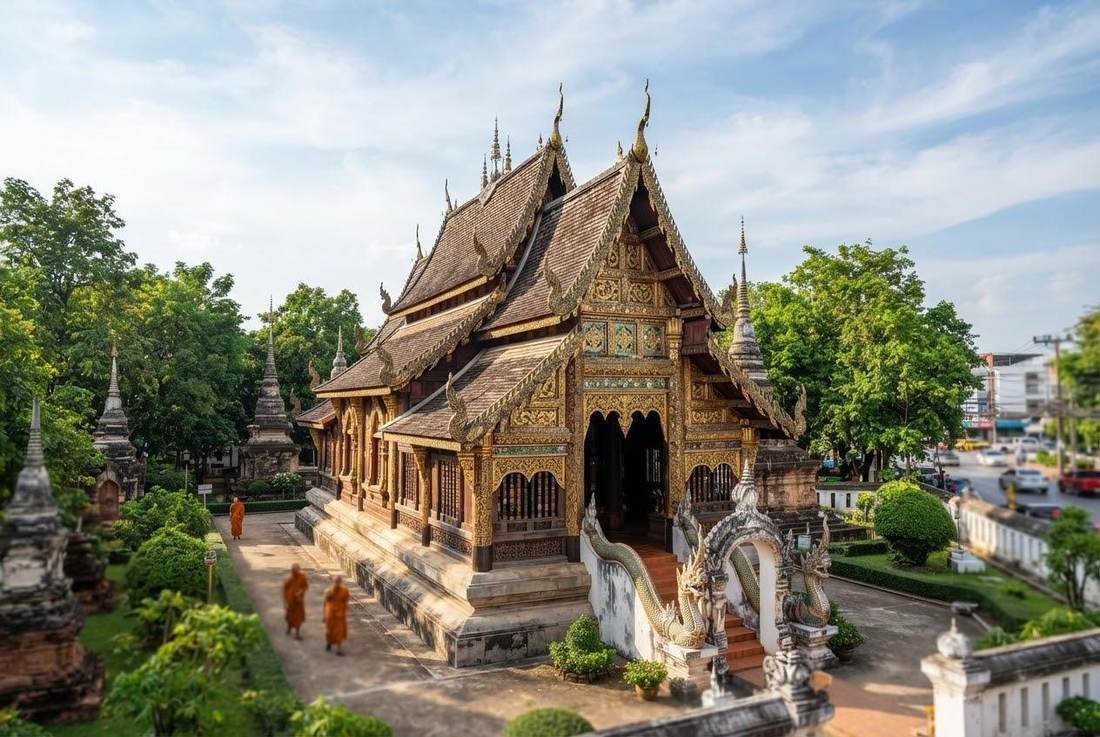
A striking temple on Tha Phae Road between the Old City and the bazaar, with an ornate teak hall.
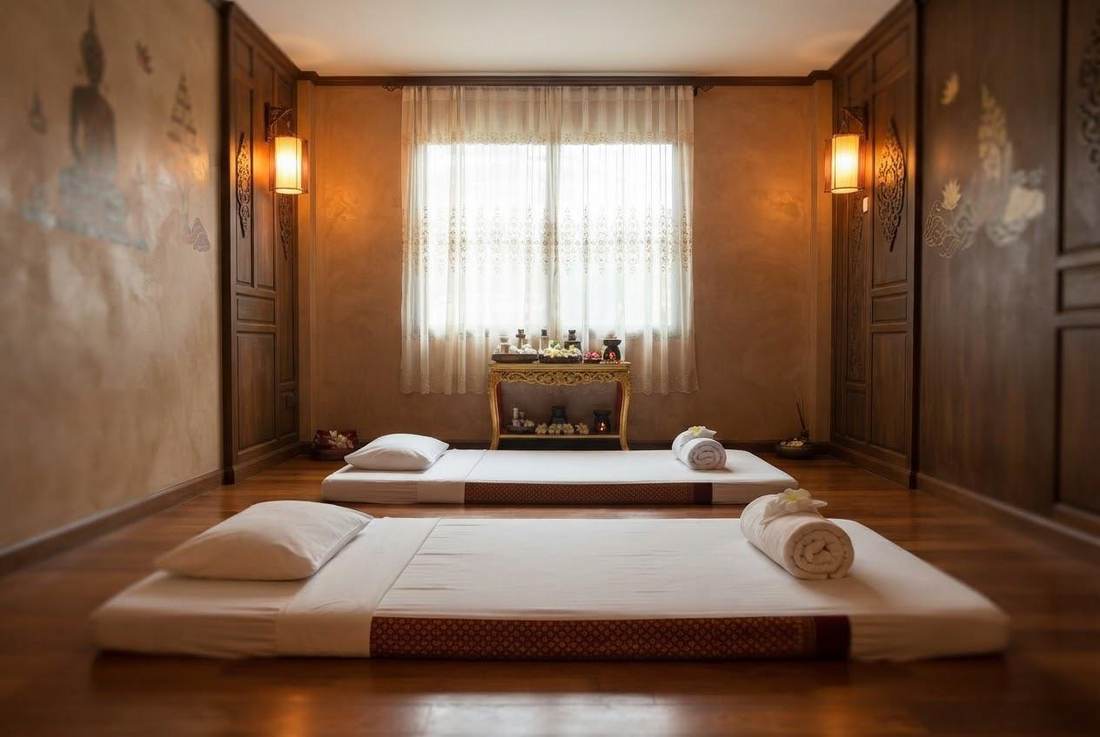
A well-reviewed day spa near the Night Bazaar, handy after a long day of walking.
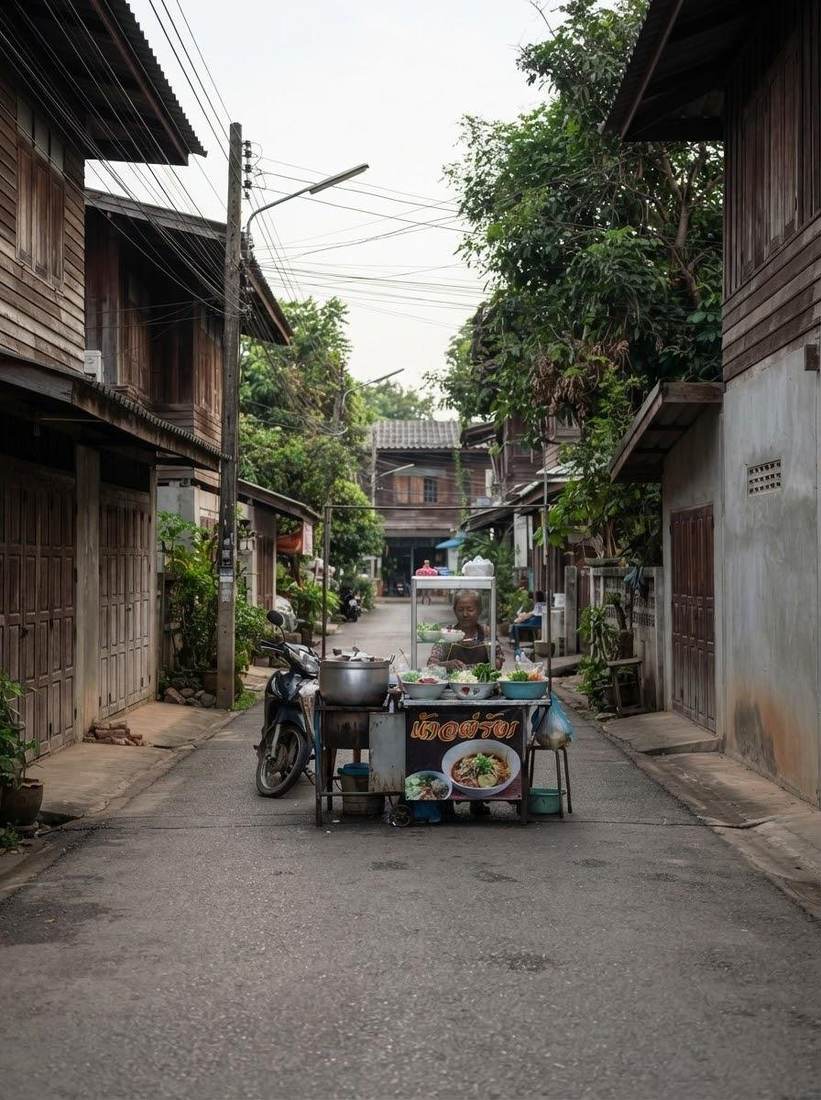
Santitham is a local neighbourhood just north-west of the Old City, between Chang Phueak Gate and Nimman. It’s where many long-stay visitors and students live: cheap and cheerful restaurants, small cafés, markets and guesthouses on quiet lanes, with some of the city’s best khao soi a short walk away. Prices are lower than the Old City or Nimman.
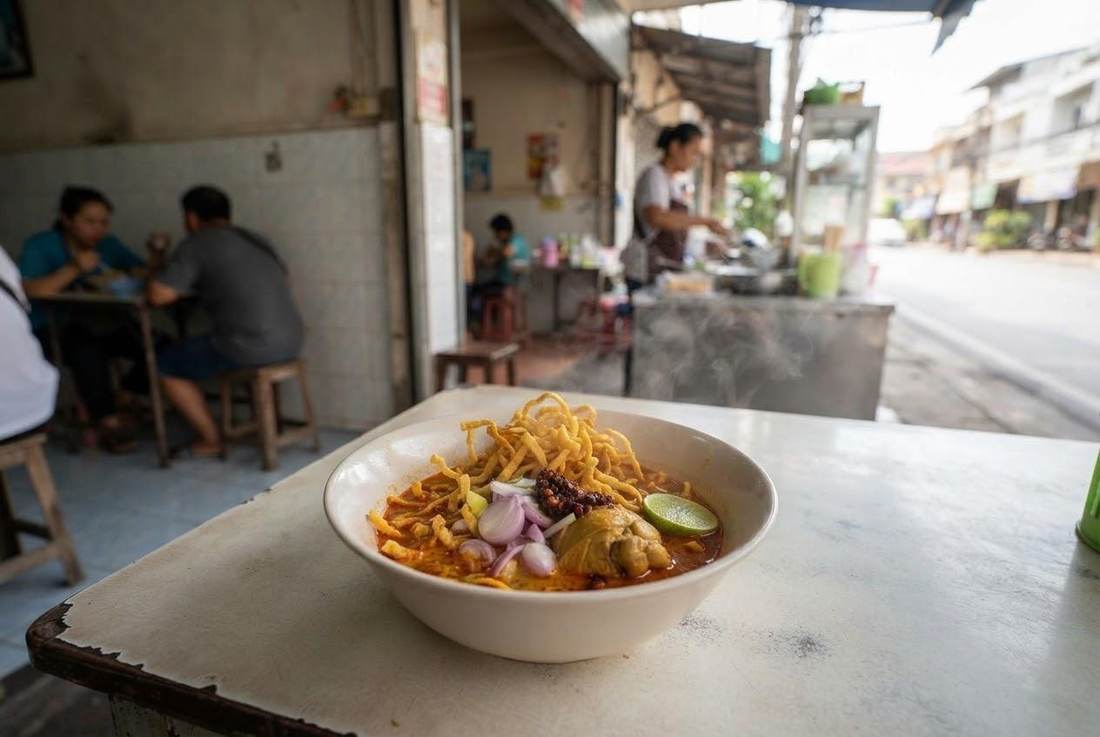
One of the city’s most loved khao soi shops, with rich, gently spicy curry noodles. MICHELIN Bib Gourmand.
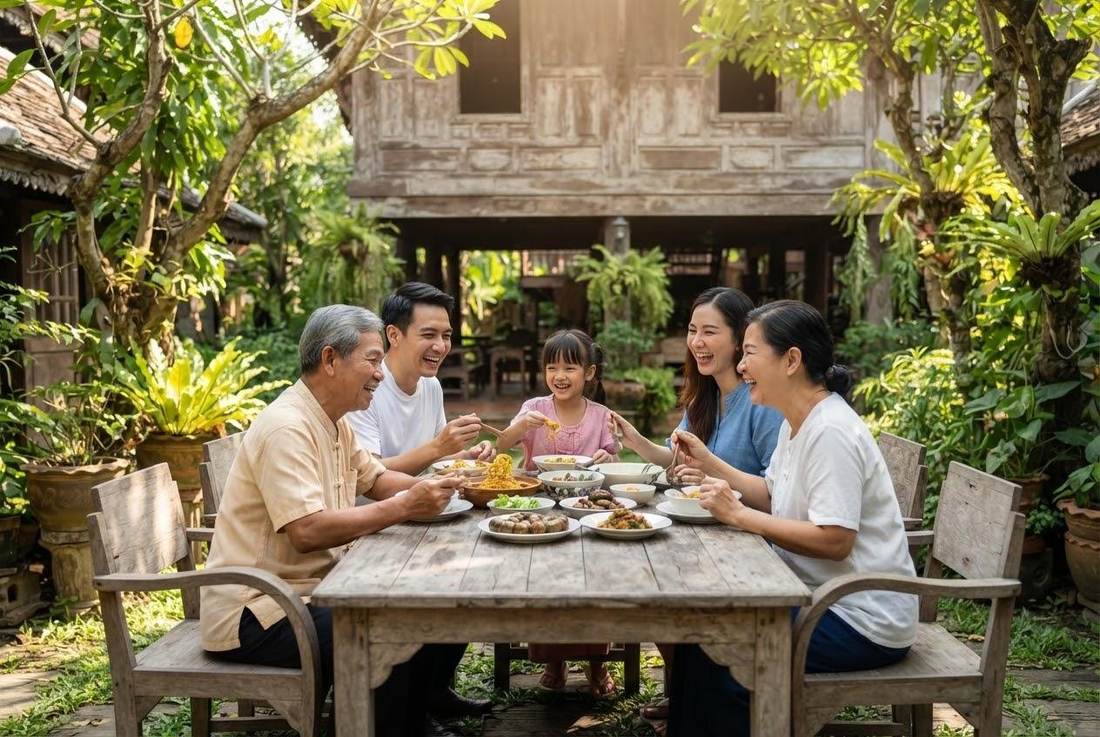
A Lanna-style wooden house serving northern Thai dips, curries and herby soups in a garden setting. MICHELIN Bib Gourmand.
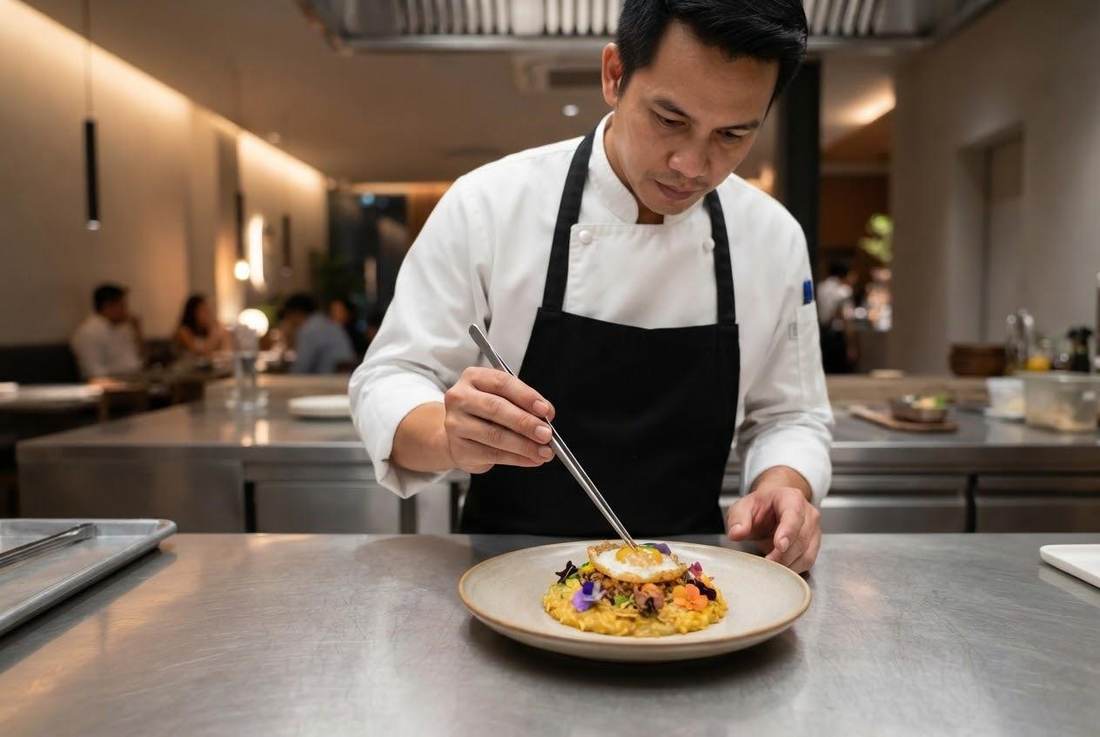
Modern Thai cooking with Malaysian and Bruneian touches, in a tiny lunch-only restaurant off Huay Kaew Road. Recommended in the MICHELIN Guide.
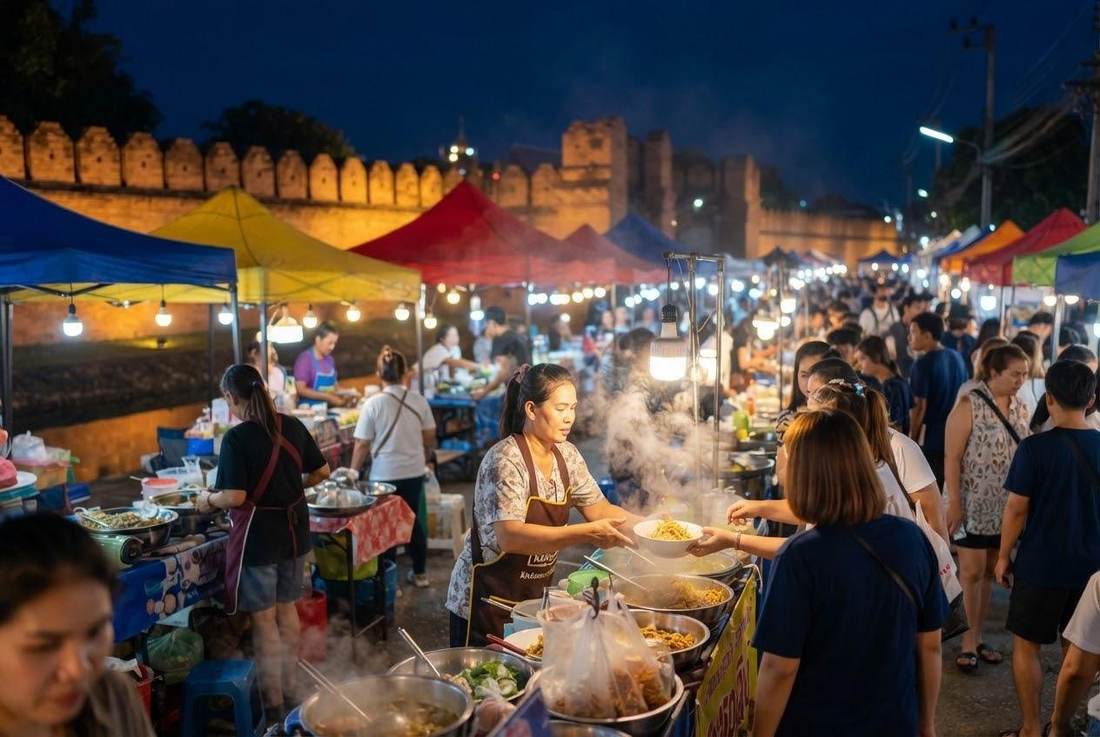
Evening street-food stalls just outside the north gate of the moat, famous for khao kha moo (slow-braised pork leg on rice).
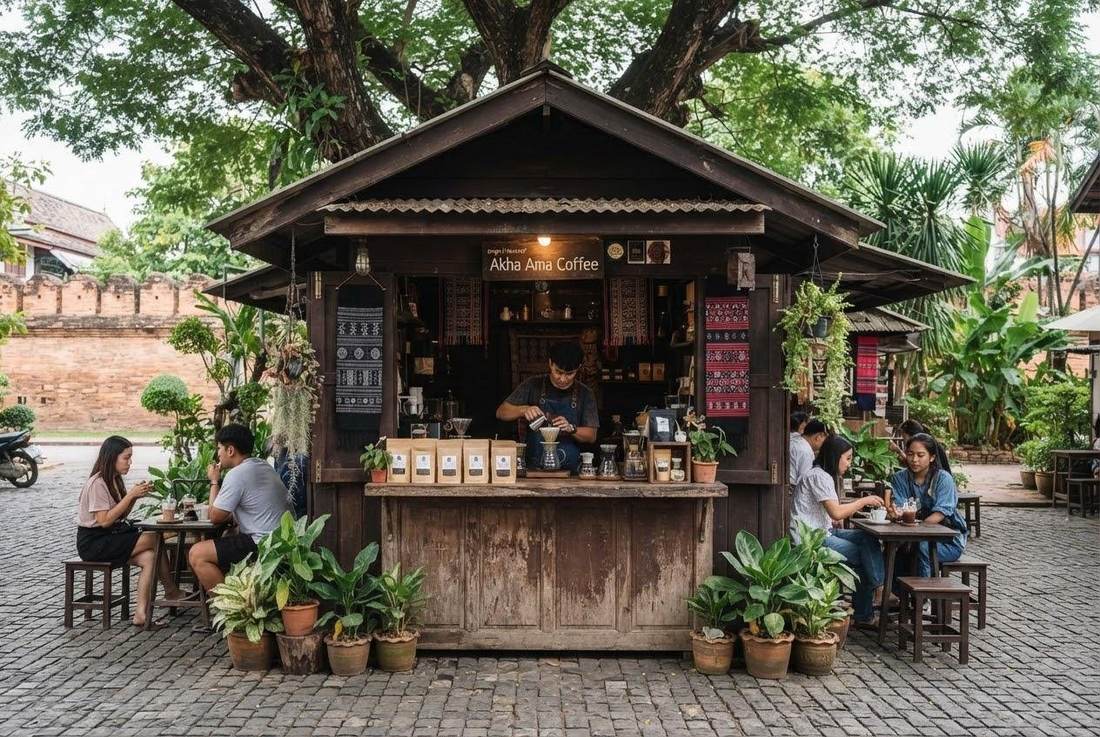
The original café of the hill-tribe-farmer coffee brand, on a quiet Santitham street.
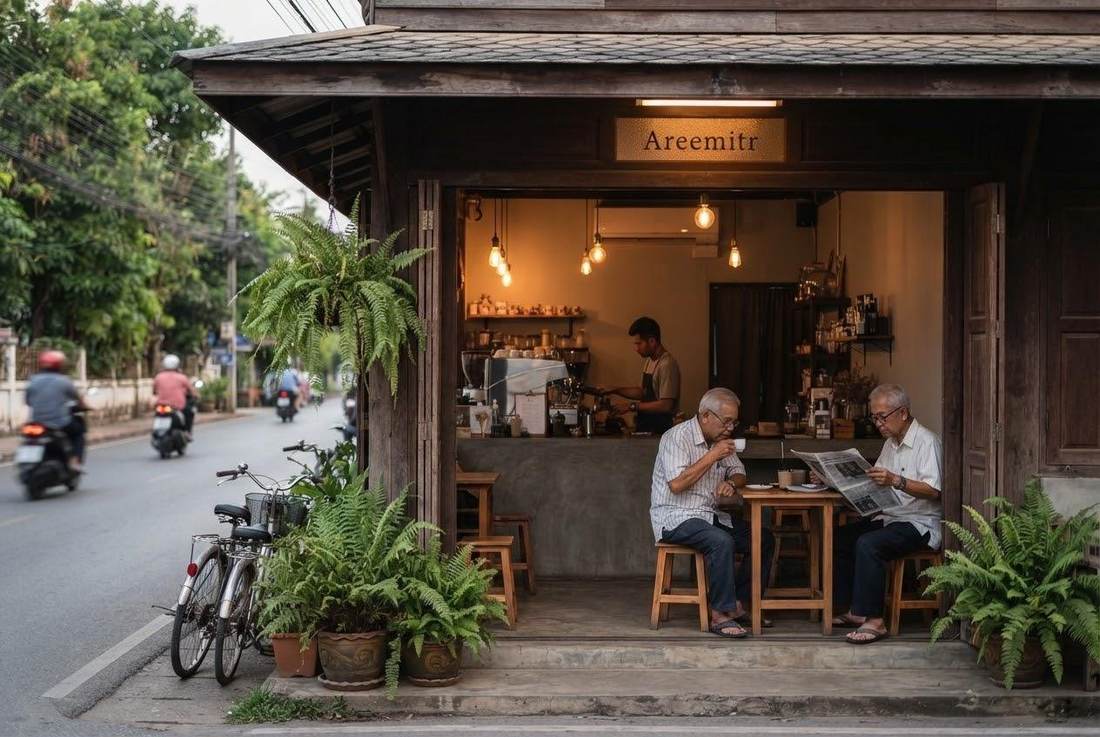
A small, friendly coffee shop in a family garden, loved by locals for generous lattes.
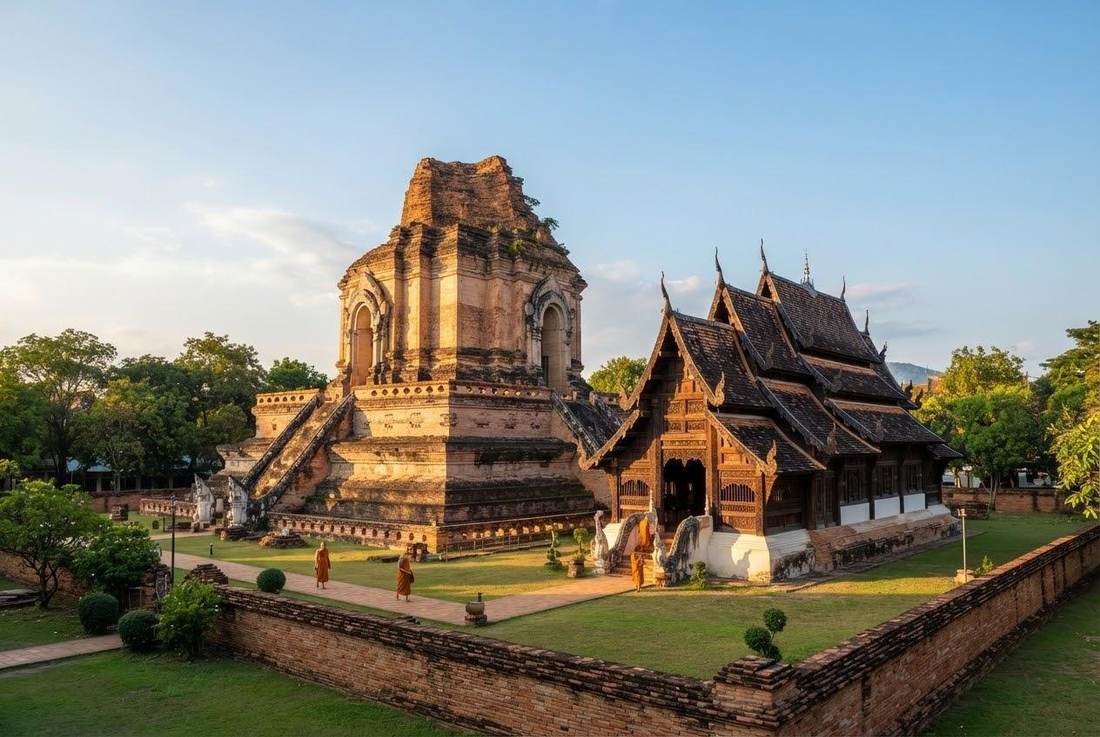
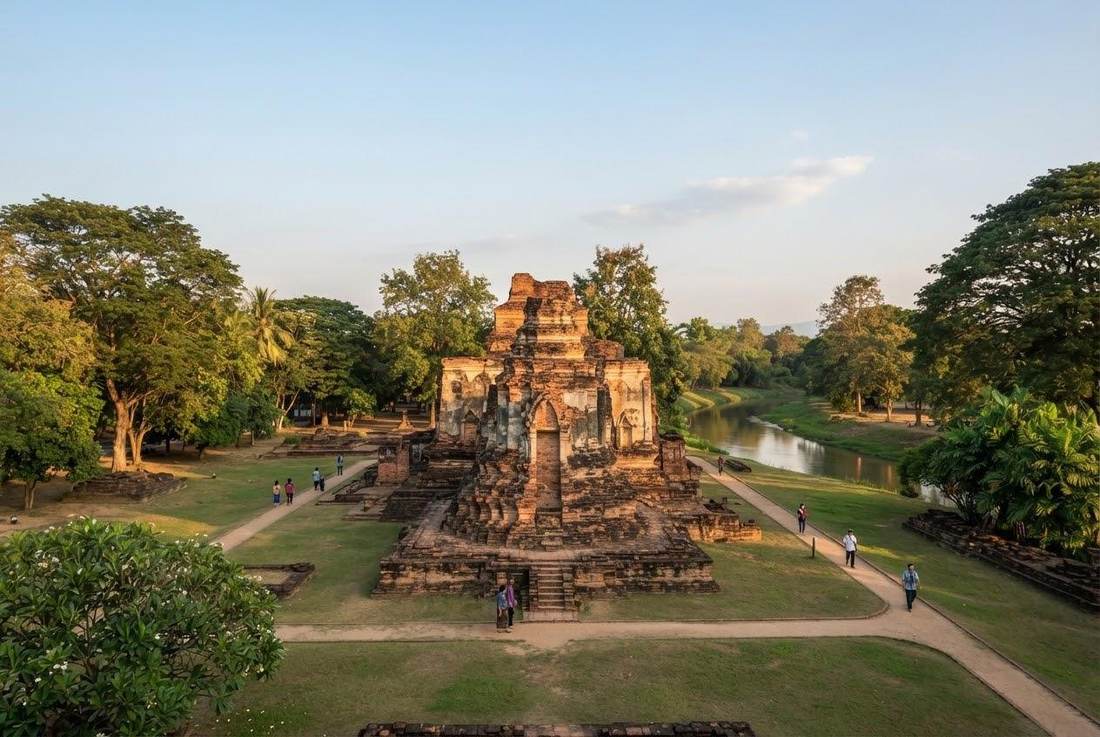
A beautiful temple just outside the north moat, with a huge old brick chedi and a dark teak hall.
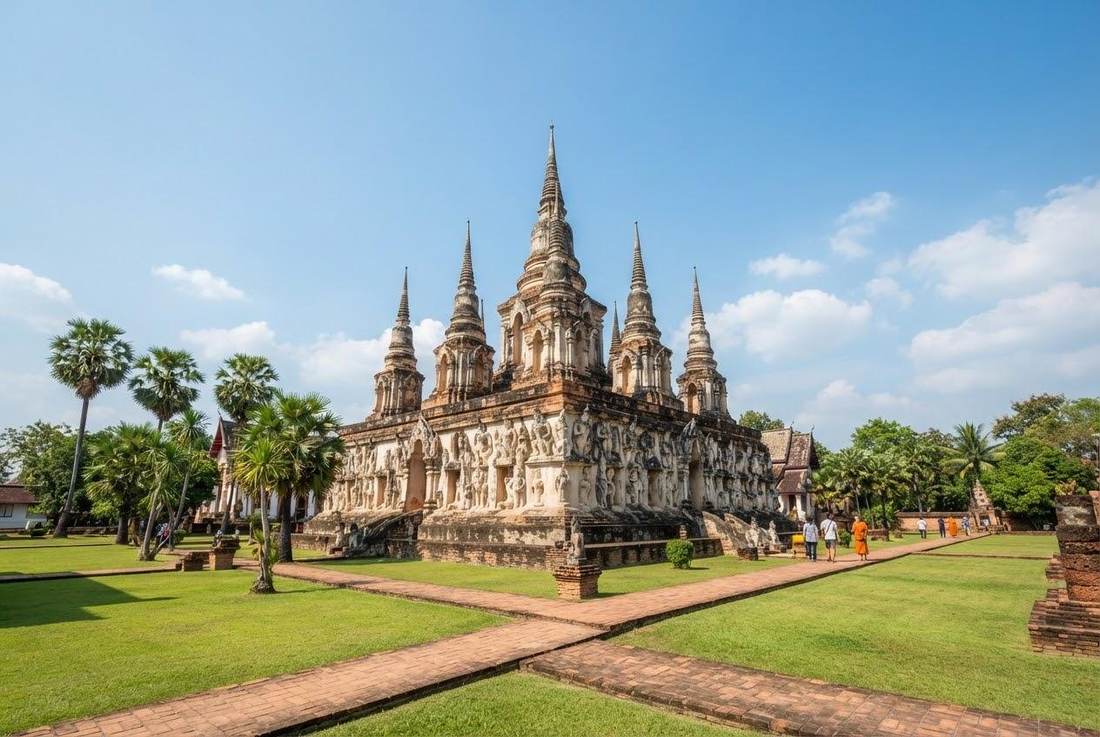
A 15th-century temple with seven spires, a few minutes’ ride north-west, set among big shady trees.
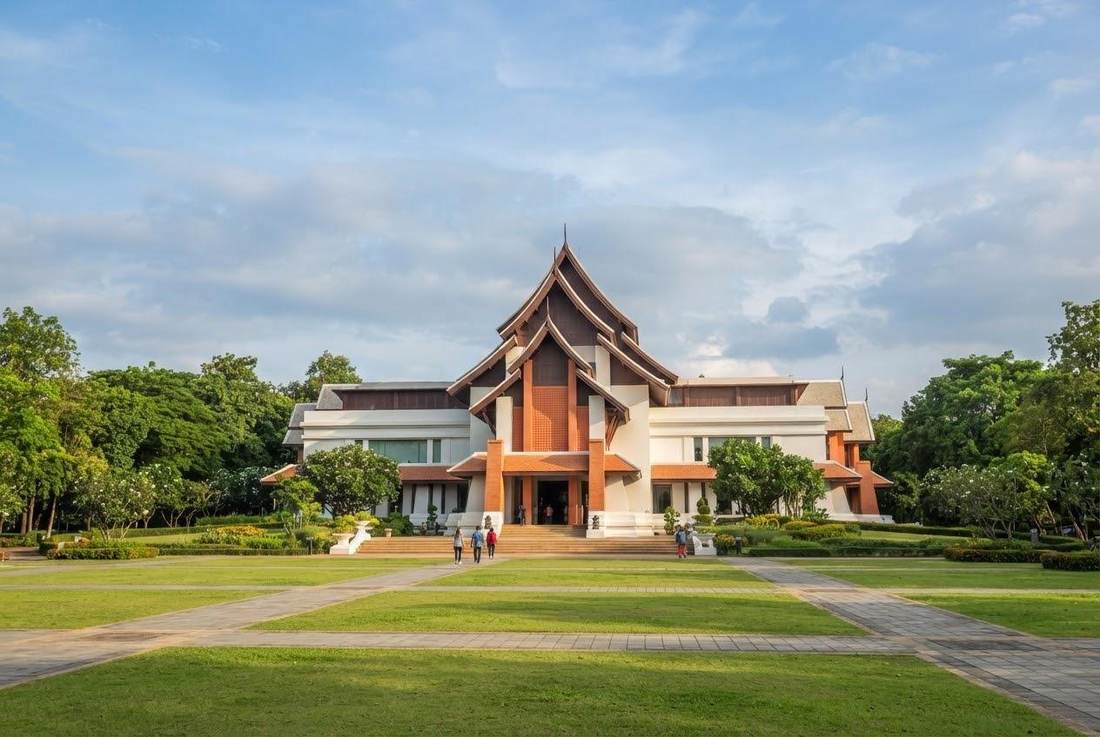
The region’s main history museum, near Wat Chet Yot, telling the story of the Lanna kingdom.
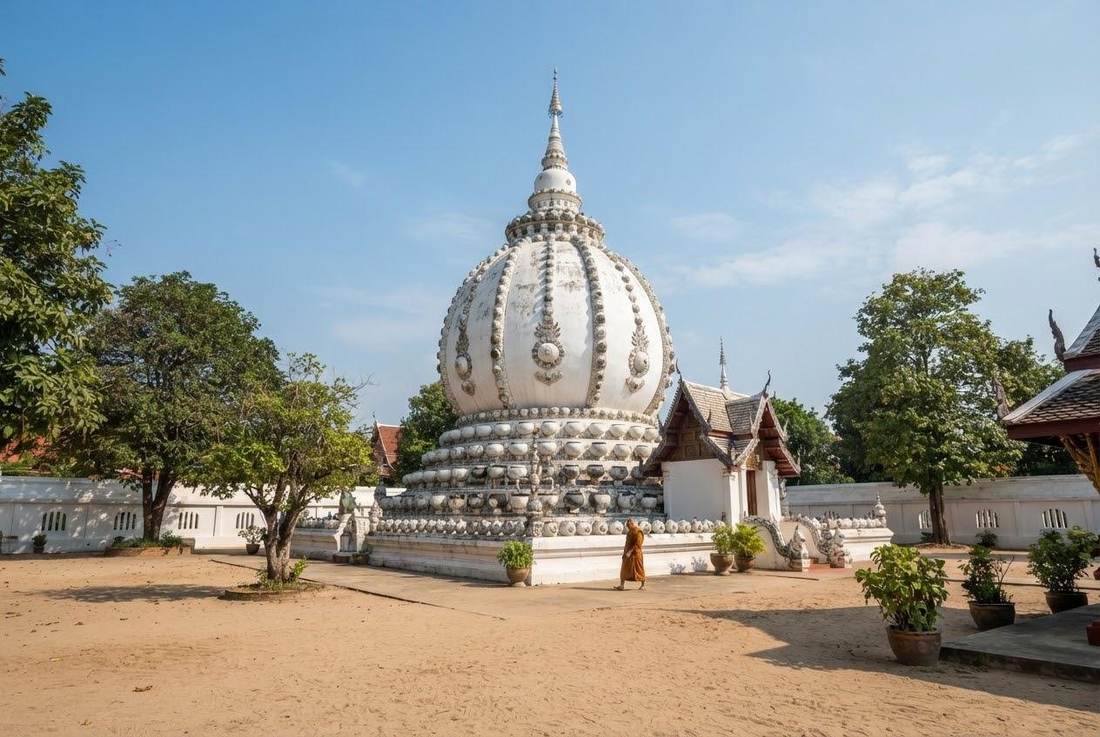
An unusual temple with a chedi shaped like stacked alms bowls, near the city stadium.
Chiang Mai is one of the easiest places in Thailand to travel with children. It’s smaller and calmer than Bangkok, the traffic is lighter, and nature is close: waterfalls, jungle, farms and ethical elephant sanctuaries are all within an hour or two. A hotel with a pool in Nimman, the Night Bazaar area or by the river makes the best family base.
Getting around with kids: use Grab cars rather than songthaews, which have no seat belts. For day trips, book a private driver or a small-group tour with hotel pick-up. Temples are best in the cooler morning, with a pool break in the afternoon.
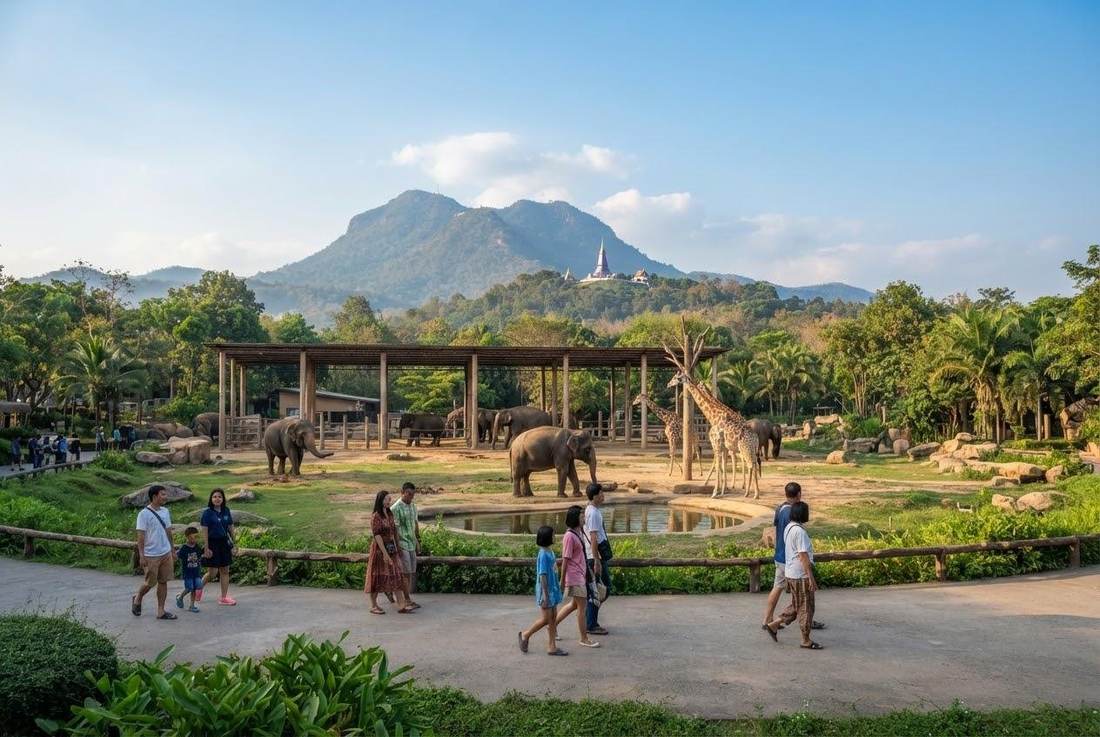
A big, hilly zoo at the foot of Doi Suthep with pandas, an aquarium and lots of shade. A full, easy family day.
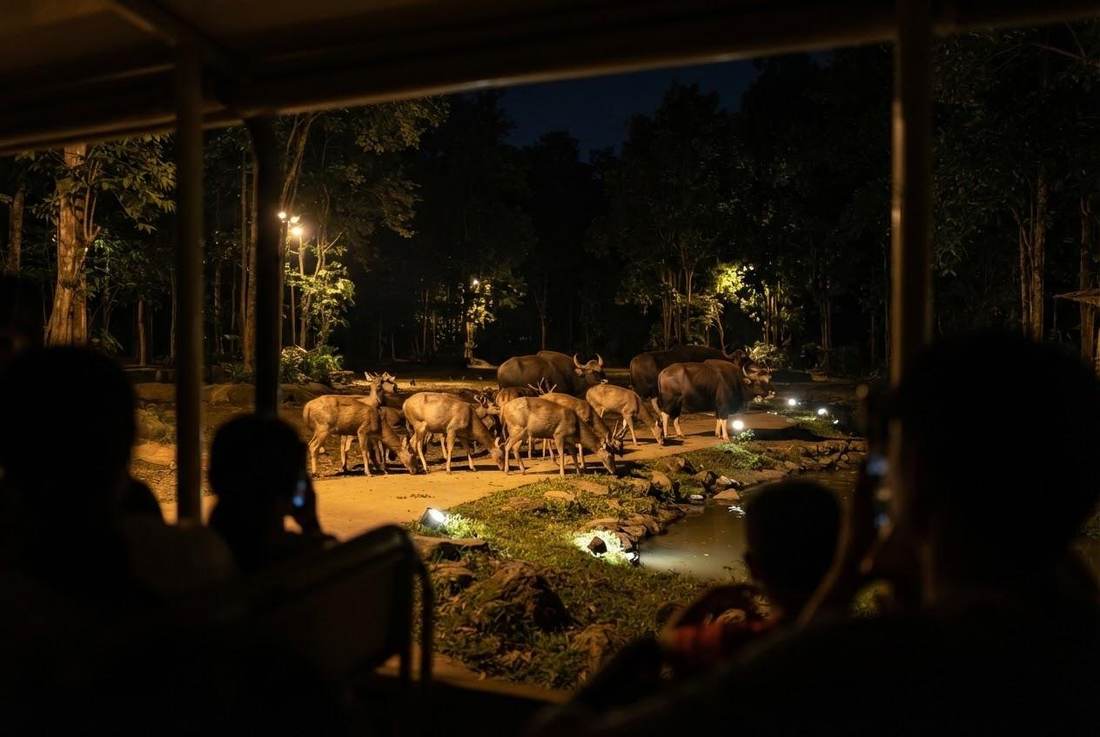
A night-time tram ride through open areas with giraffes, zebras and big cats, plus a light show by the lake.
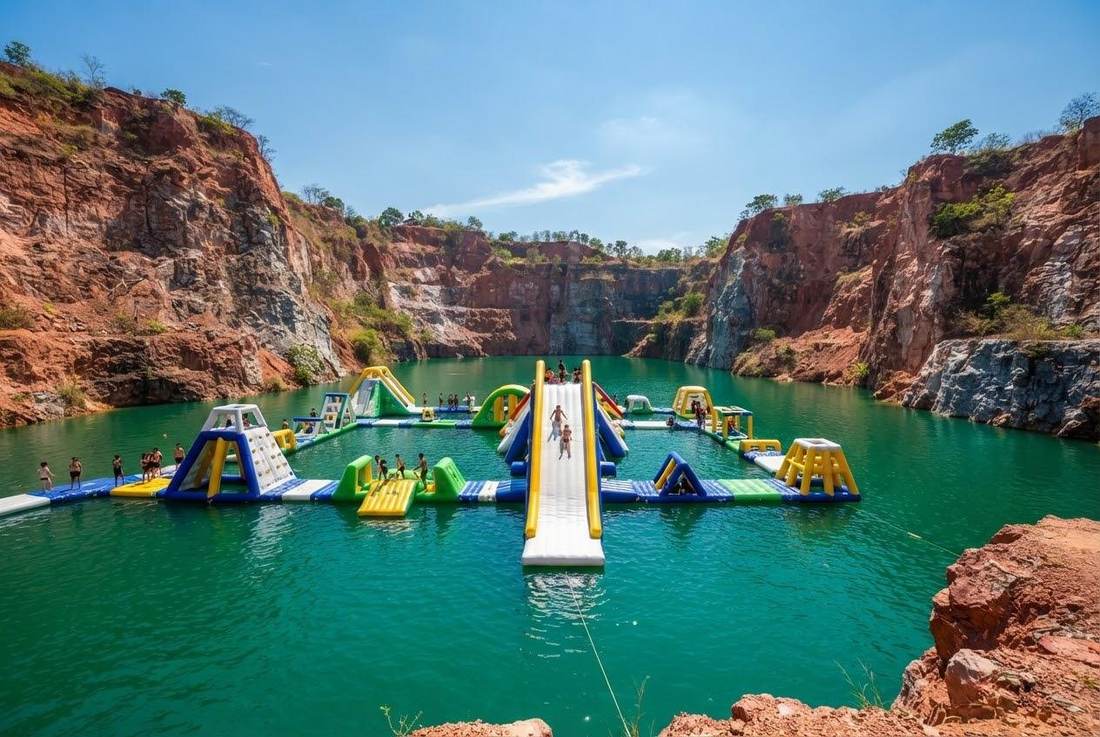
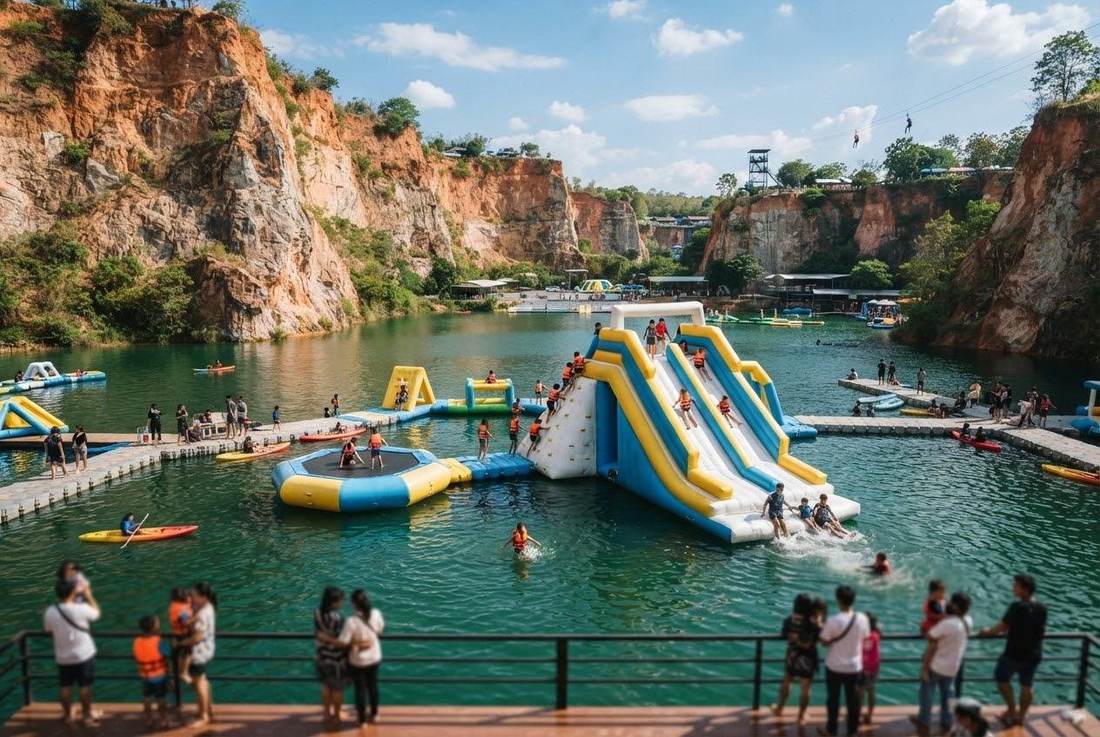
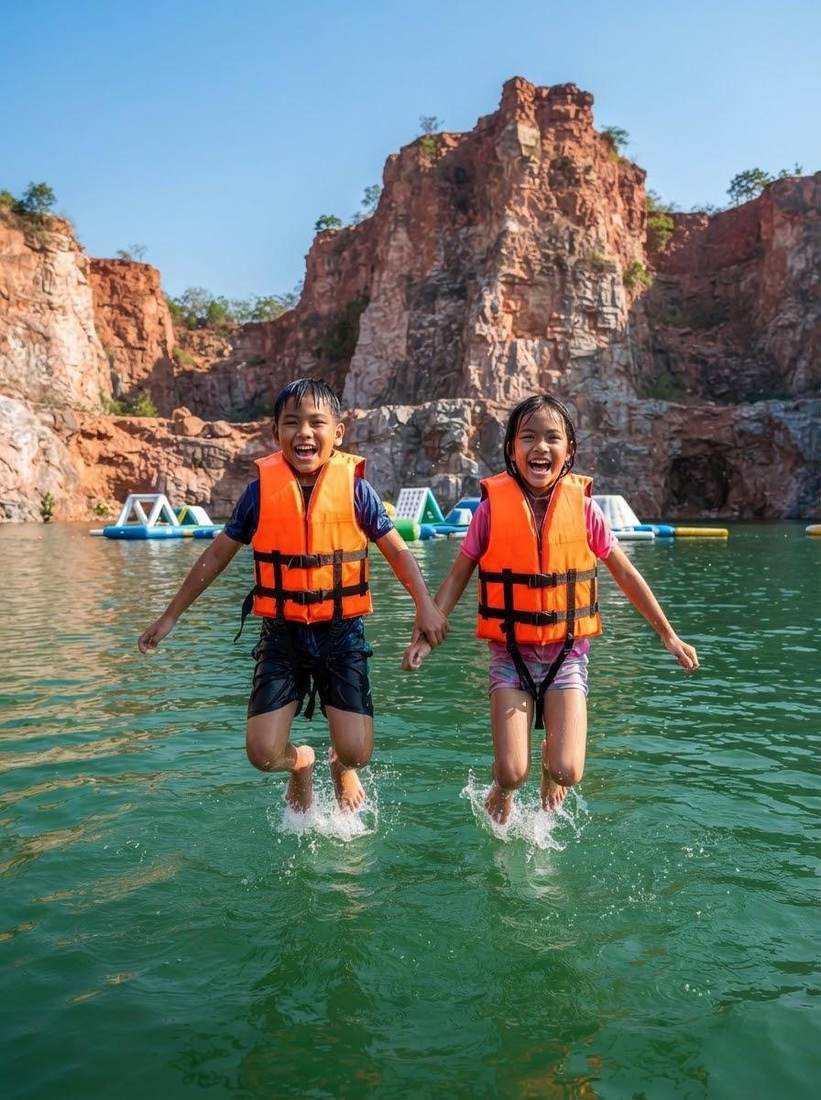
A water park in a flooded old quarry, with inflatable obstacle courses, slides and zip lines. Best for older kids who can swim.
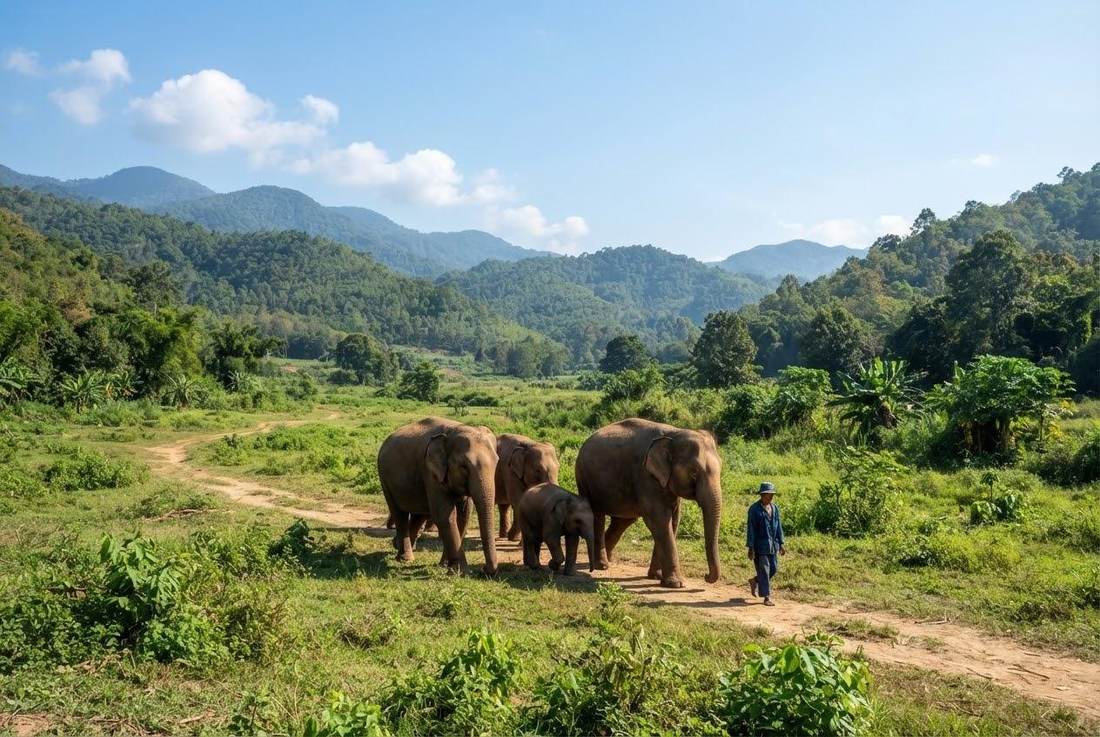
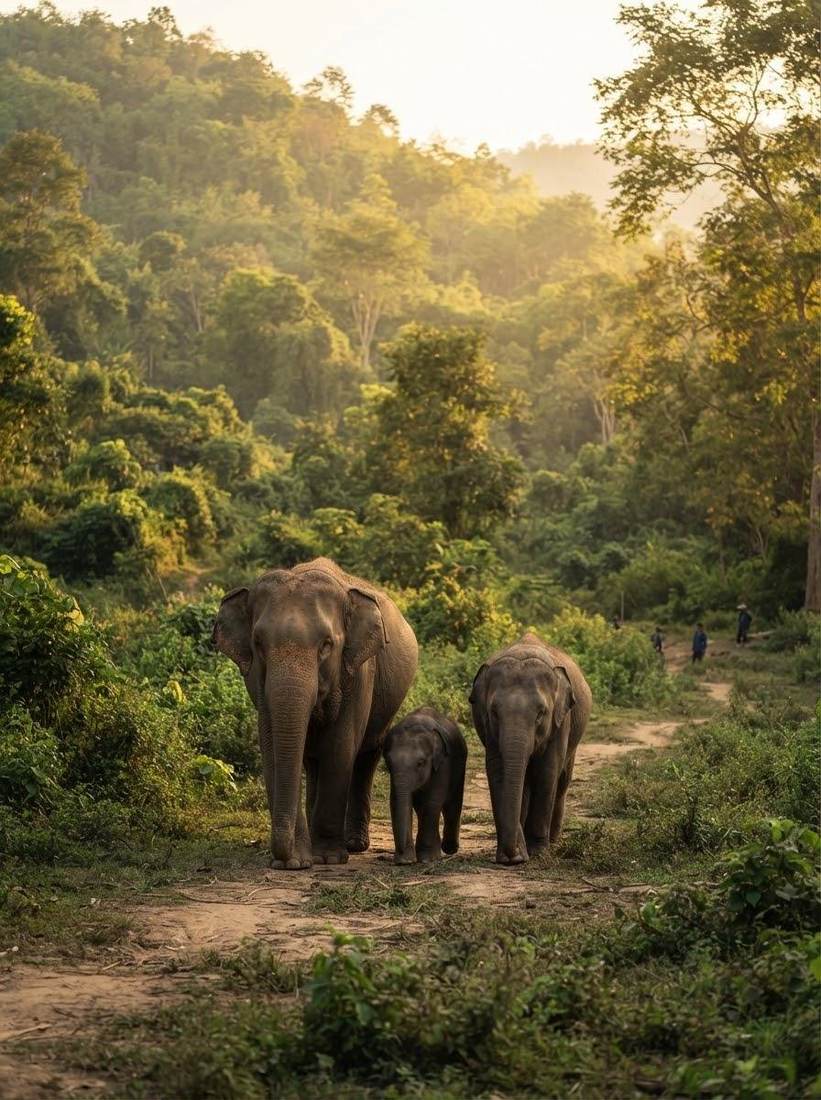
The best-known ethical rescue sanctuary: you watch and feed rescued elephants roaming freely, with no riding or shows.
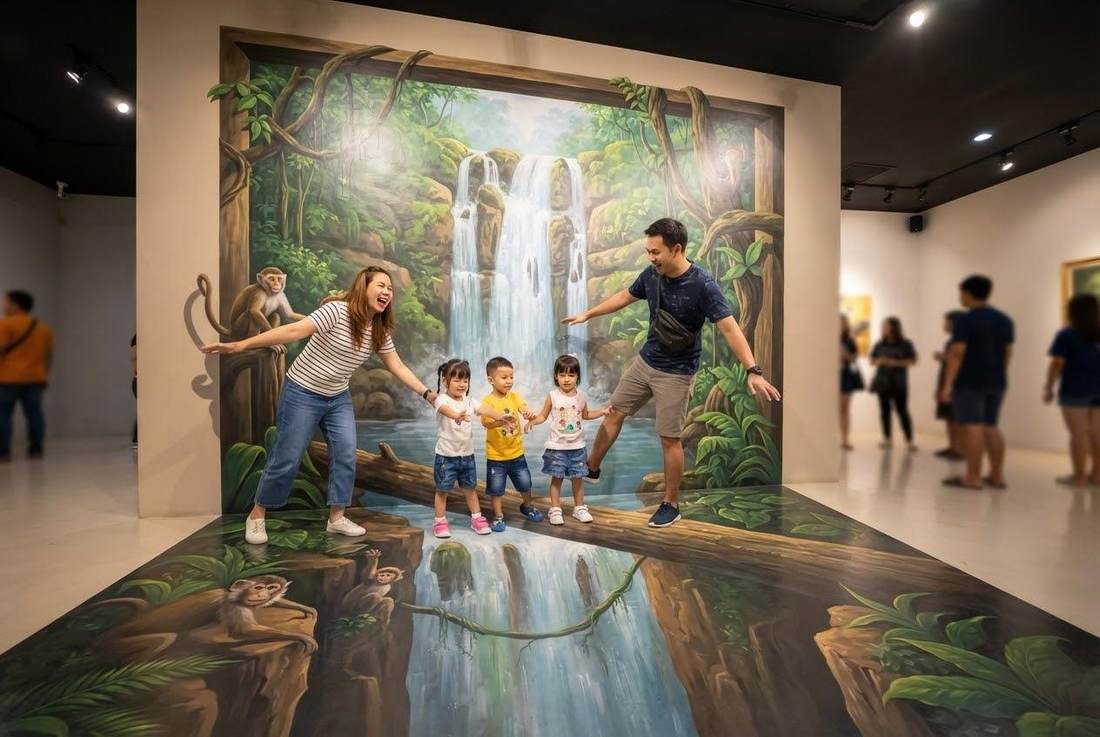
A 3D illusion art museum where kids pose inside giant painted scenes. Indoor and air-conditioned.
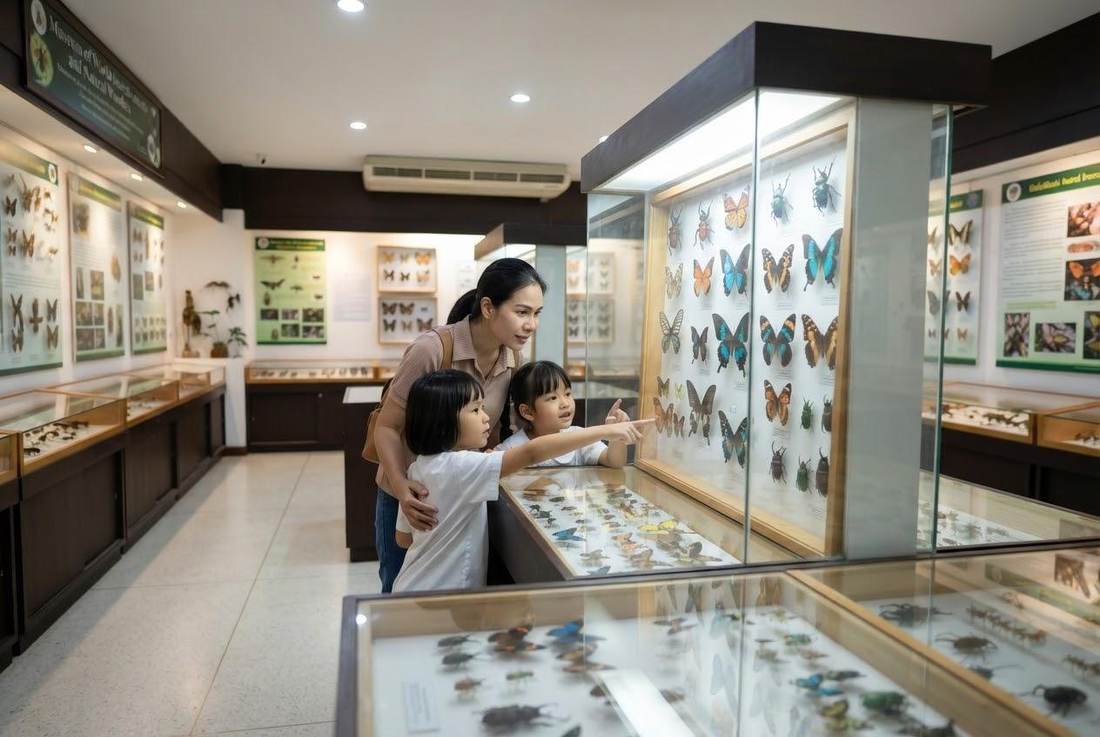
A quirky little museum packed with butterflies, beetles and giant bugs from around the world.
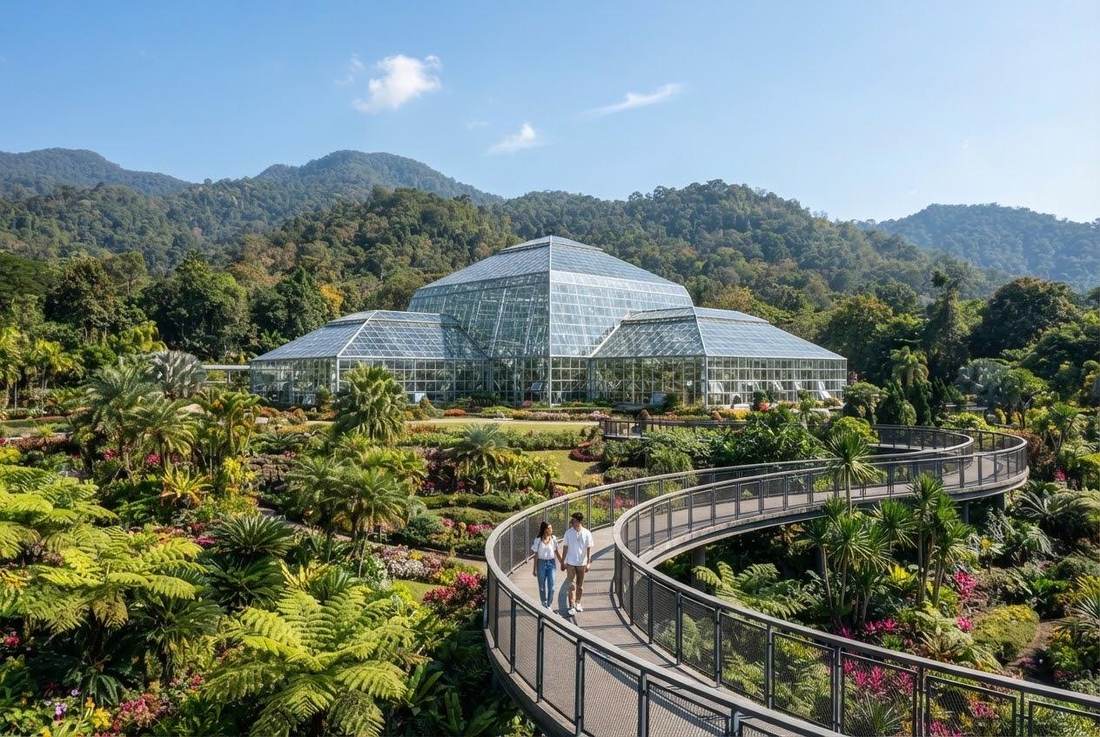
Huge gardens in the hills with glasshouses and a canopy walkway high above the forest.
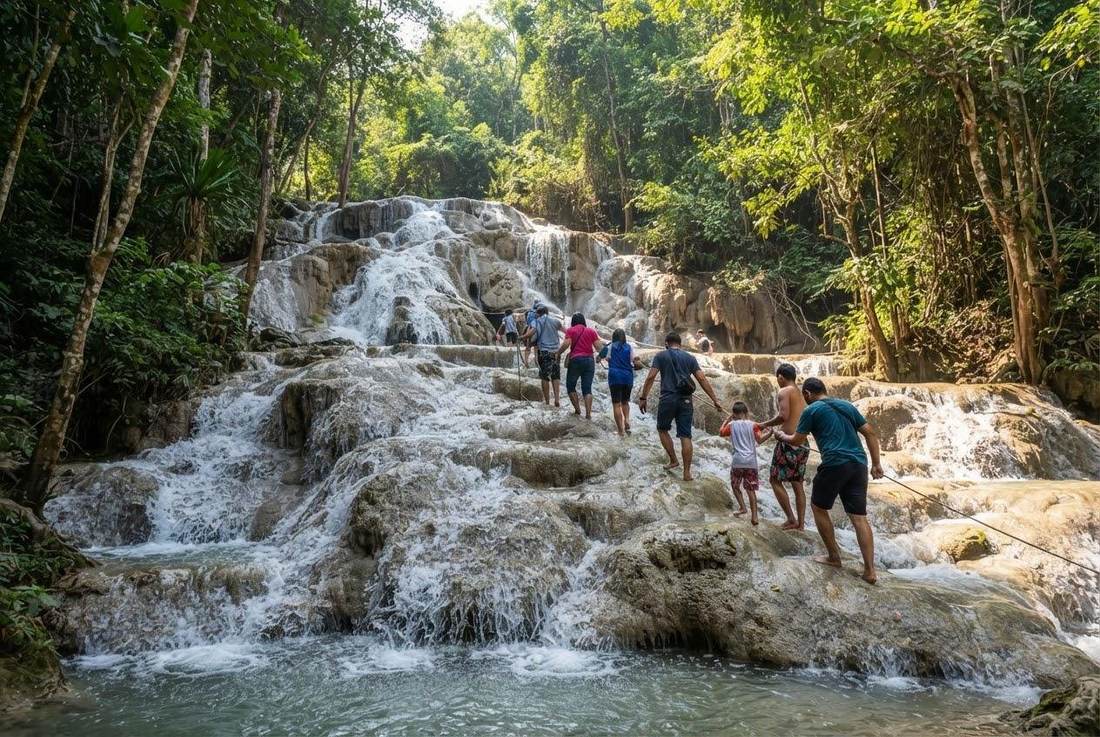
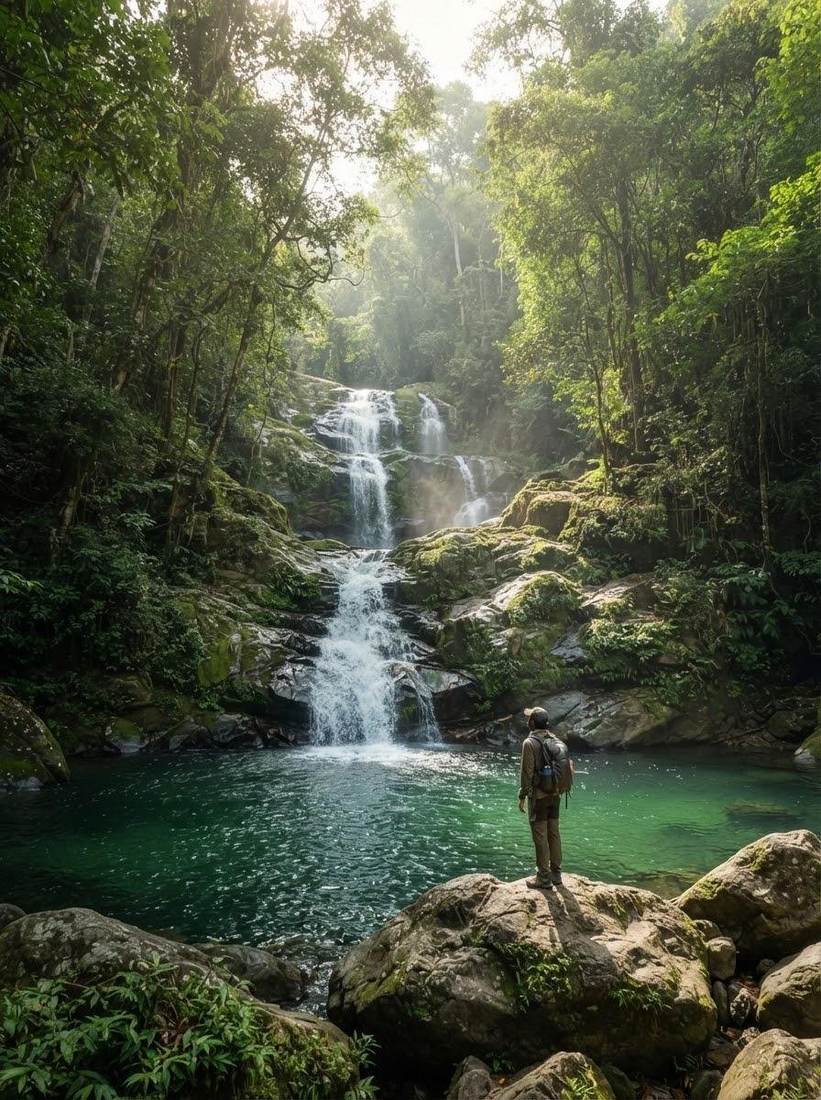
A waterfall you can actually climb, because the mineral rock is grippy rather than slippery. Kids love it.
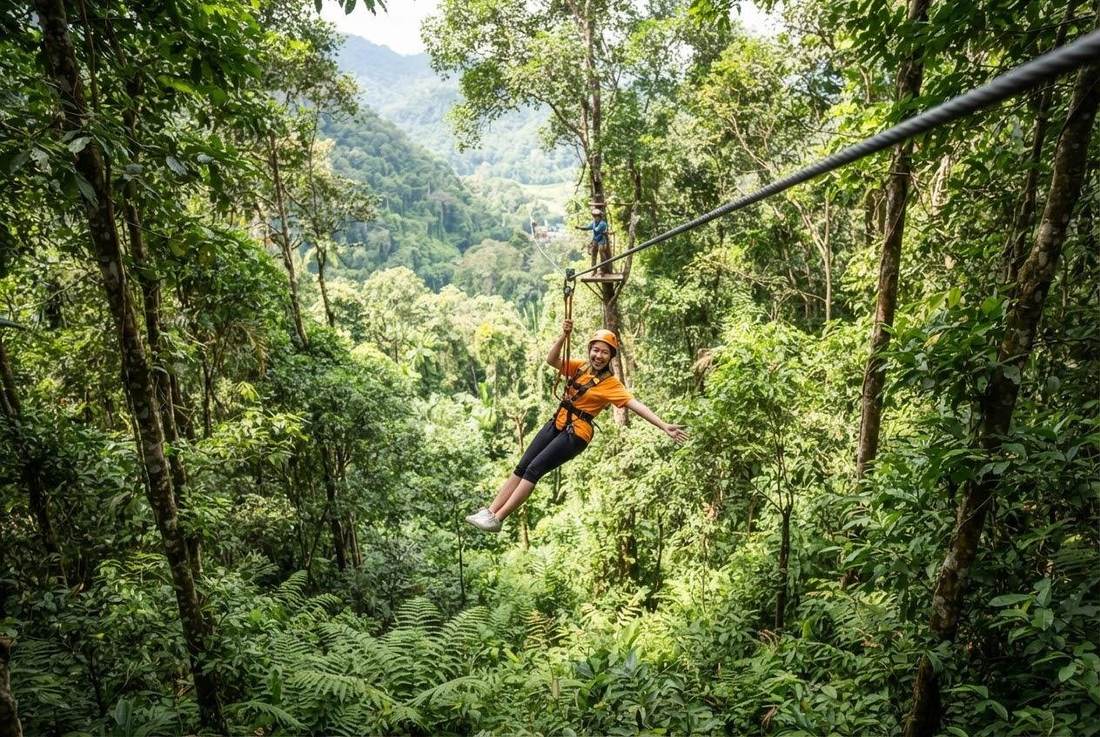
A long zipline course through the rainforest canopy, with guides clipping you in all the way. Check the minimum height for children.
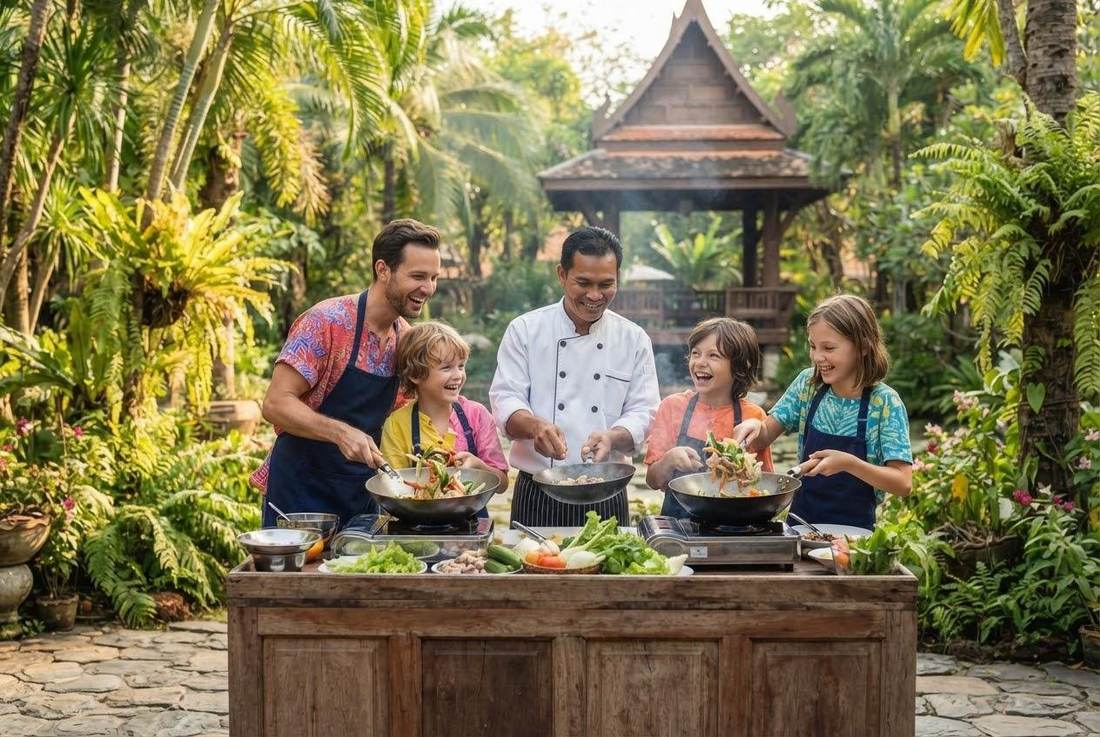
Many cooking schools welcome children, who can help pick vegetables and make their own curry paste.
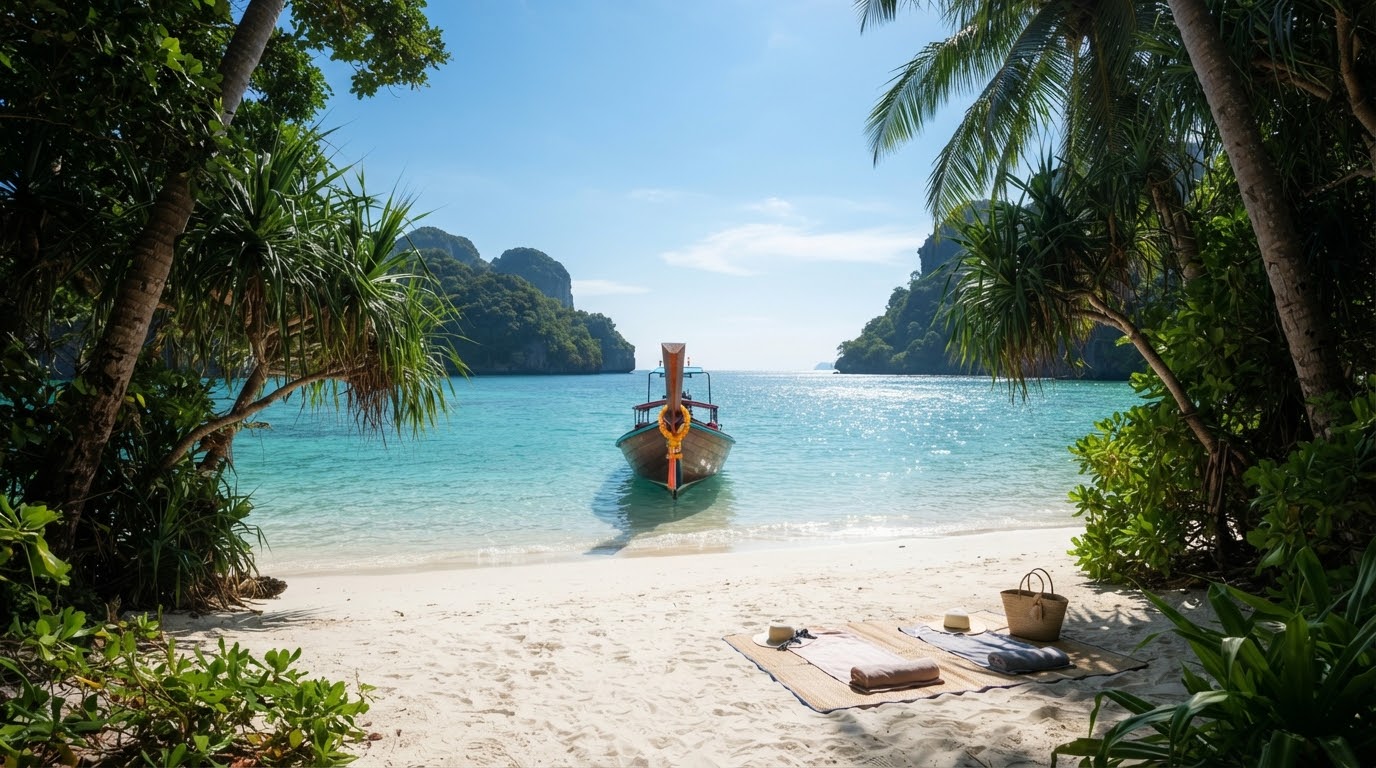
Many families pair the mountains of Chiang Mai with a few days on the beach. Koh Samui and Phuket are easy to add, and Pattaya is close to Bangkok.
Well-rated hotels with a pool that genuinely suit families.
Chiang Mai’s rainy season (roughly June to October) brings short, heavy afternoon storms rather than all-day rain, and plenty of indoor options. A few ideas below, and don’t forget: the cooking classes, spas, massages, malls and museums featured elsewhere in this guide are all great rainy-day options too.
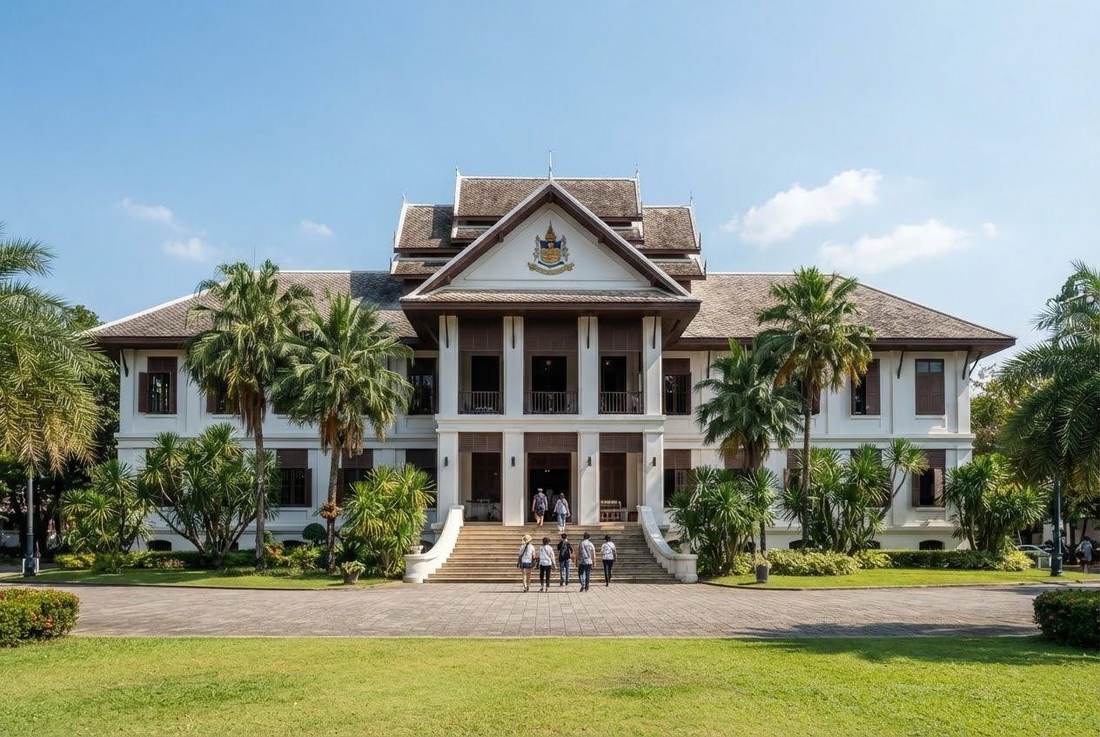
An indoor museum in the old provincial hall that tells the story of the city from its founding to today.
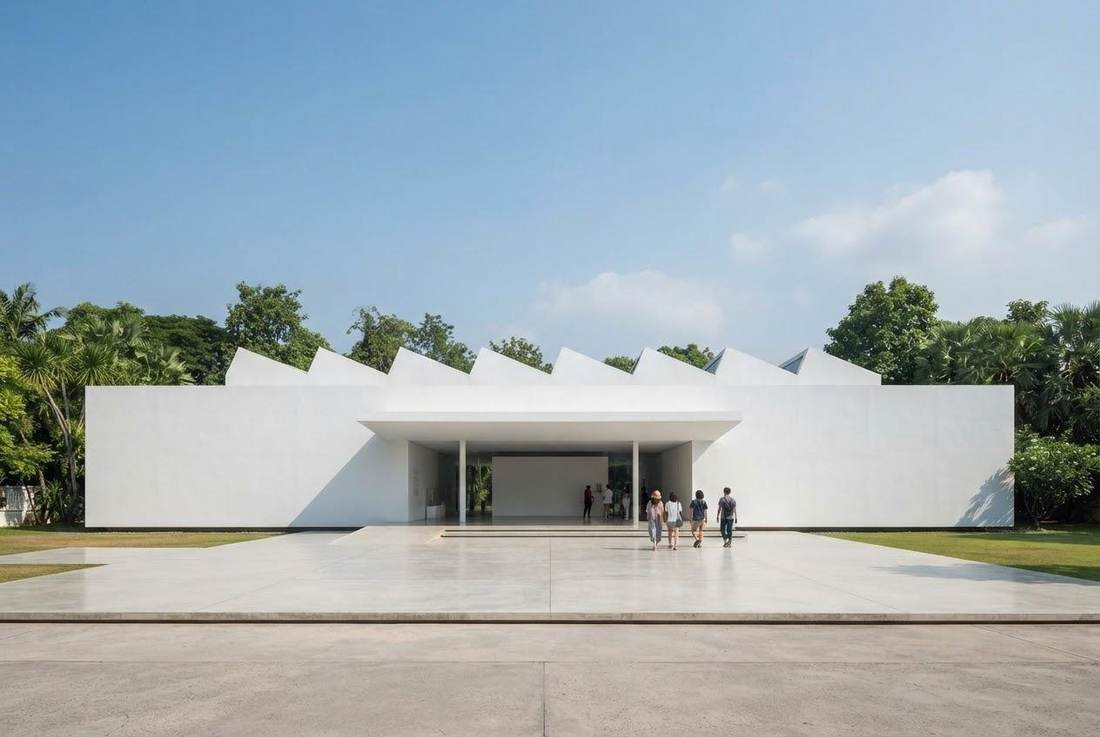
A striking mirrored building showing modern Thai art, about 30 minutes east of the city.
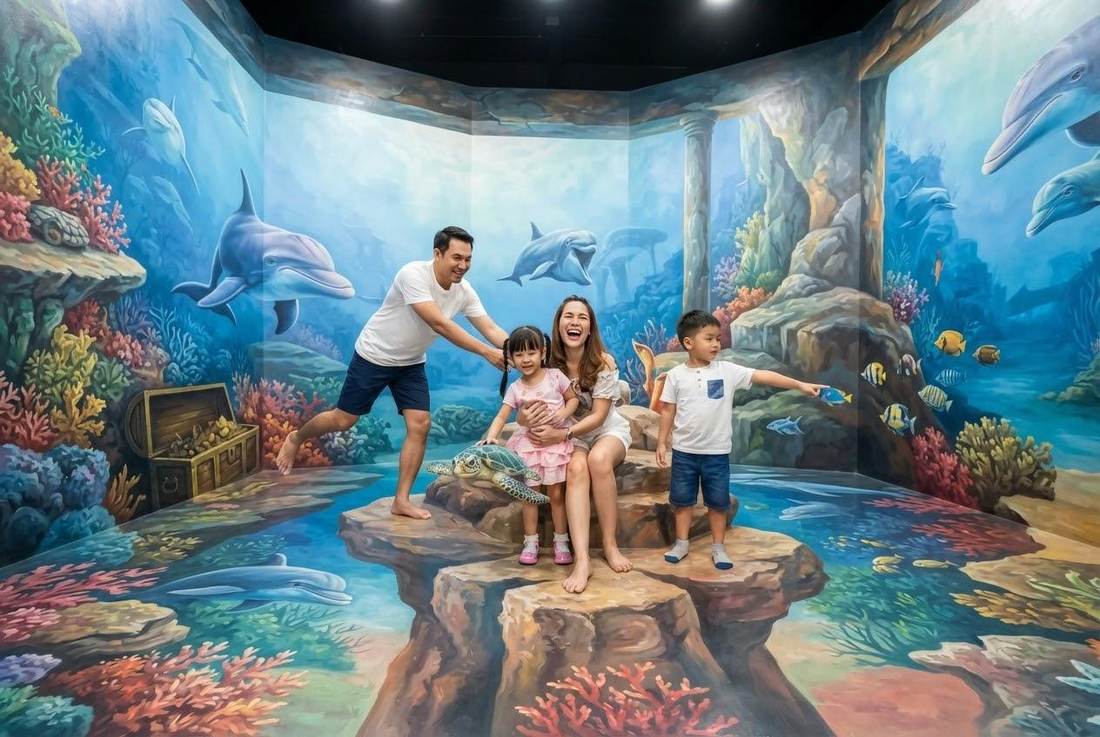
A 3D illusion museum where you pose inside huge paintings. Fully indoors and air-conditioned.
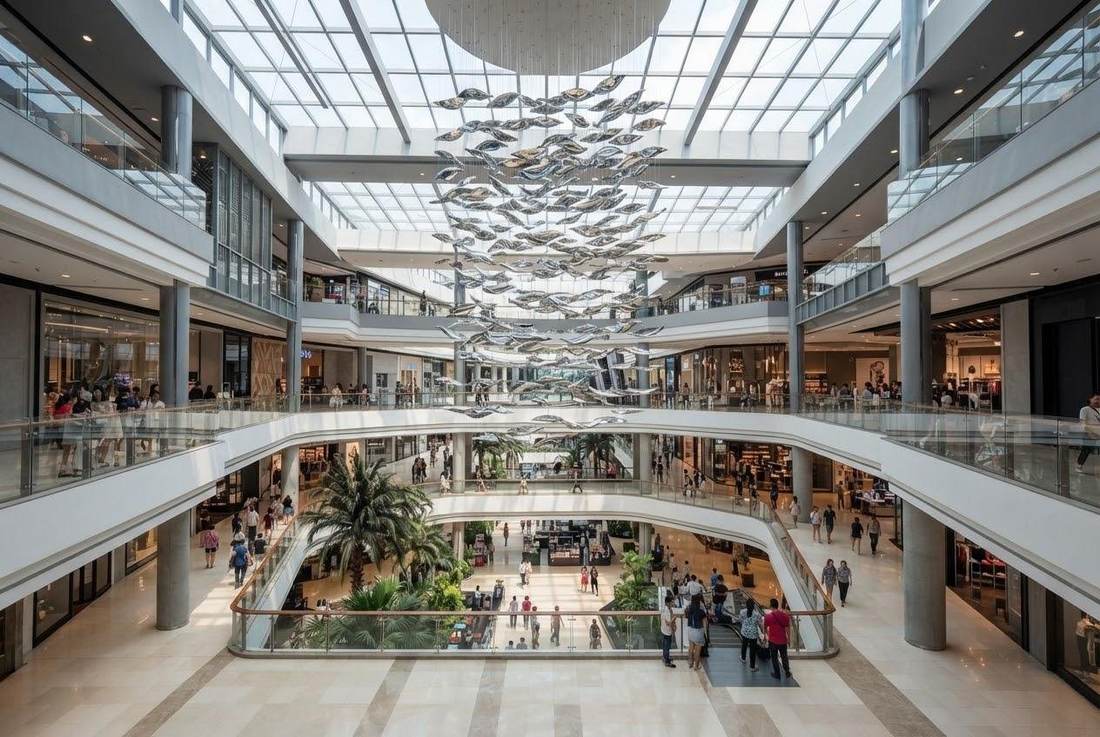
The biggest mall in the city, with a huge food court, cinema and hundreds of shops.
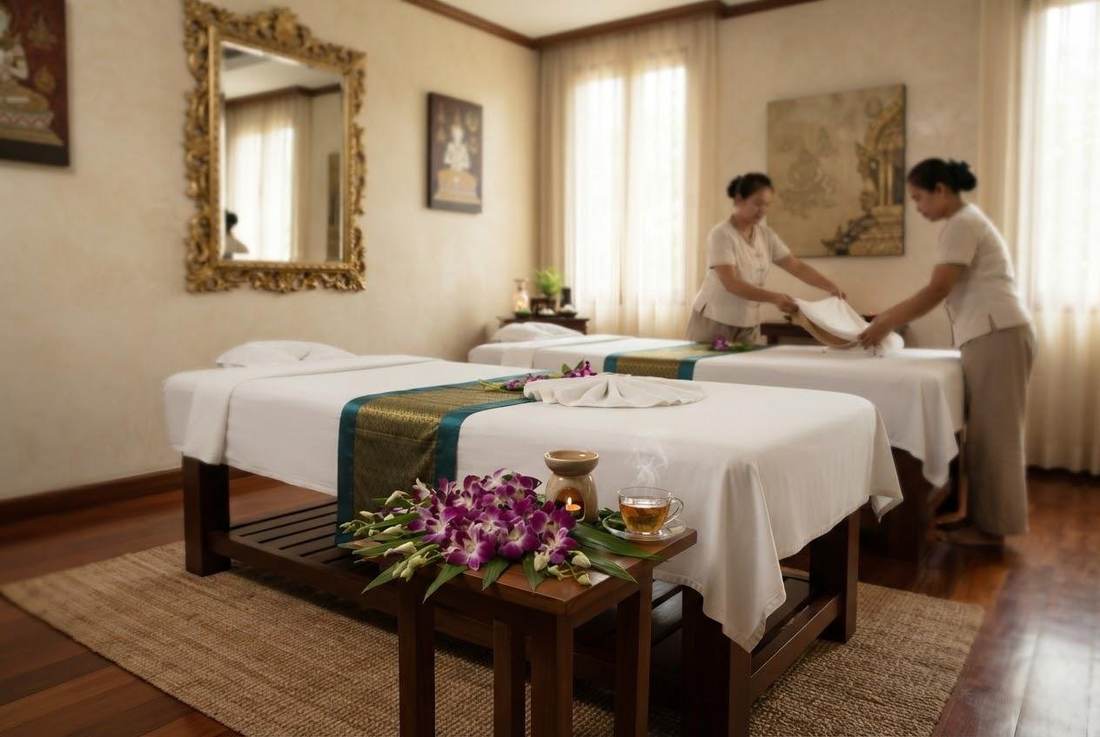
Rain is the perfect excuse for a two-hour massage or spa package, bookable in advance.
Out of Chiang Mai and back — or stay over if you like it. Book tours or arrange your own transport with 12Go.
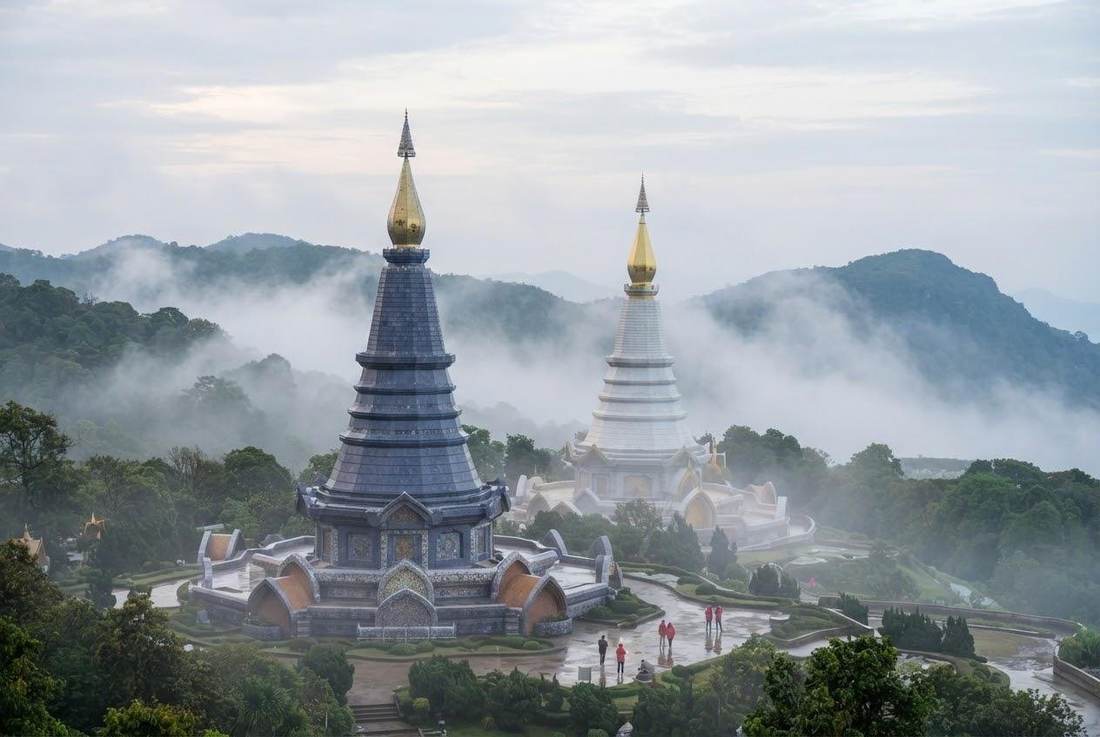
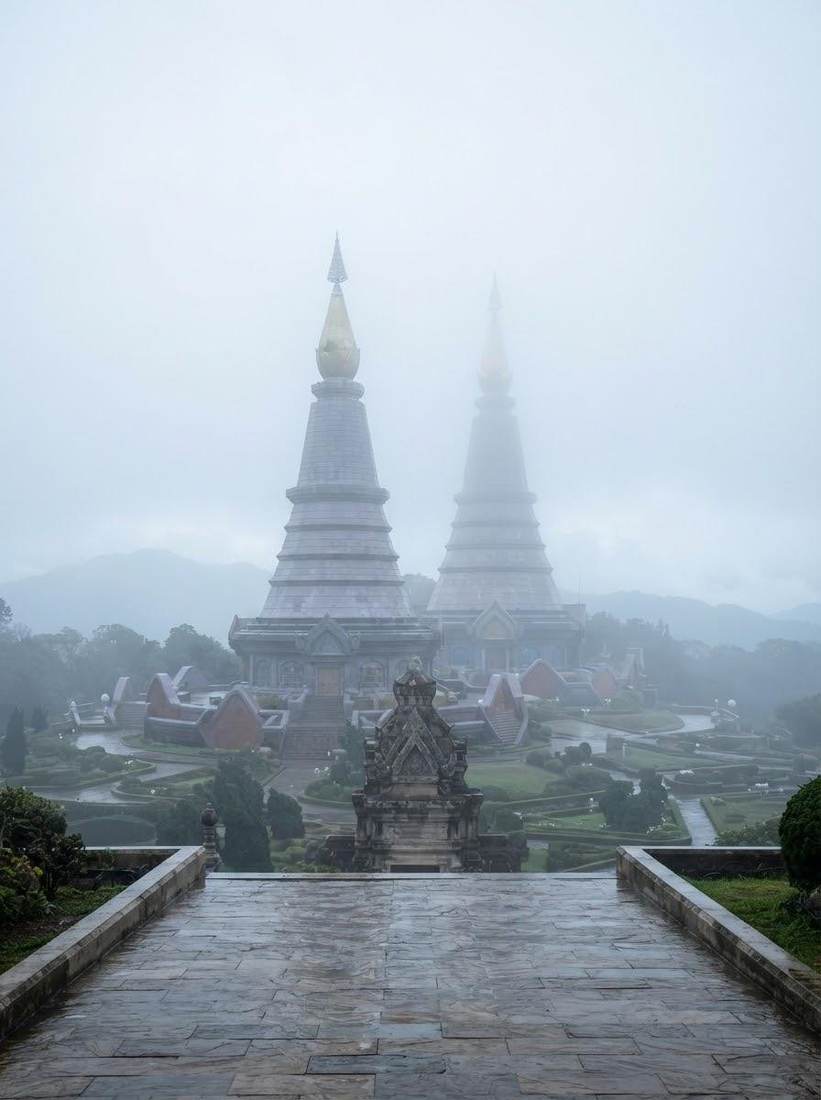
Thailand’s highest mountain, with the twin royal pagodas, waterfalls, hill-tribe villages and a cool, misty summit. The most popular day trip from Chiang Mai.
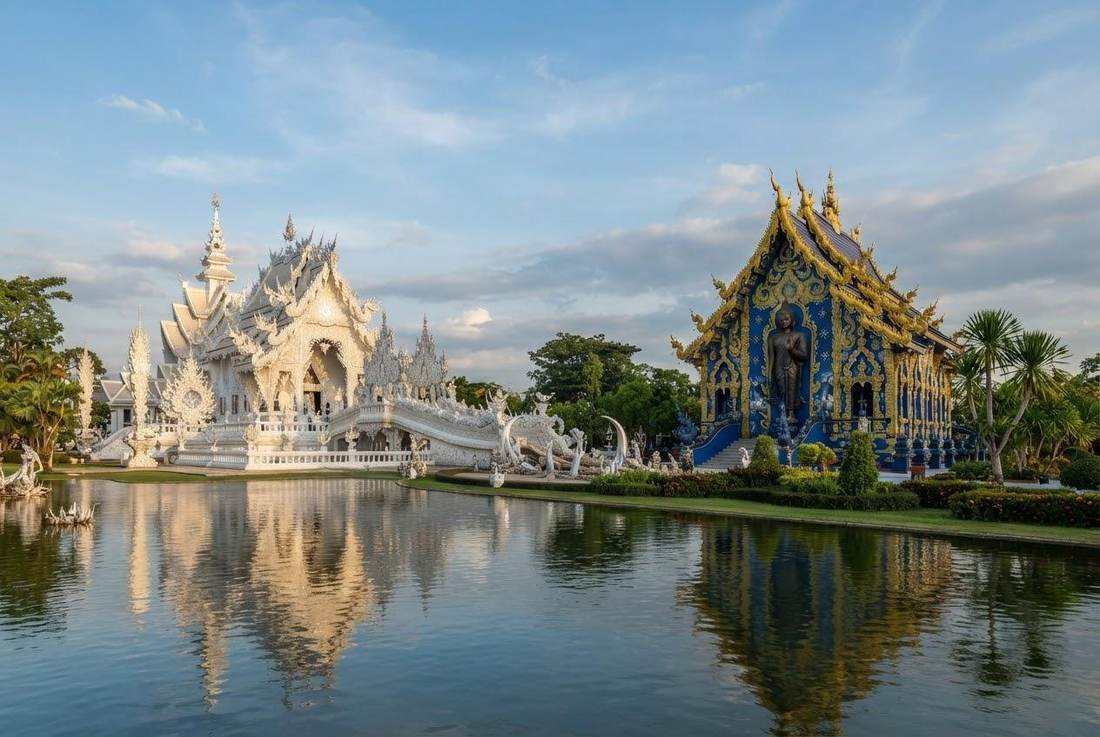
The dazzling White Temple (Wat Rong Khun), the Blue Temple and the Black House, all in one long day.
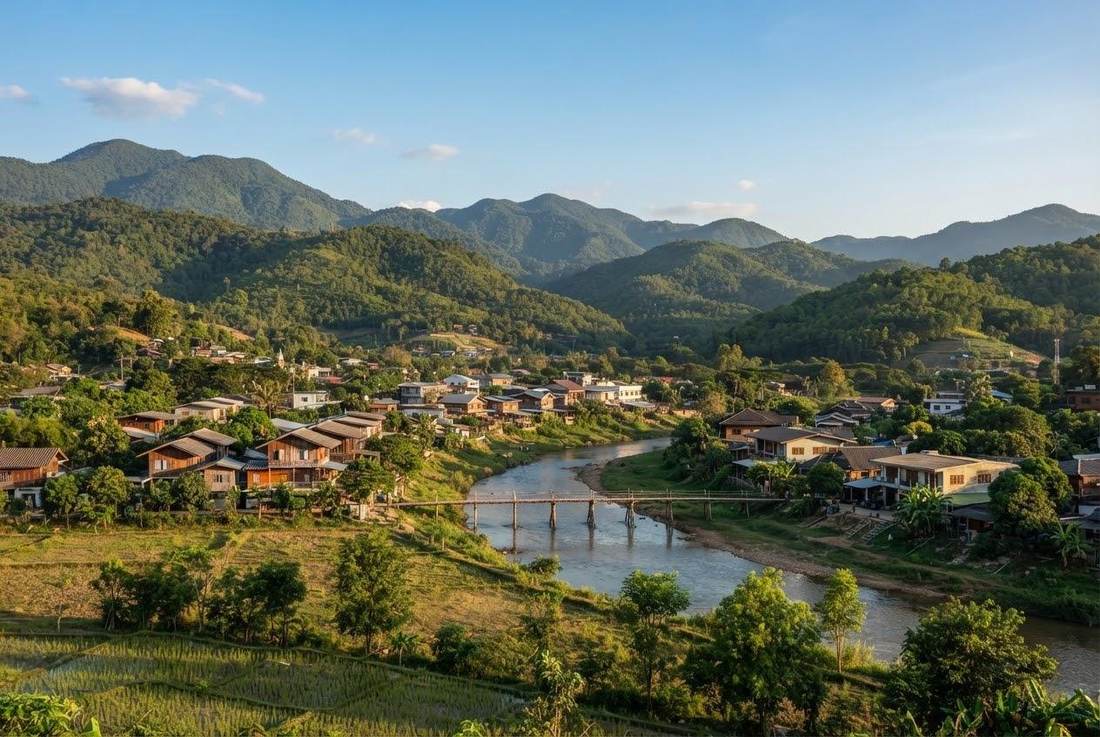
A laid-back mountain town with hot springs, a canyon, waterfalls and a lively walking street. Reached by a famously winding road.
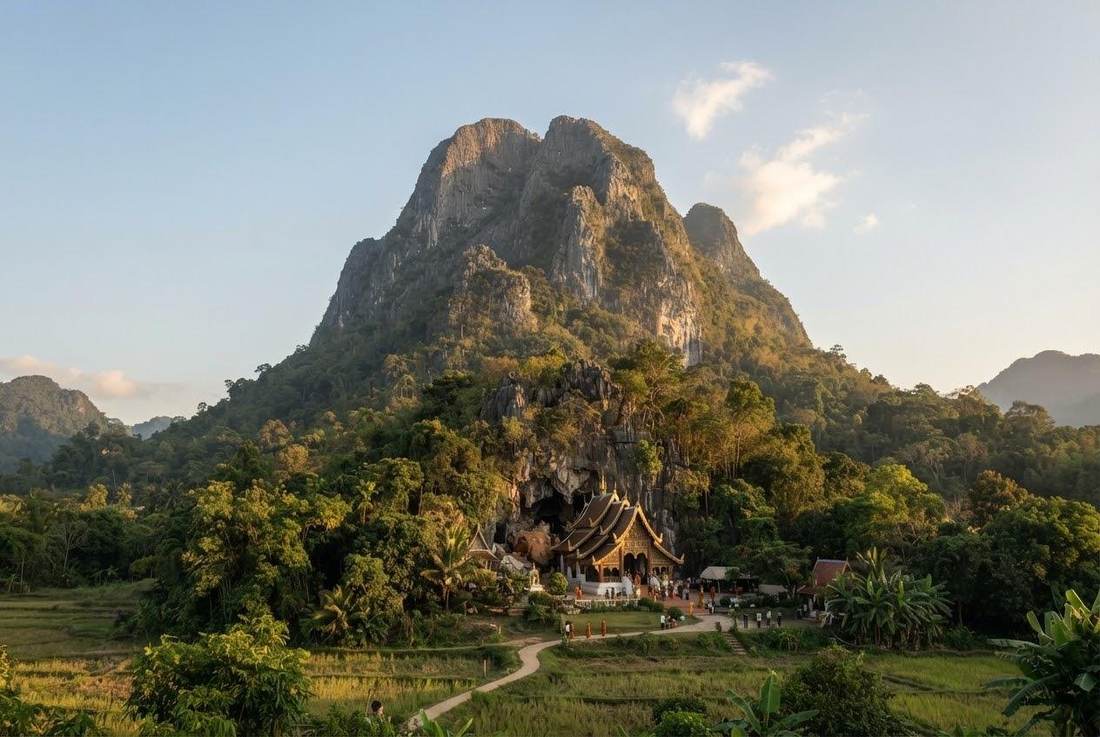
A dramatic limestone mountain with a temple cave system to explore by lantern, plus cool, quiet countryside.
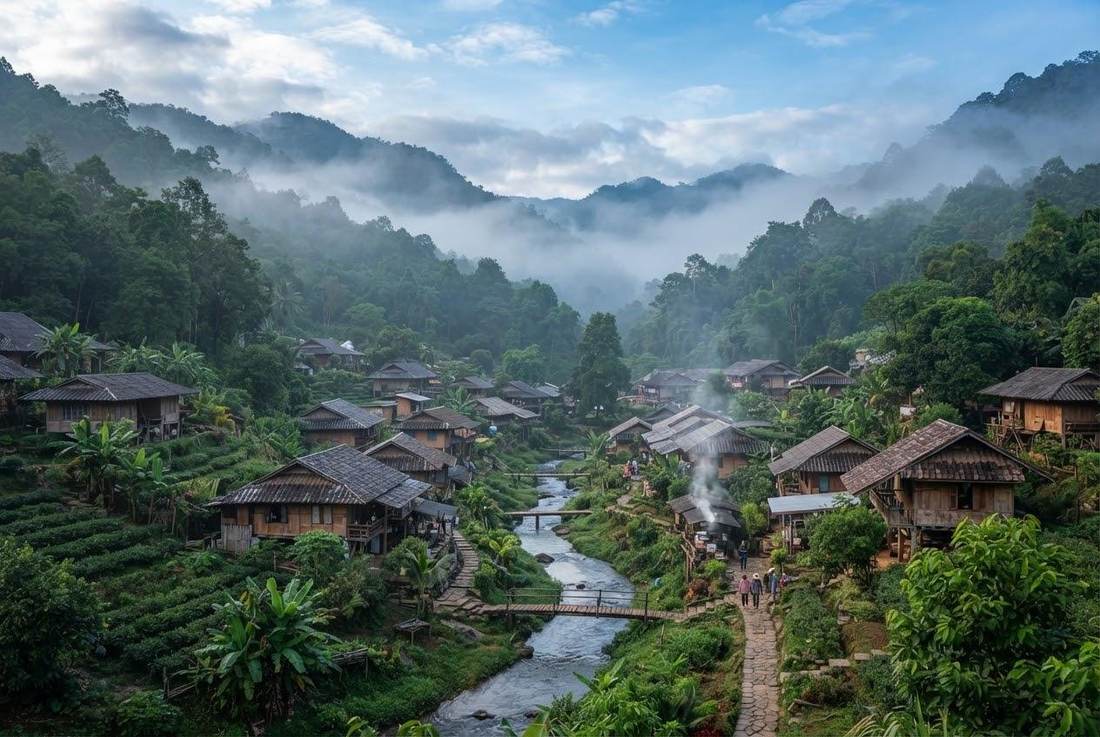
A pretty mountain village of wooden houses and coffee farms, with a waterfall and forest walks.
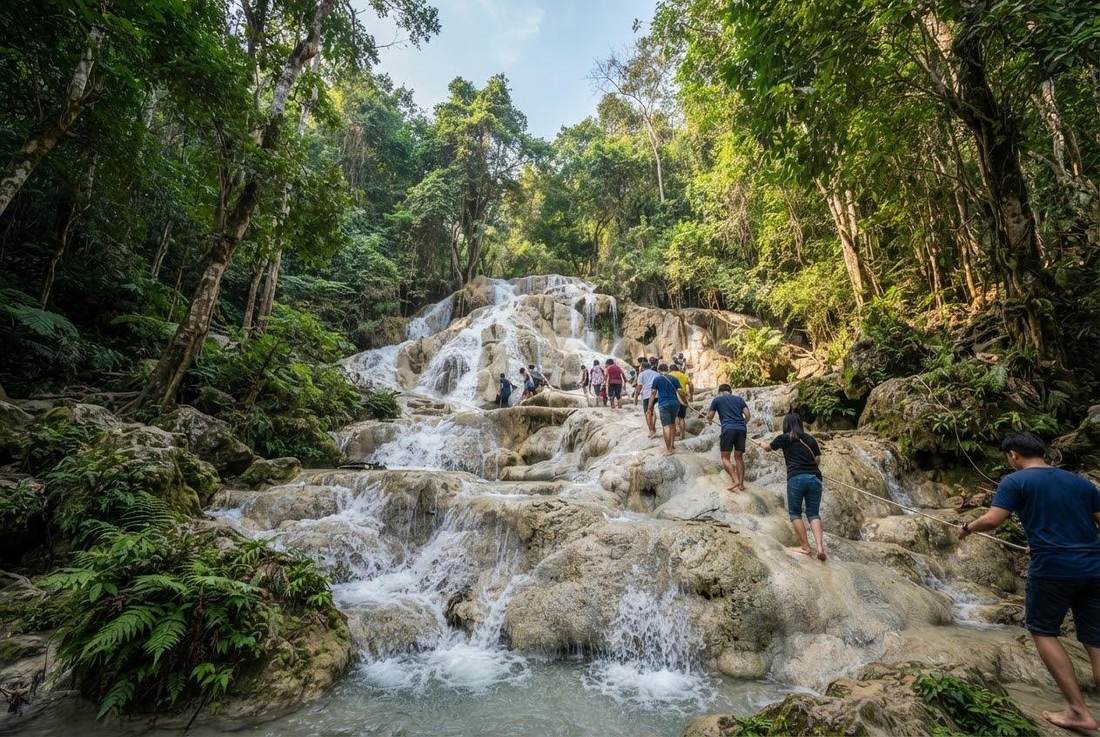
The “sticky” waterfall you can walk straight up, thanks to the grippy mineral rock.
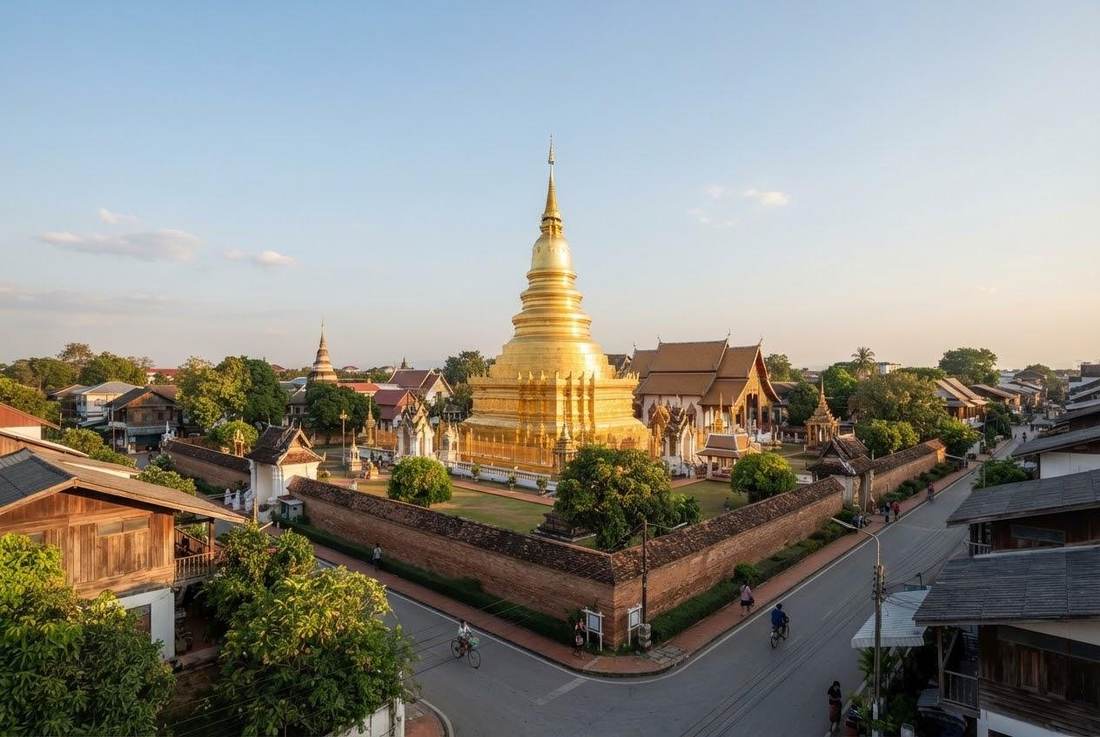
An old, quiet town with the golden Wat Phra That Haripunchai, one of the most important temples in the north.
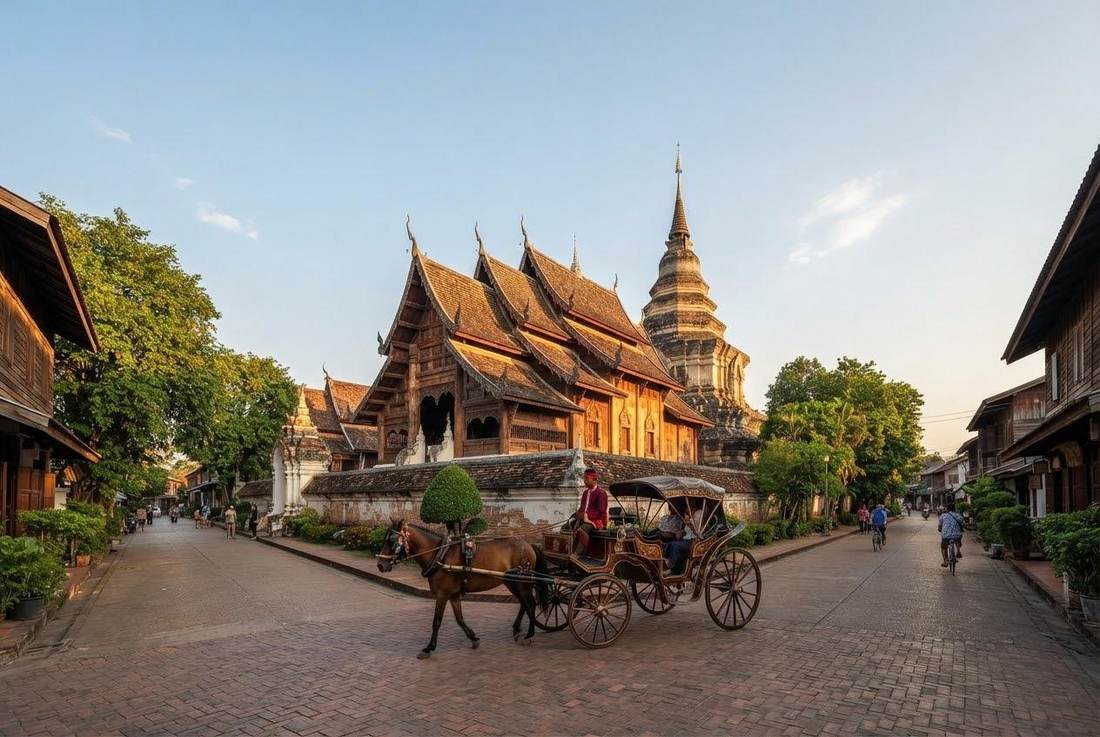
A slower town known for its horse-drawn carriages and the beautiful old Wat Phra That Lampang Luang.
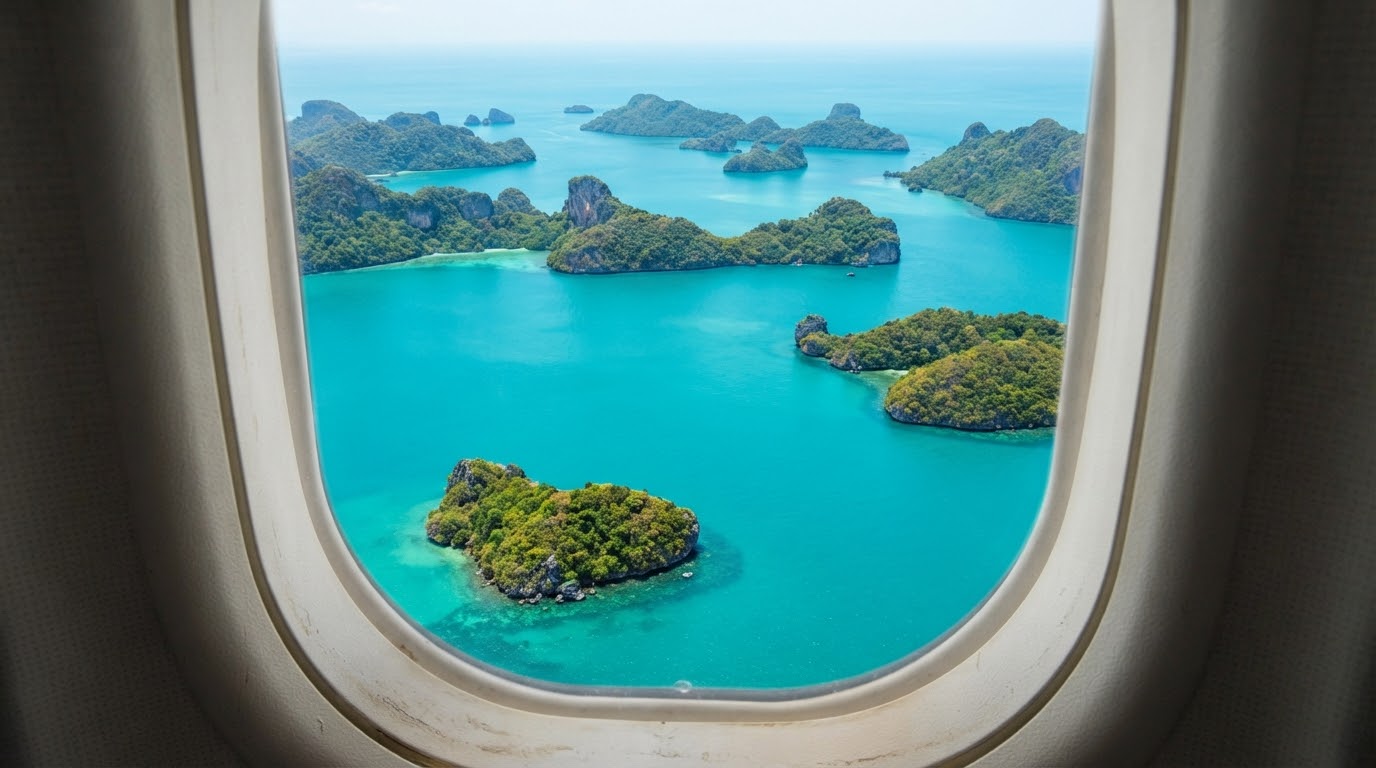
Taking a longer trip? Our other Thailand guides cover where to stay and what to do in each place, the same way as this one.
Where to actually eat — markets, northern Thai dishes and the places locals queue for.
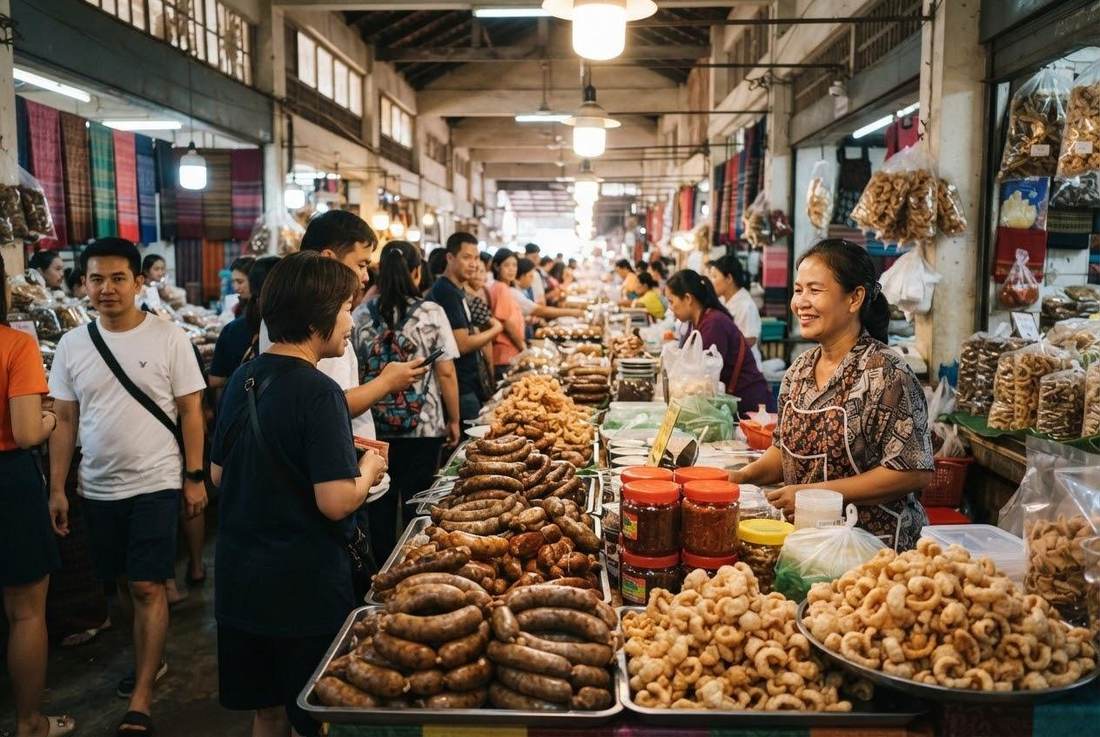
The city’s big old market by the river, the best place to try northern snacks: sai oua sausage, nam prik noom chilli dip and crispy pork skin.
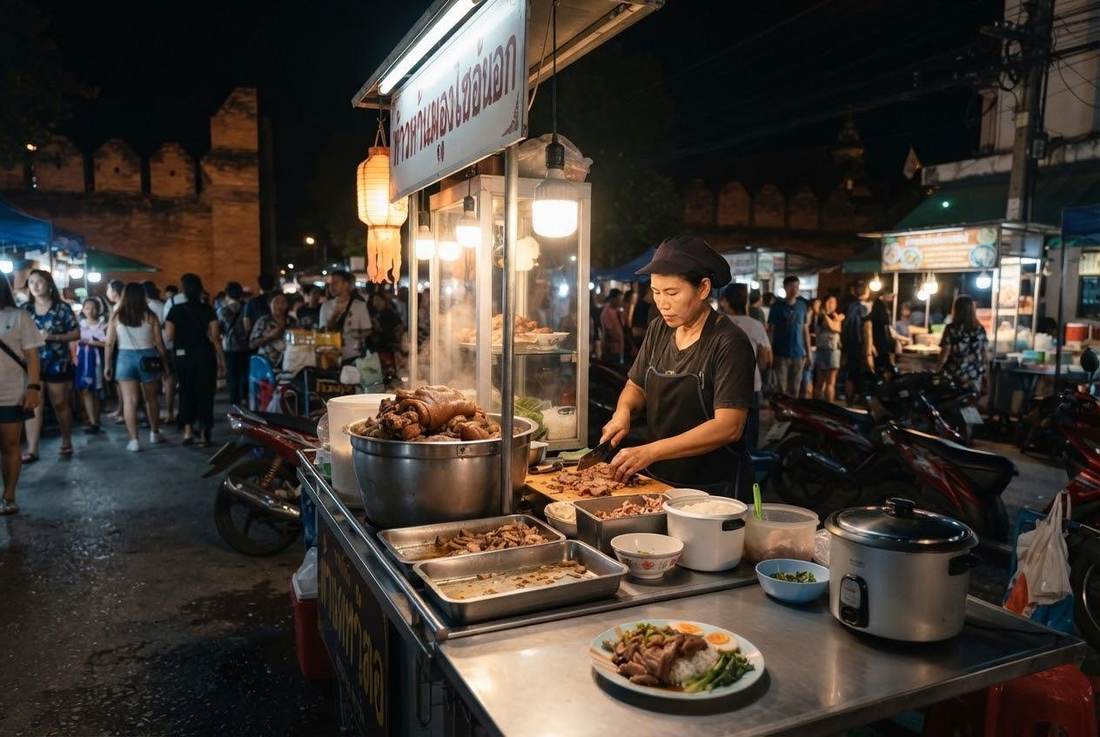
Evening street food outside the north gate, famous for its slow-braised pork leg on rice from the stall run by the lady in a cowboy hat.
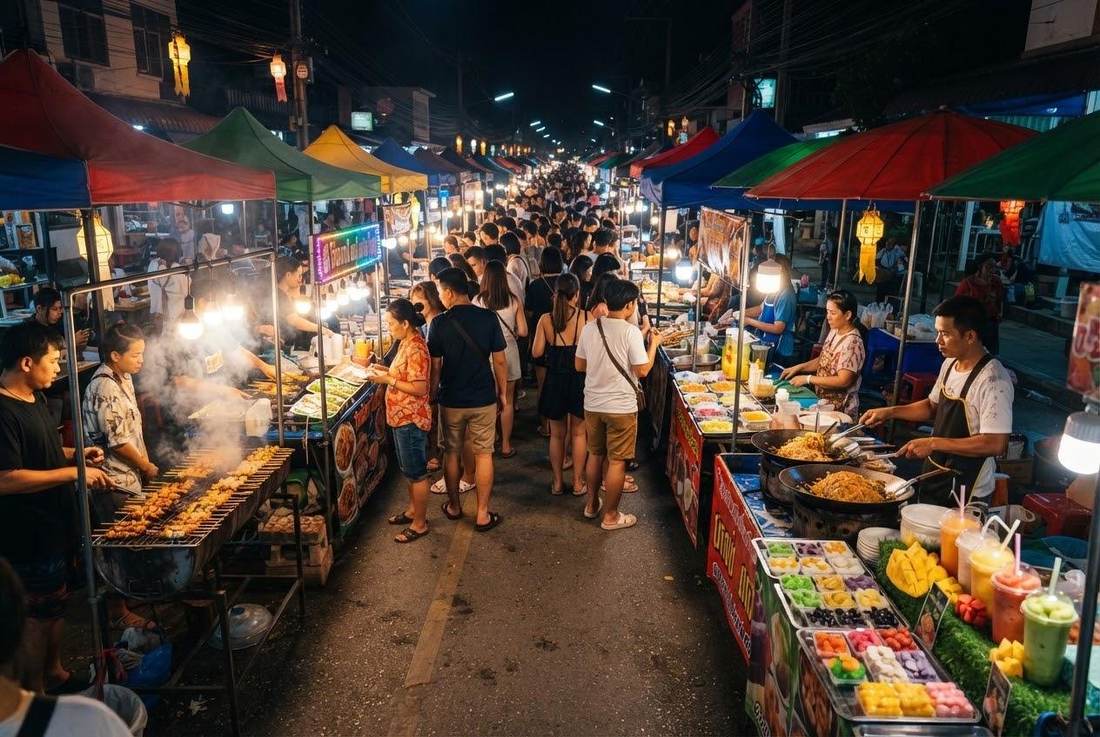
Every Saturday evening Wua Lai Road, the silversmiths’ street south of the moat, becomes a market with lots of food stalls.
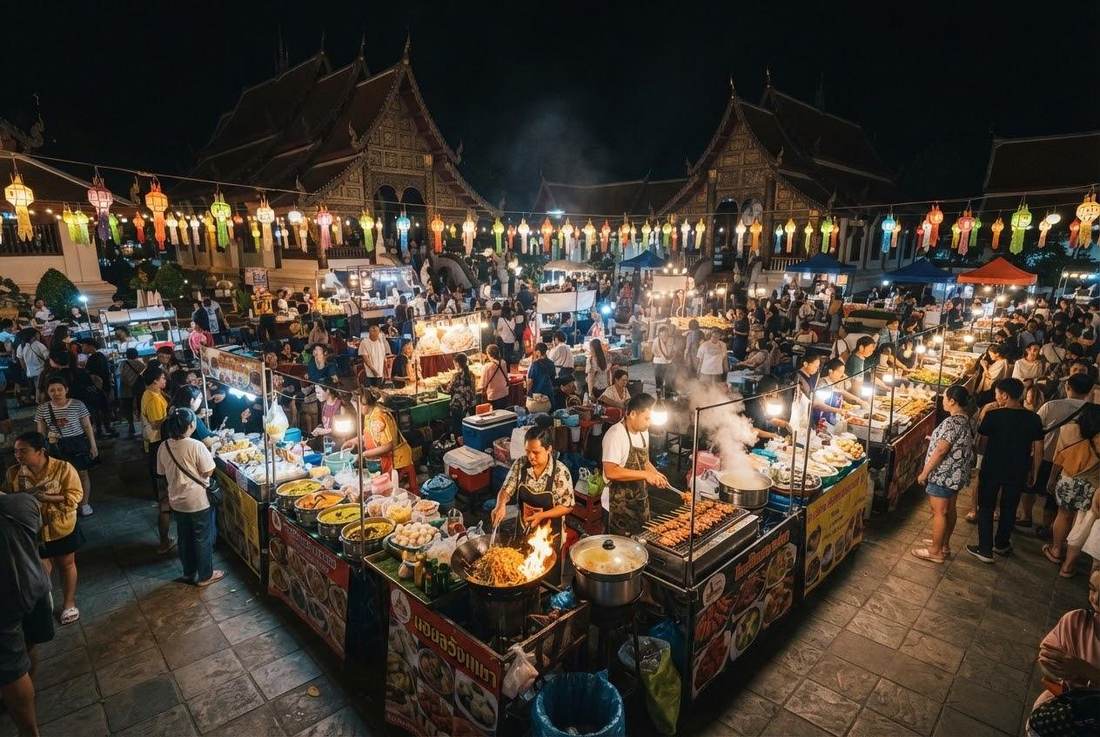
On Sunday evenings the temple courtyards along Ratchadamnoen Road turn into big food courts with dozens of stalls.
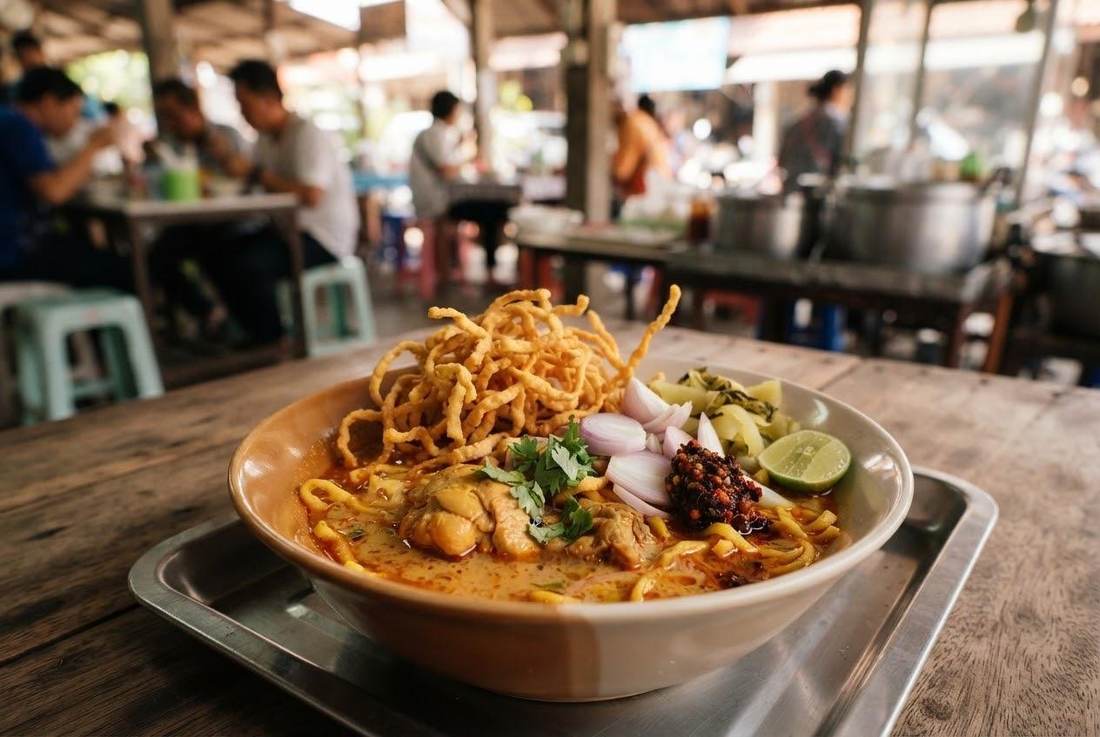
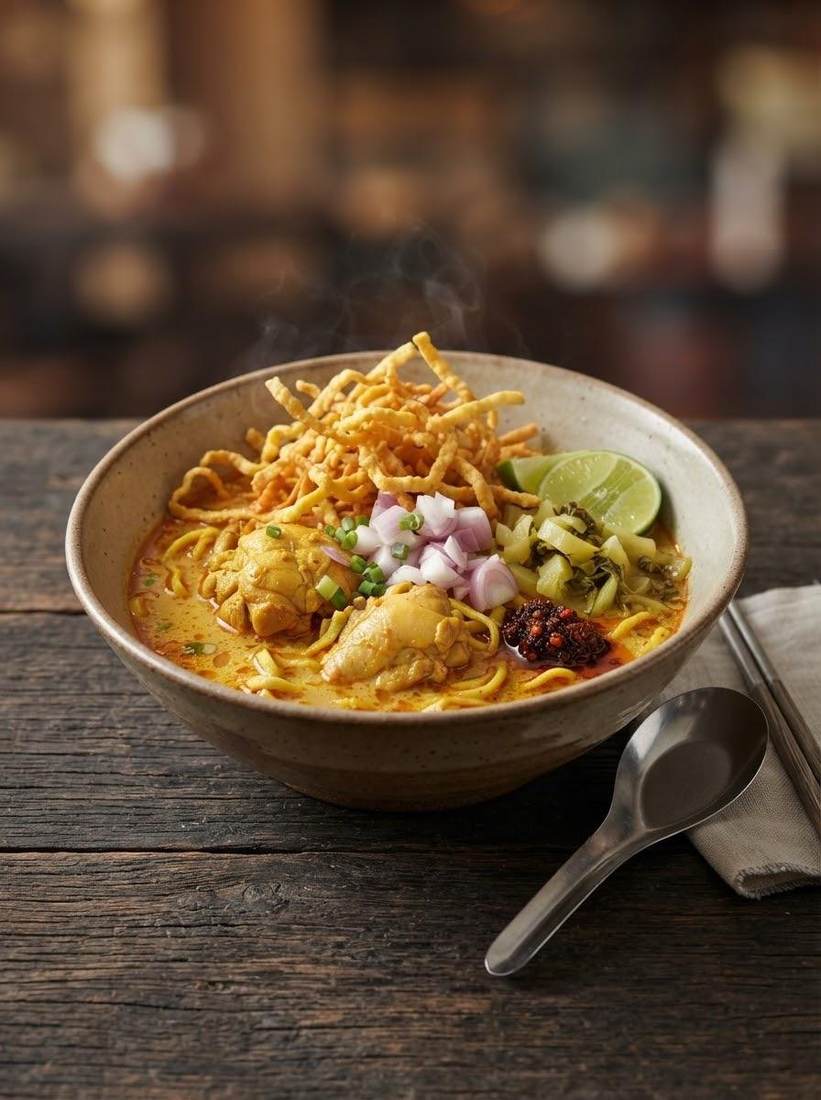
Chiang Mai’s signature dish, khao soi (curry noodle soup with crispy noodles on top), at one of the best-loved shops in the city. MICHELIN Bib Gourmand.
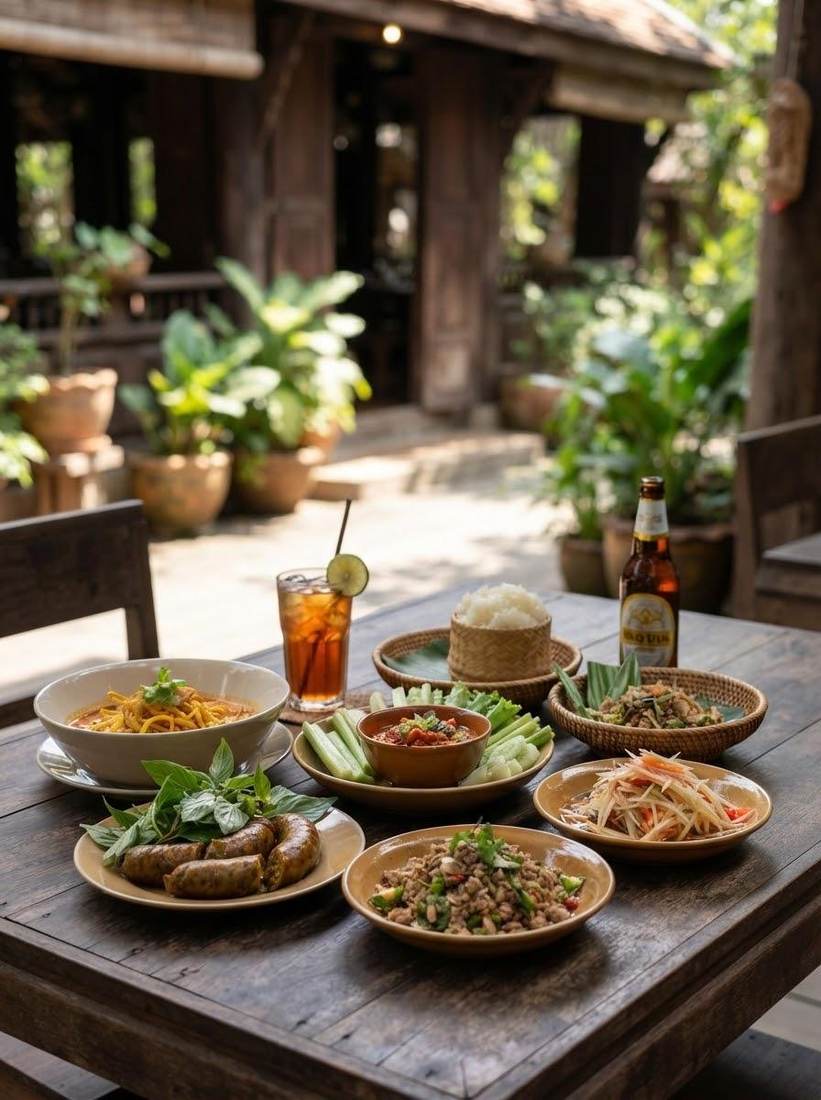
Dishes worth seeking out: Khao Soi (curry noodle soup), Sai Oua (northern herb sausage), Nam Prik Noom (green chilli dip), Kaeng Hang Lay (pork curry), Khao Kha Moo (braised pork leg on rice).
Real, long-running Chiang Mai cooking schools. Most include a market tour, hotel pick-up and a recipe book.
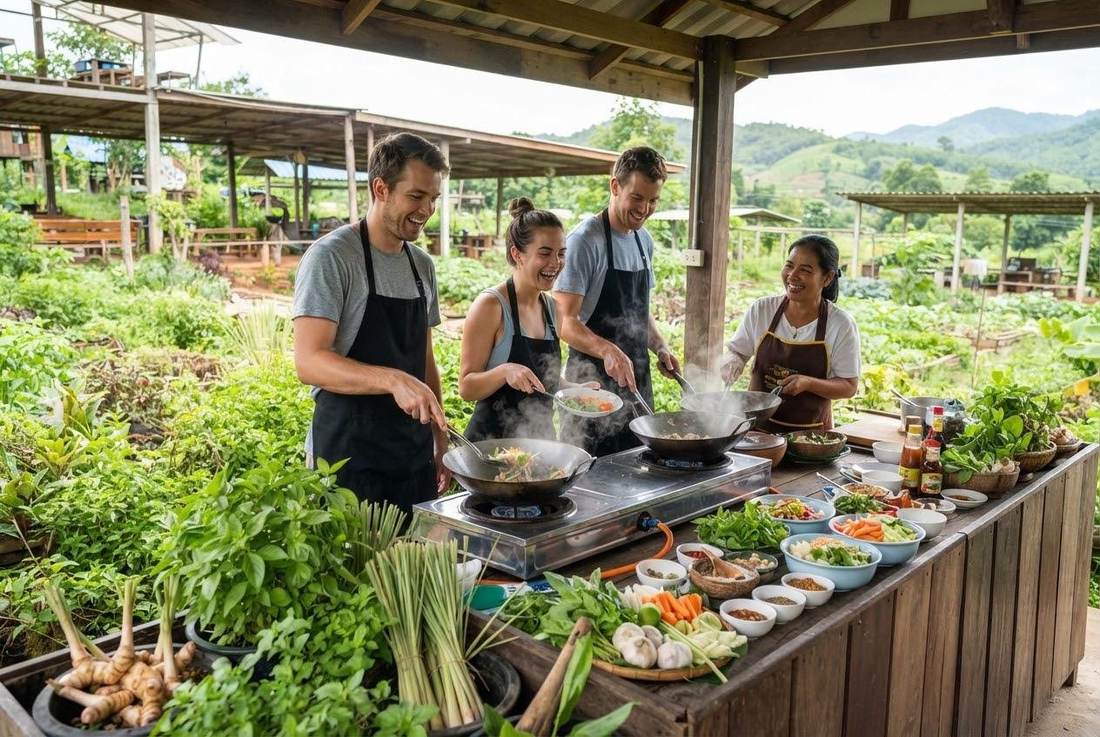
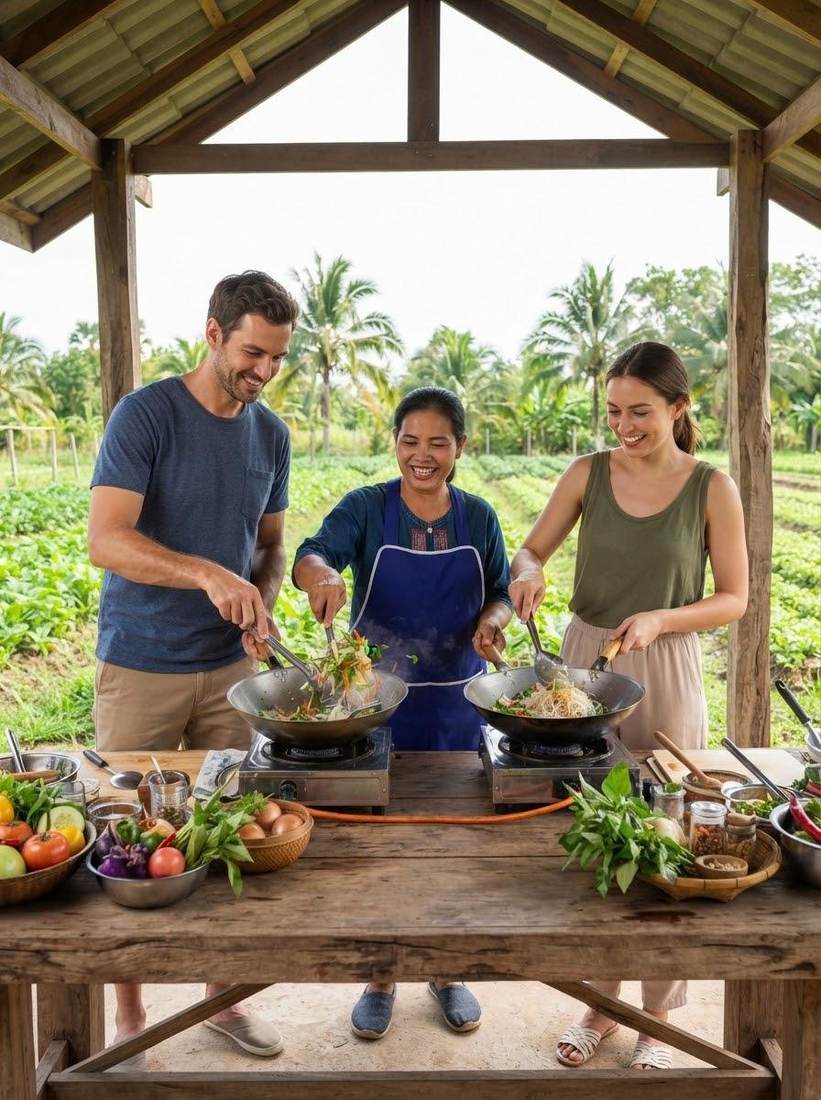
A full day on an organic farm outside the city: pick your own herbs, cook six or more dishes and eat on a terrace overlooking the fields.
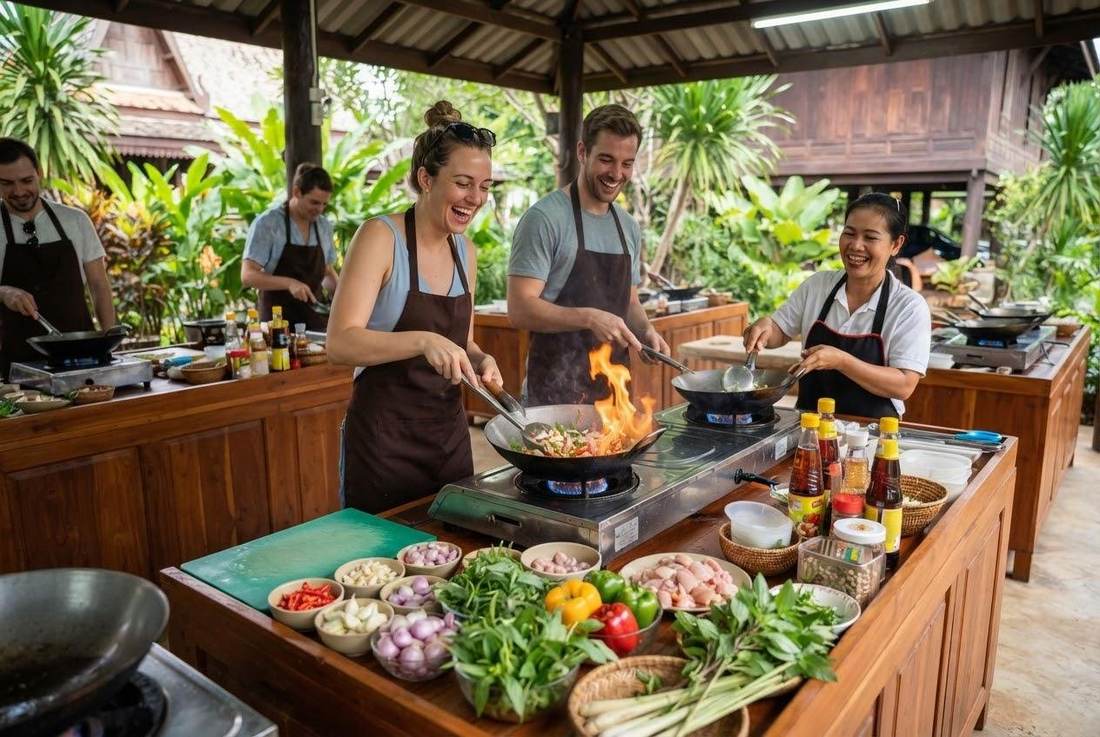
Choose the in-town school or their countryside farm. Both include a market tour and around five to seven dishes, with half-day and full-day options.
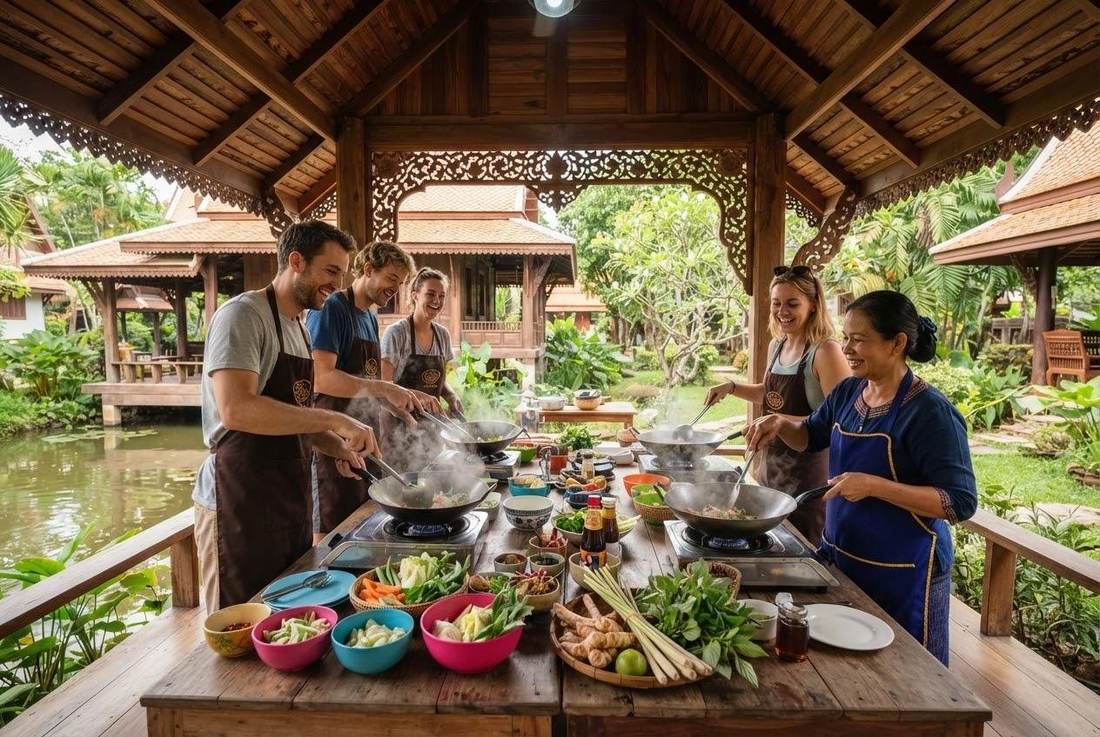
Cook in traditional Thai pavilions after a market tour and a walk round the organic garden.
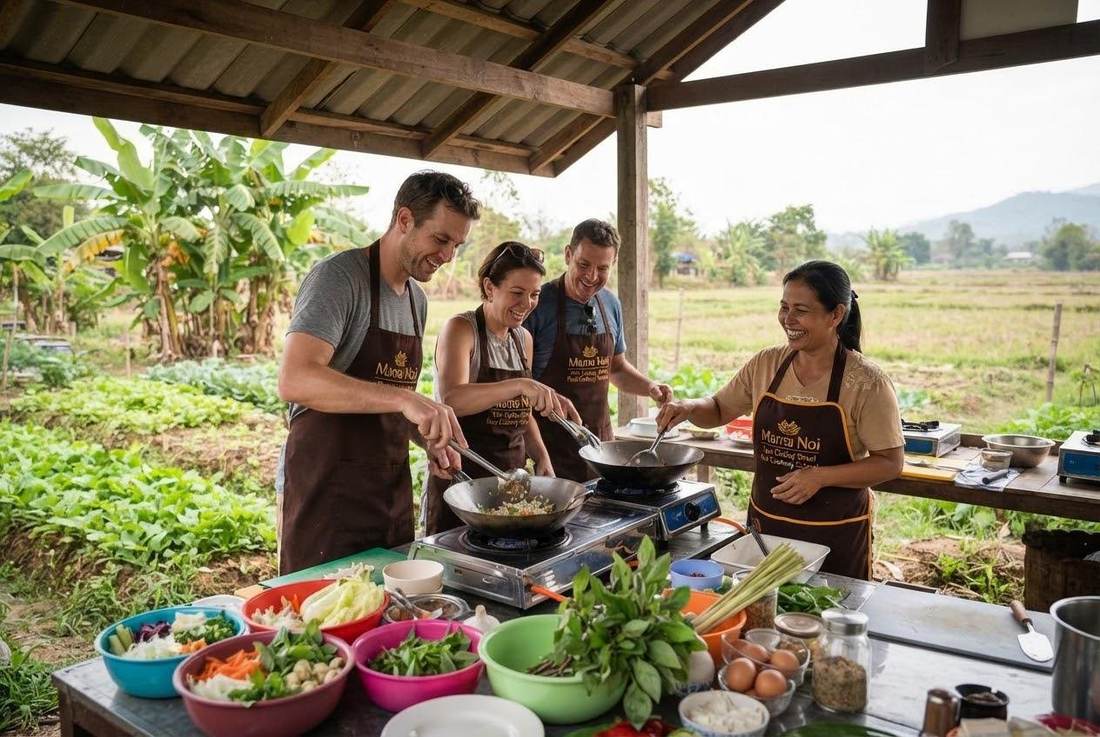
A friendly family-run class on an organic farm, with a market tour and a relaxed, small-group feel.
From street-food institutions to fine dining, all recognised in the 2026 MICHELIN Guide Thailand.
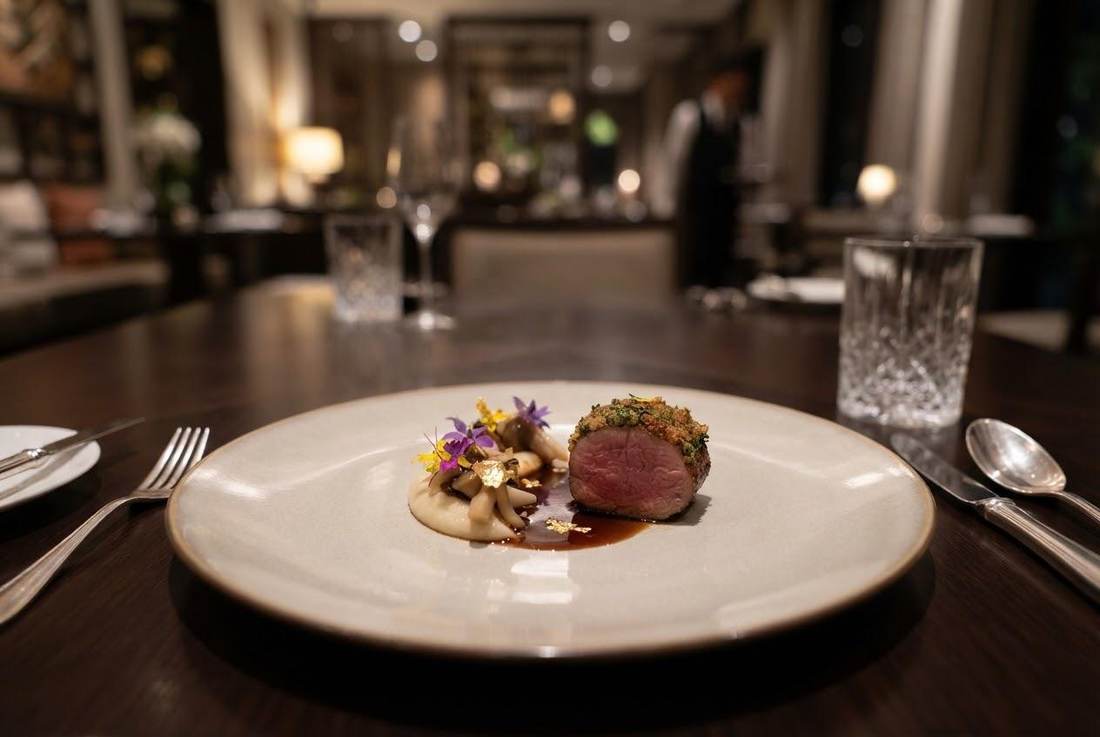
Creative European tasting menus built on local Thai ingredients, inside the InterContinental The Mae Ping.
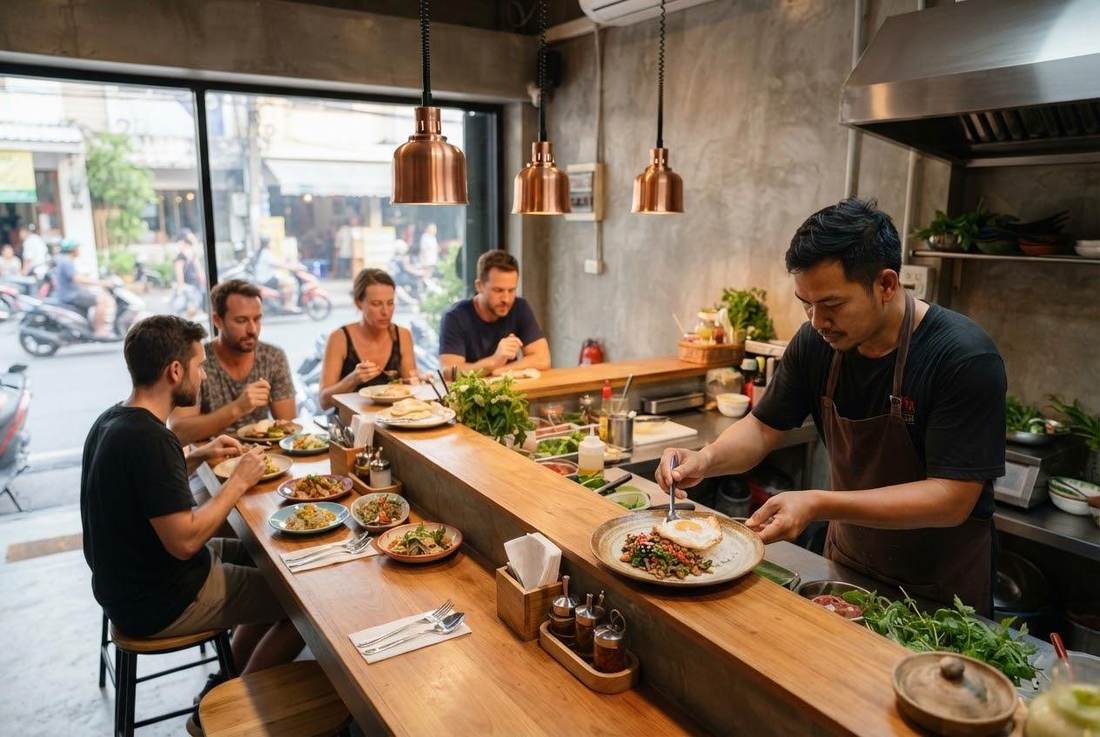
Modern Thai cooking with Malaysian and Bruneian influences, in a tiny lunch-only dining room off Huay Kaew Road.
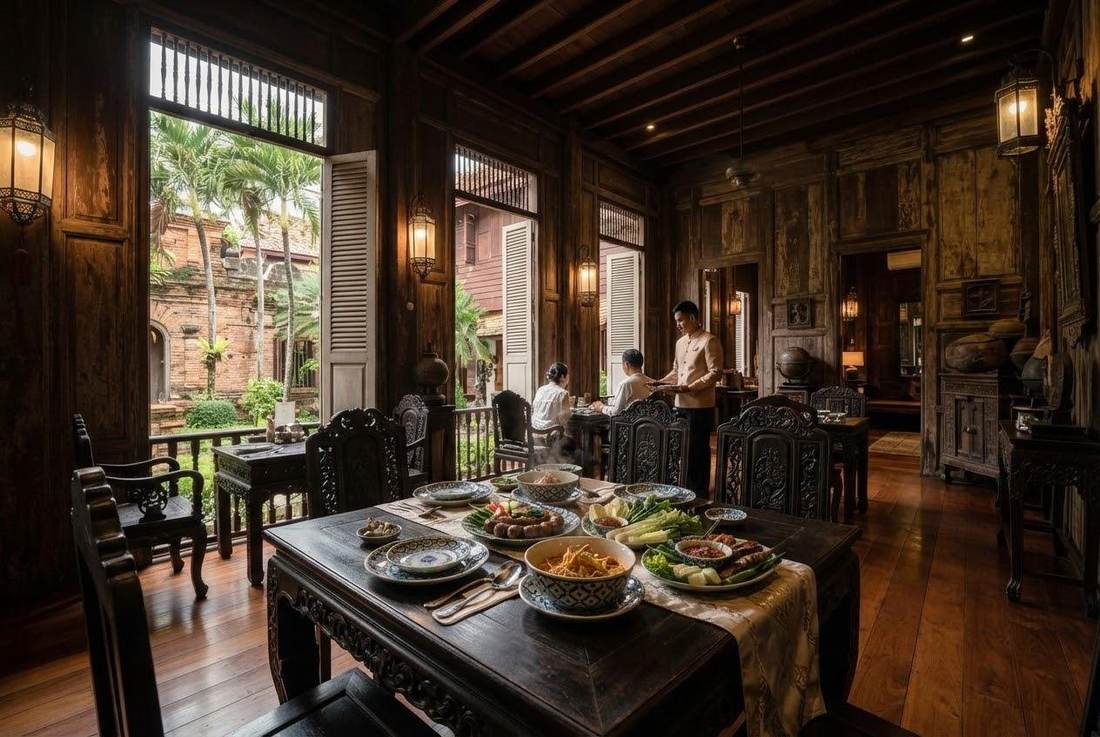
Refined northern Thai food in a beautifully restored 1880s mansion on Tha Phae Road.
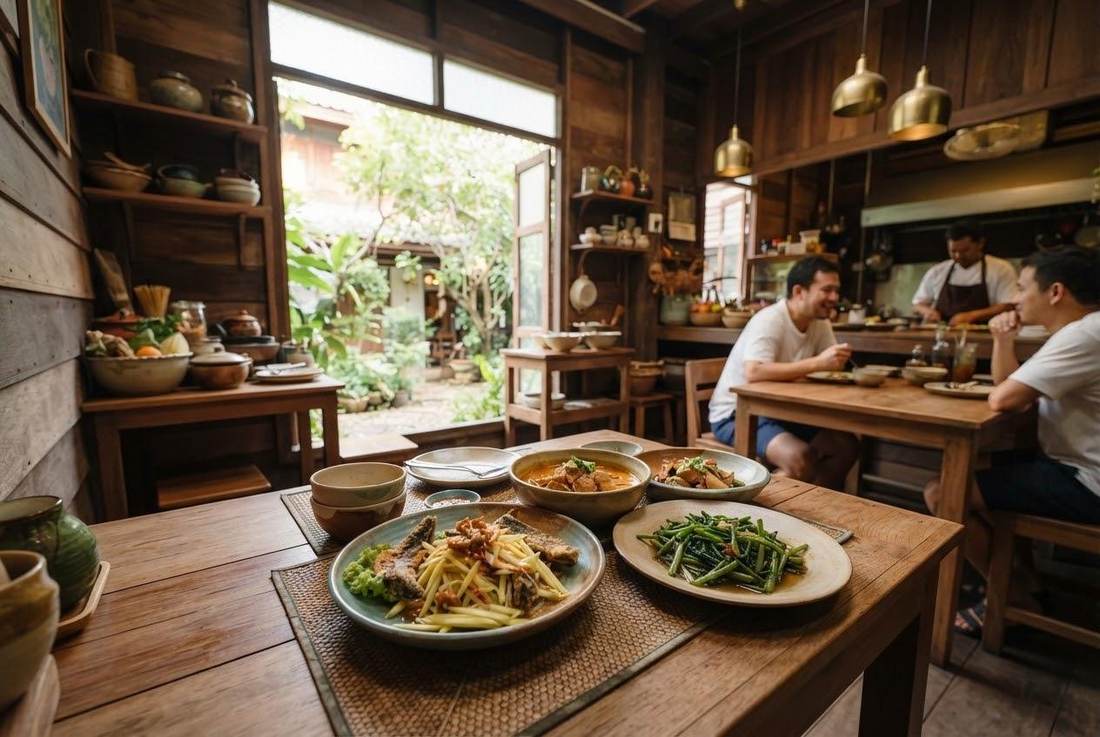
A tiny wood-lined restaurant near the Night Bazaar with a thoughtful, seasonal take on Thai food.
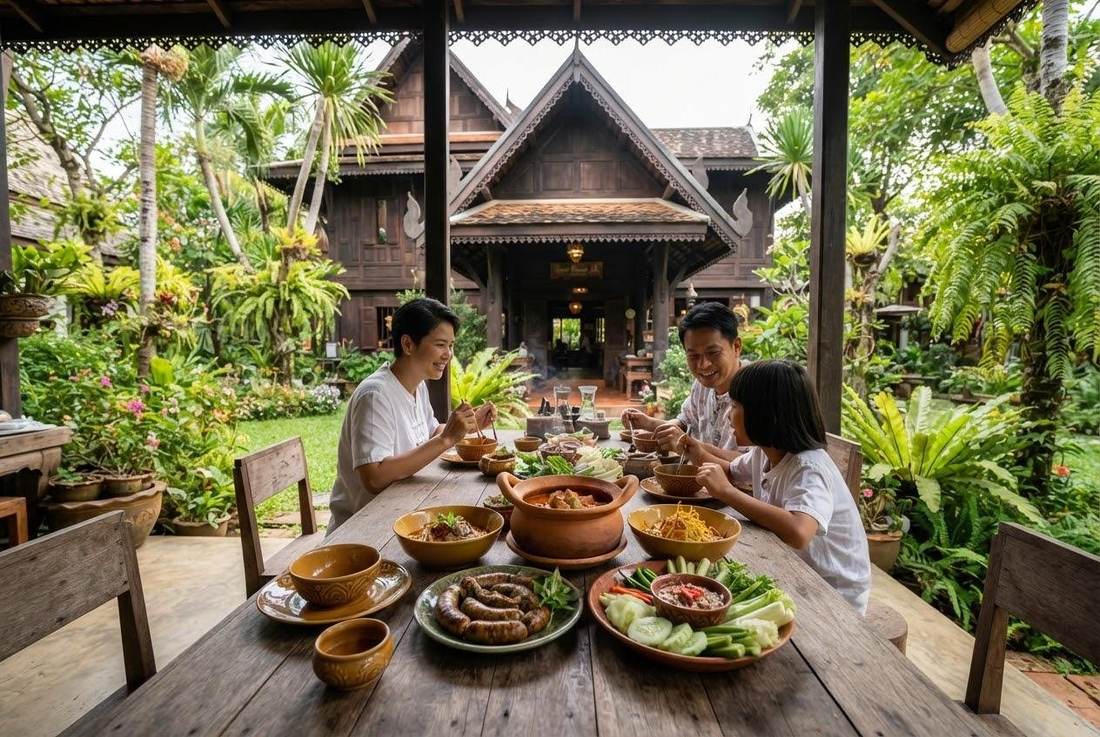
A Lanna-style wooden house in Santitham serving northern dips, curries and herby soups in a garden.
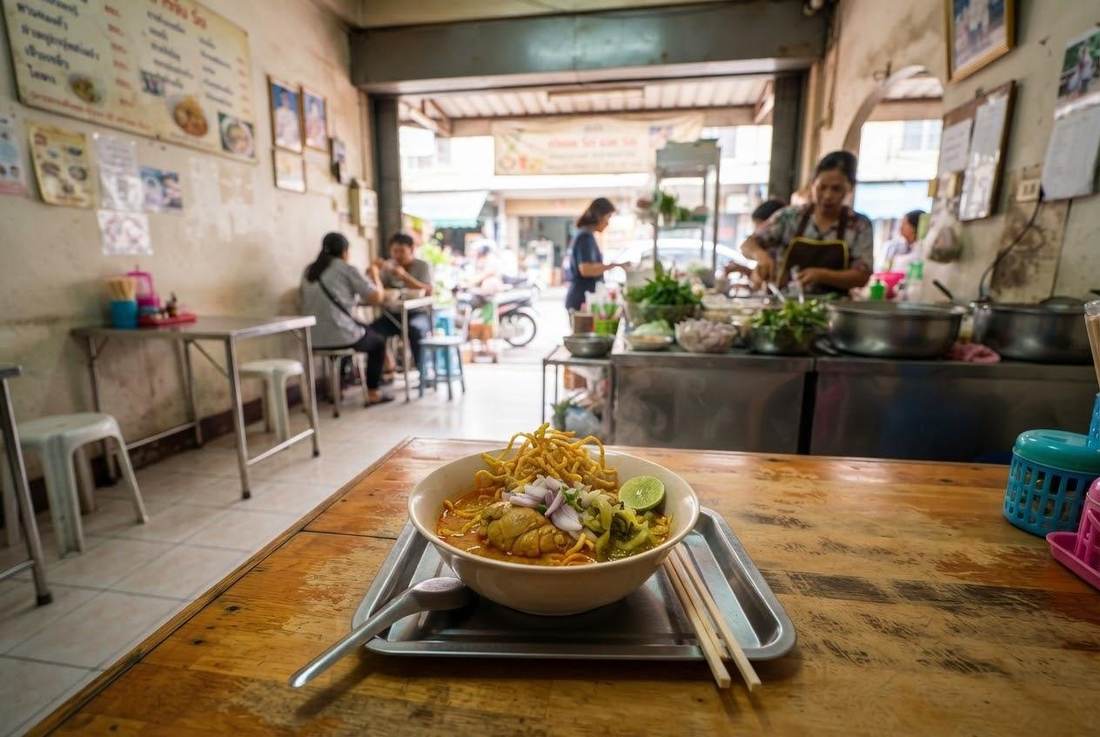
Arguably the city’s favourite bowl of khao soi, rich and gently spicy.
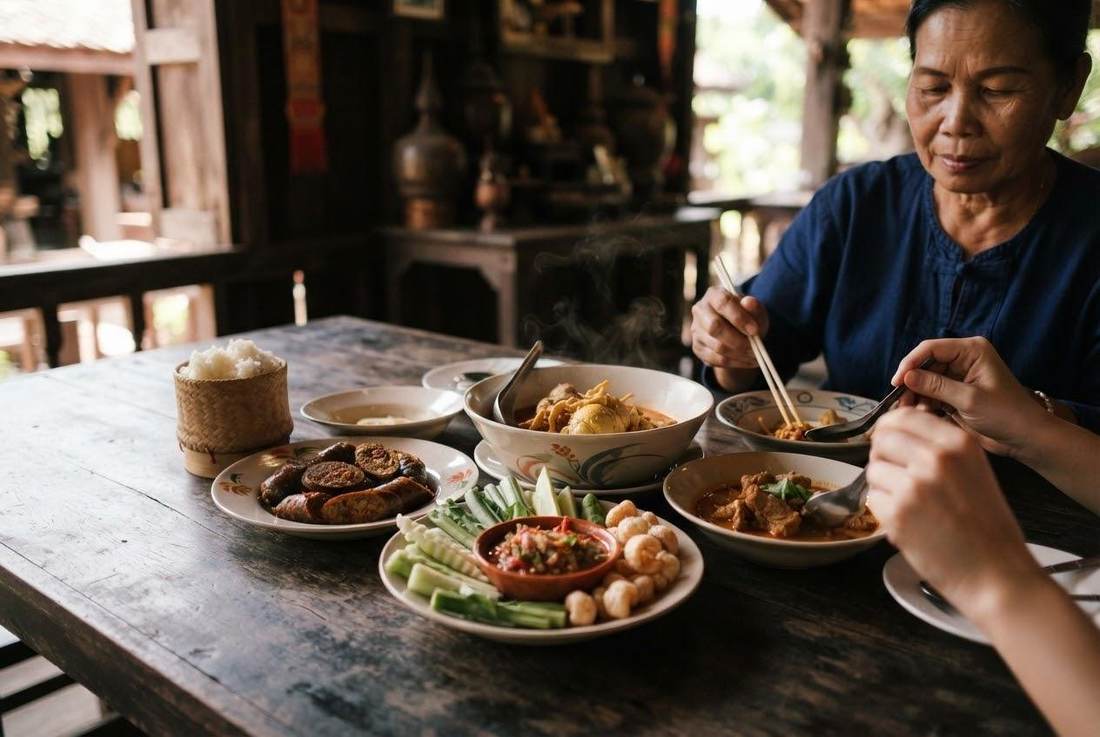
A century-old family restaurant on Wua Lai Road serving recipes handed down through generations.
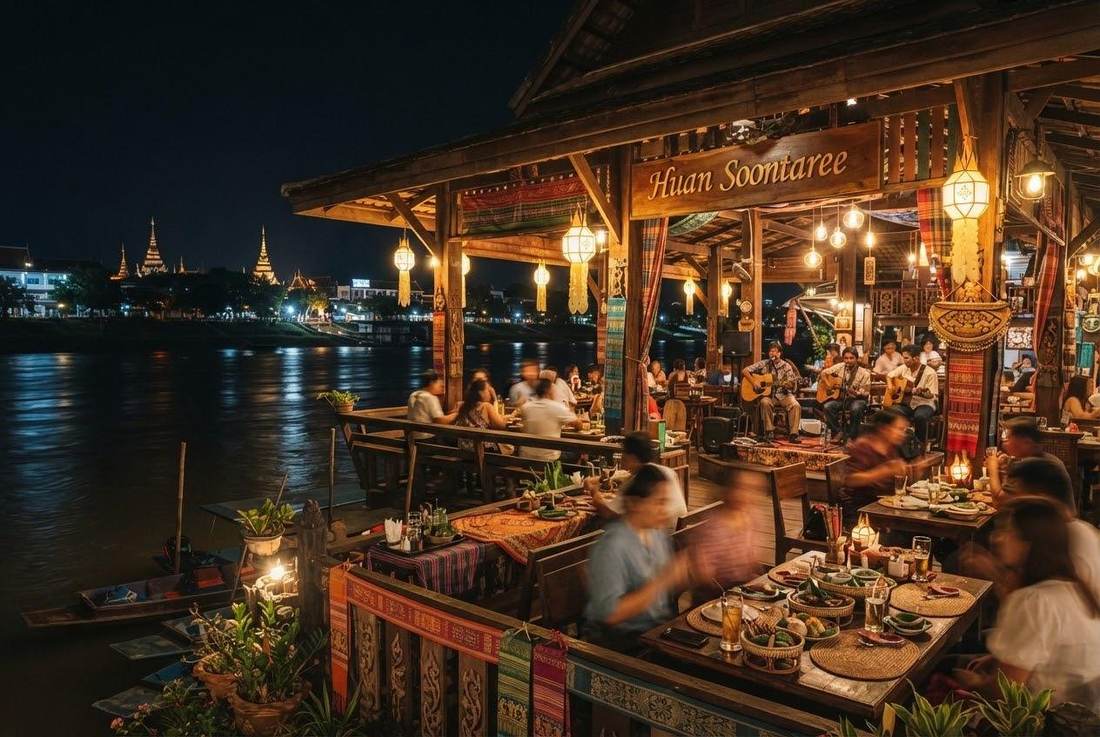
An open-air riverside restaurant where the owner, a well-known singer, performs most nights.
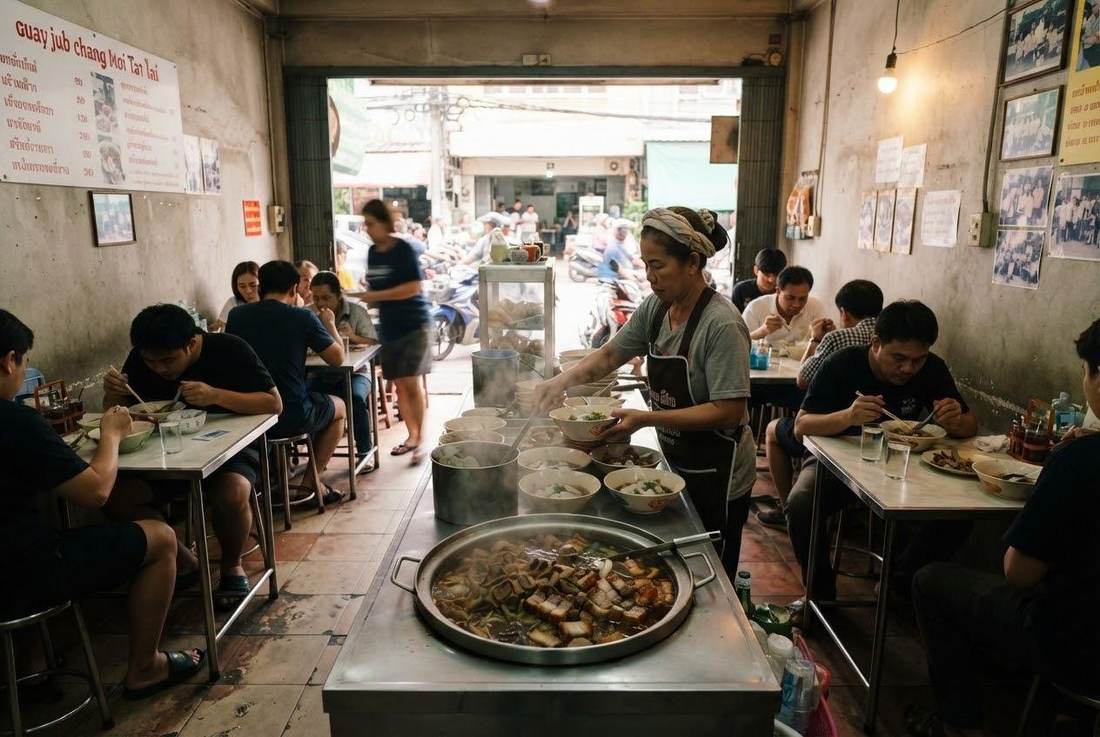
Peppery rolled-noodle soup with northern sausage and crispy pork, at a busy lunchtime shop.
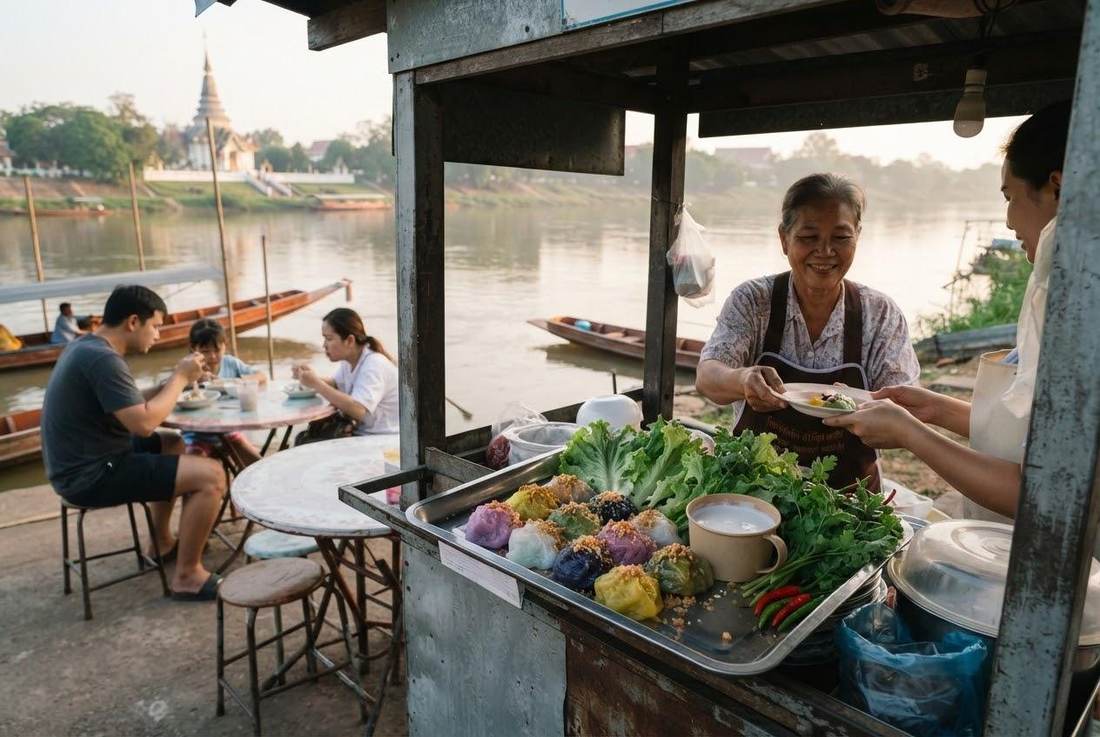
A riverside breakfast shop famous for steamed rice dumplings with fresh coconut milk.
Rooftops, live music, speakeasies and a few genuinely unique ones.
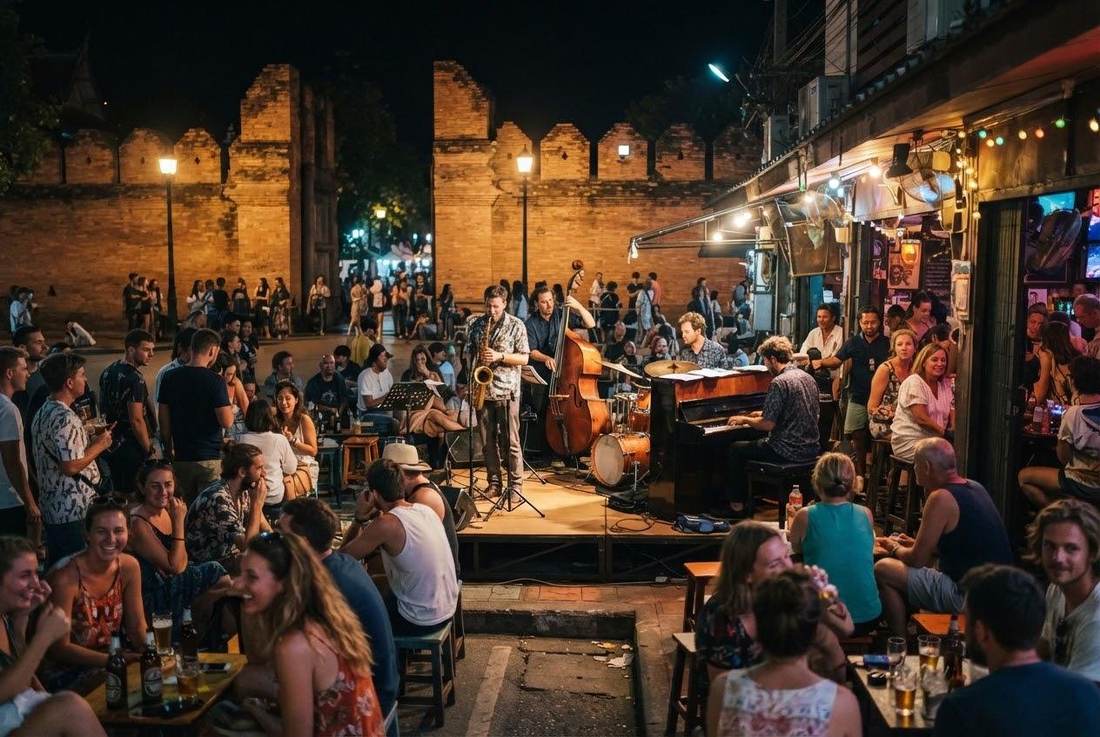
A tiny, no-frills open-air jazz bar beside Chang Phueak Gate, with live music most nights and a great mixed crowd.
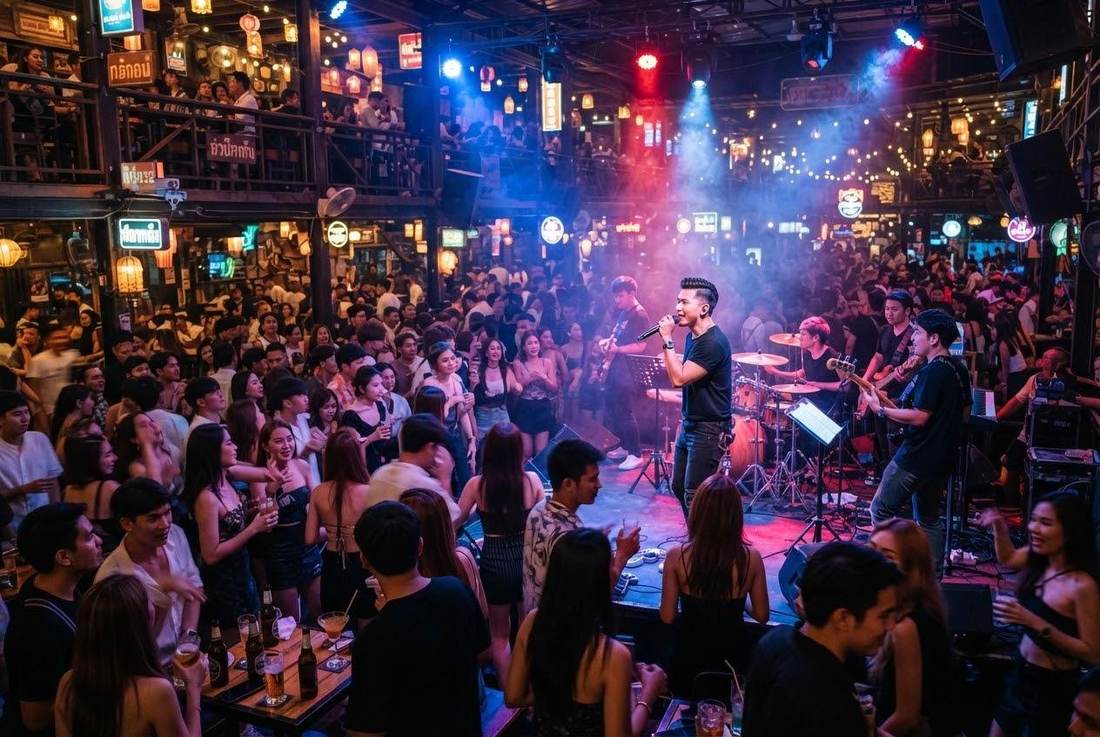
Nimman’s best-known night spot, with an outdoor area, a band stage and a club room that fills up late.
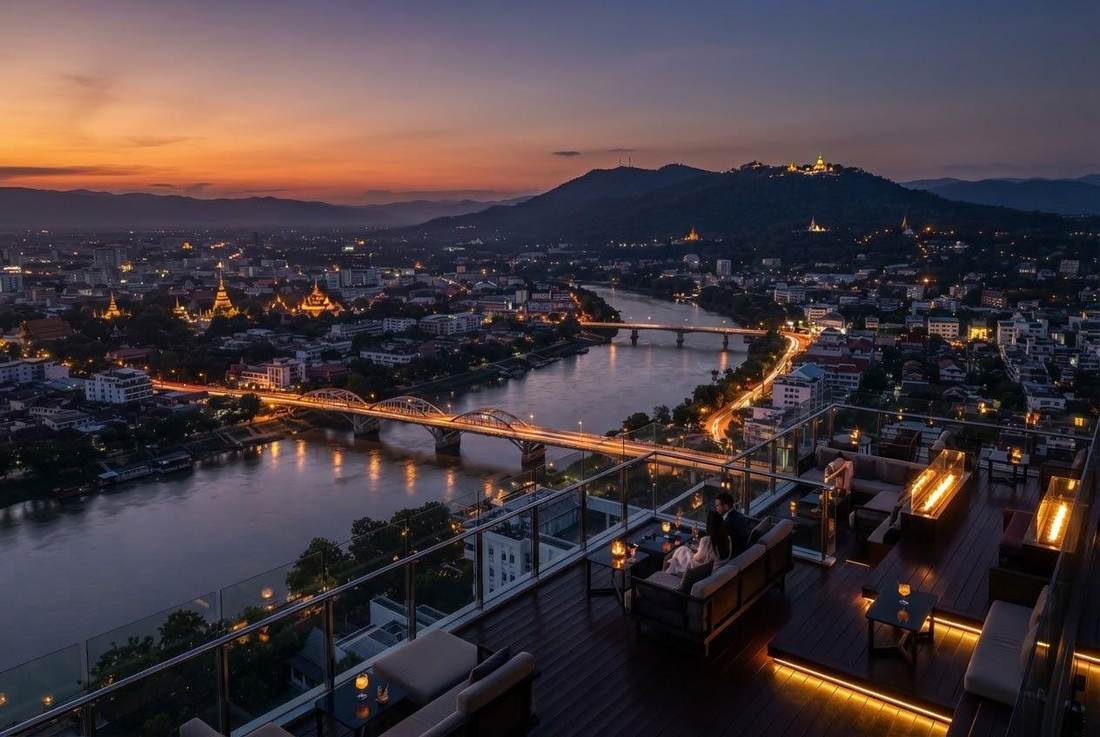
The highest rooftop bar in Chiang Mai, at the top of the Meliá, with views across the city and the Ping River.
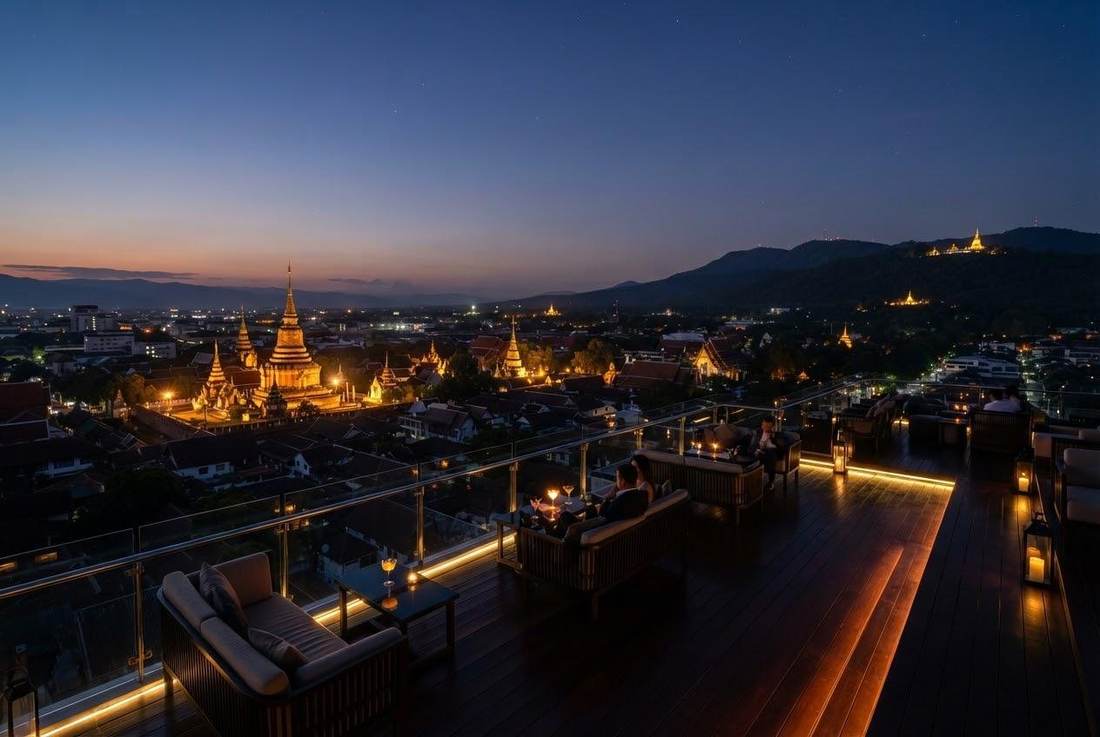
A polished rooftop bar at the InterContinental The Mae Ping, with cocktails and old-town views.
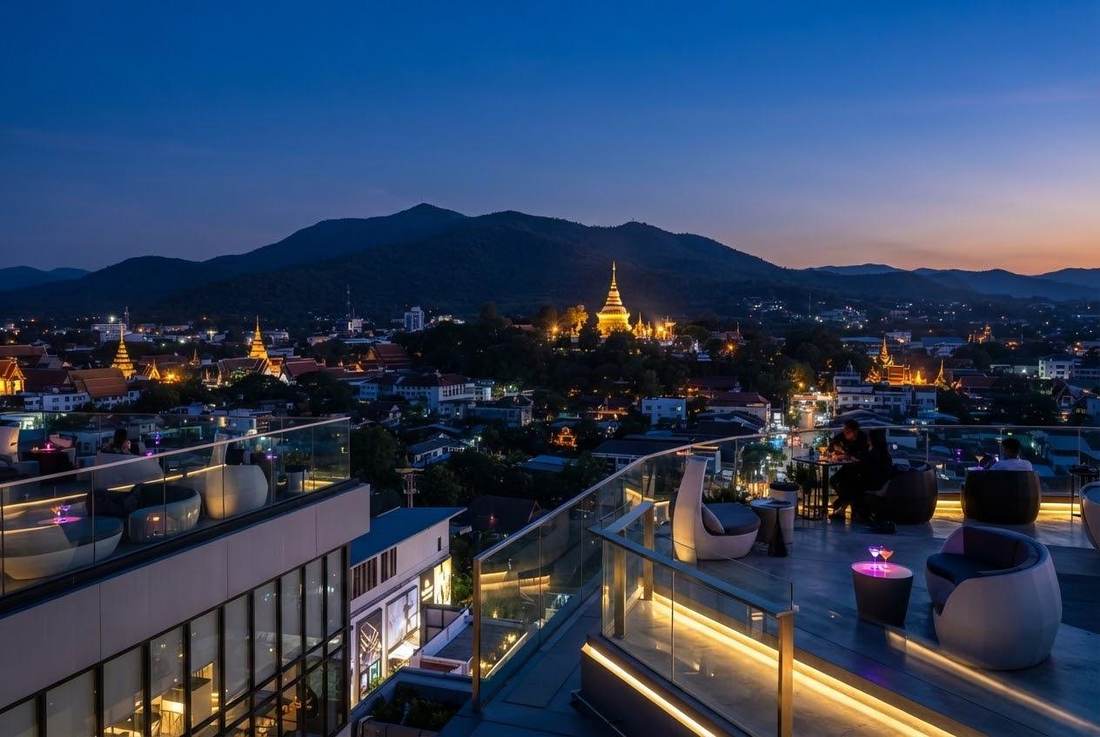
A rooftop on top of MAYA mall in Nimman with 360-degree views towards Doi Suthep.
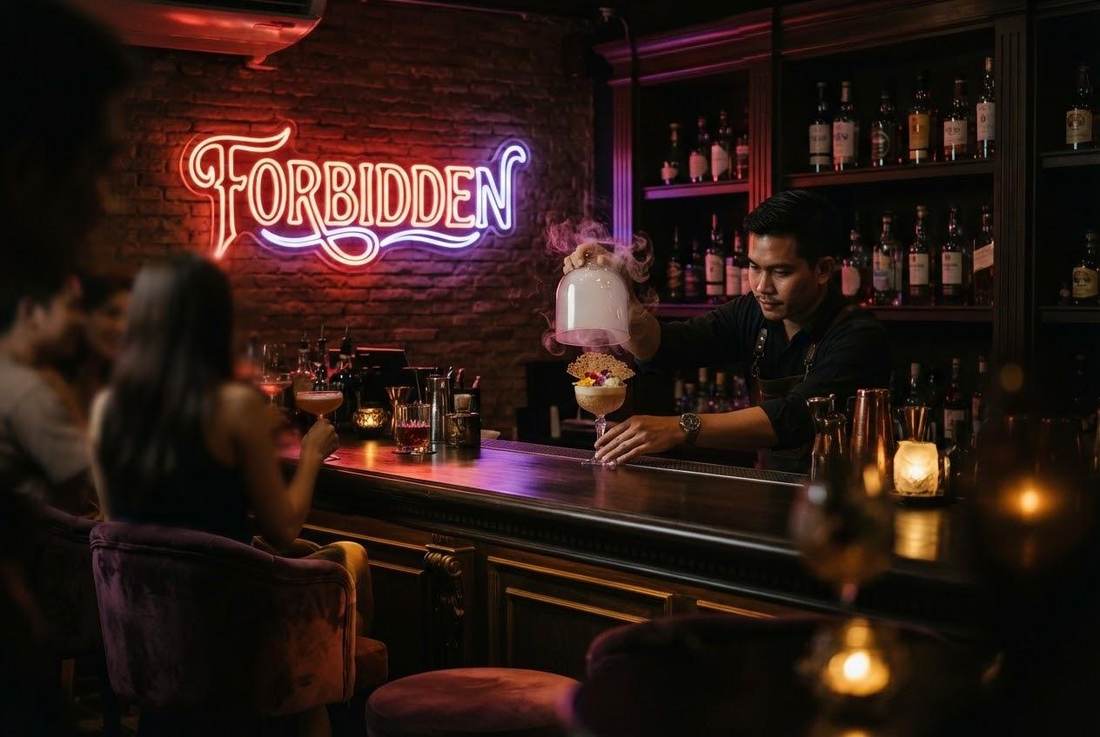
A little speakeasy above an ice-cream shop on Nimman Soi 5, with dessert-inspired cocktails.
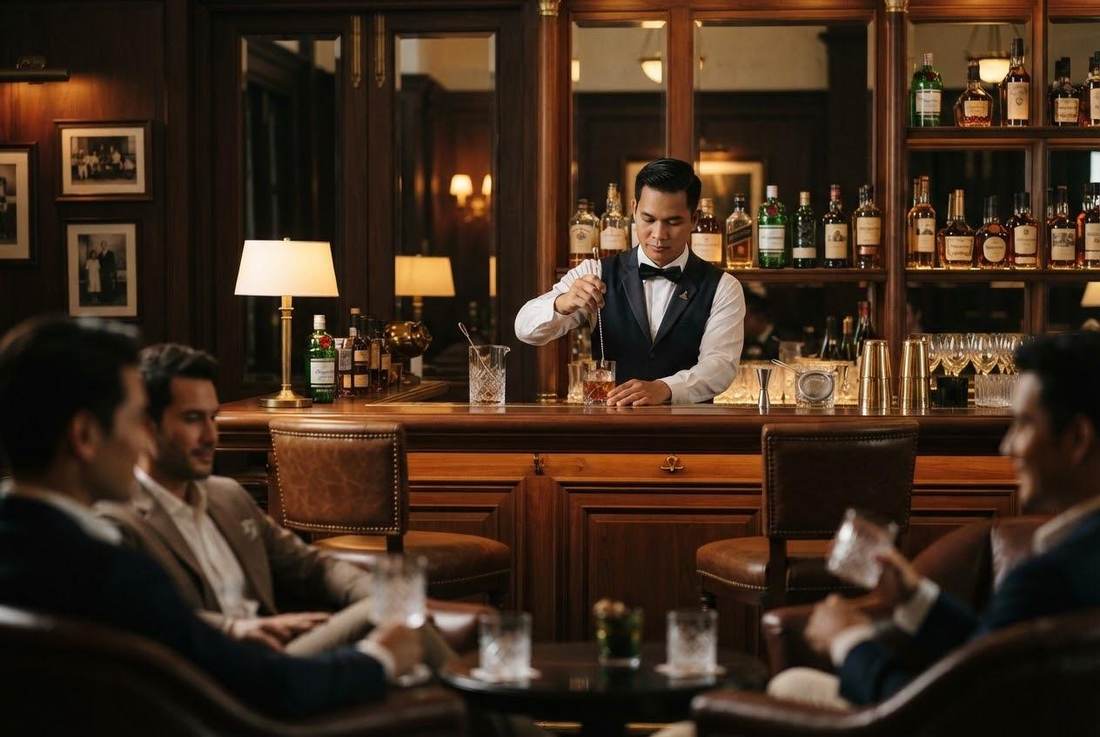
An elegant colonial-style bar at 137 Pillars House, with classic cocktails given Thai twists.
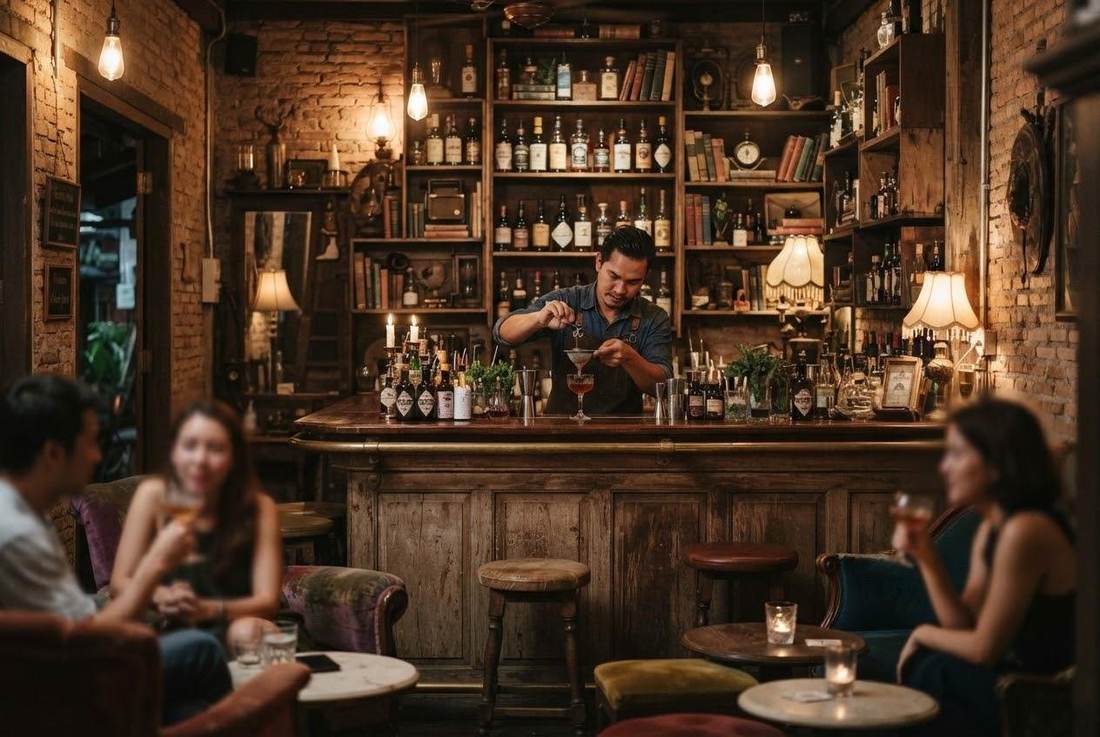
A cosy living-room-style bar on Samlarn Road in the Old City, known for excellent signature cocktails.
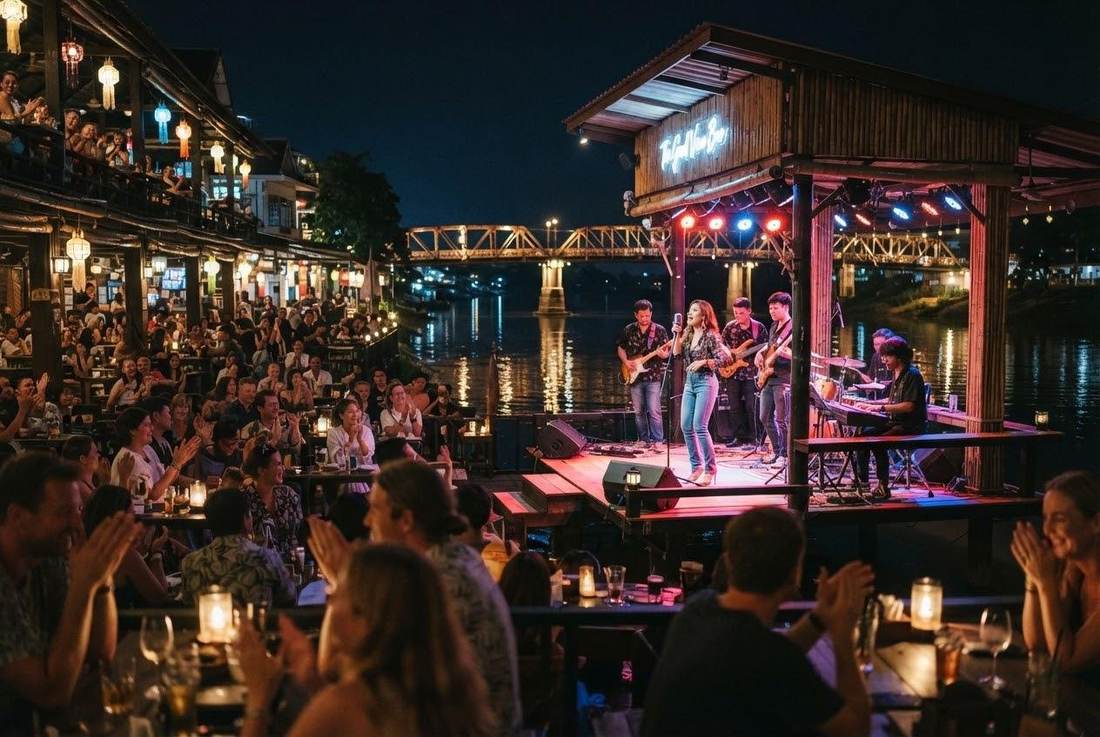
A big riverside venue with open-air tables and live bands most evenings.
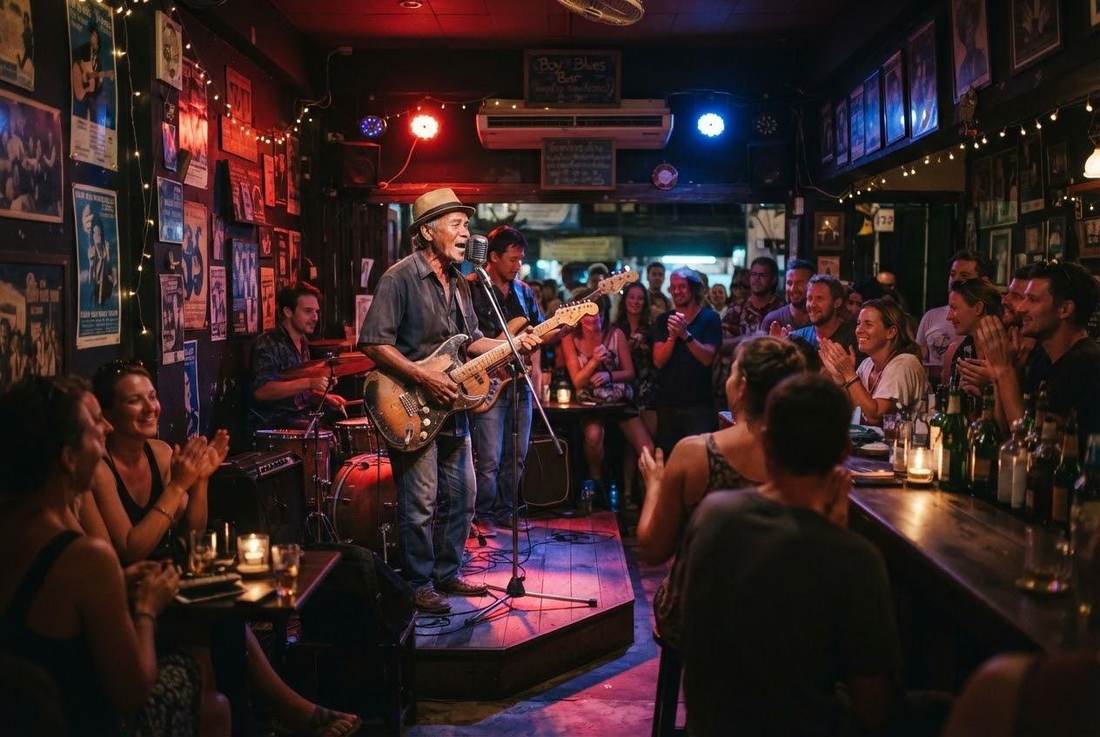
A relaxed blues and rock bar in the Night Bazaar area, with bands most nights.
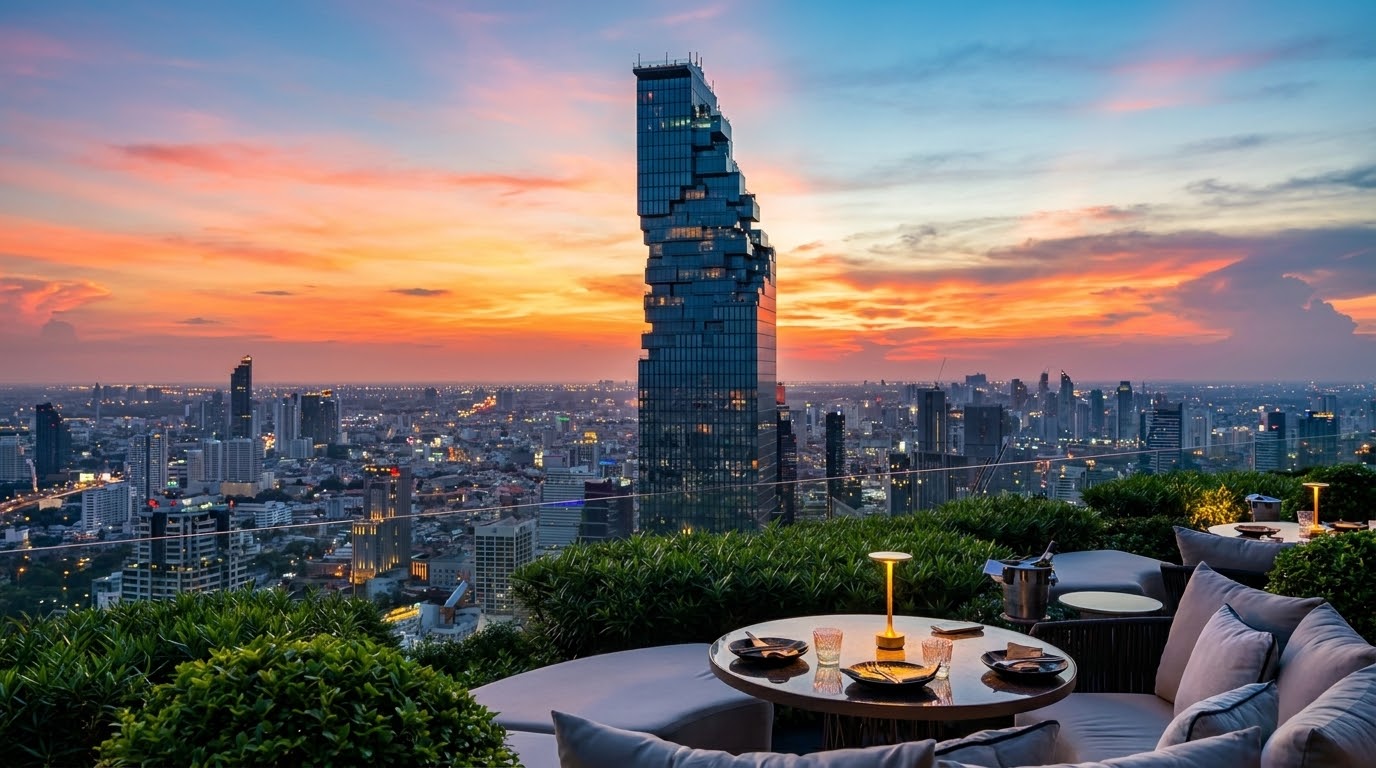
Flying in or out through Bangkok? Spend a night there and watch the sunset from one of its famous rooftop bars, high above the city lights.
Walking-street markets, khantoke dinners, Muay Thai and river cruises. The best evenings in Chiang Mai, for couples, families and solo travellers.
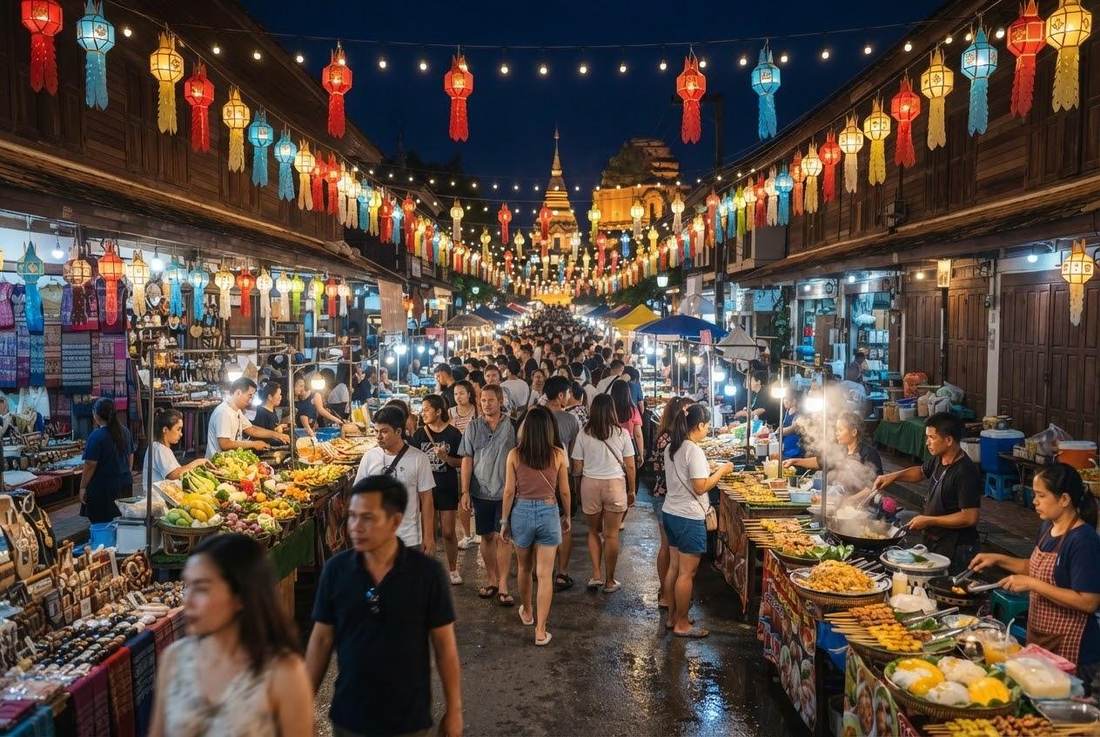
The city’s biggest weekly market takes over Ratchadamnoen Road from Tha Phae Gate, with crafts, live buskers and temple food courts.
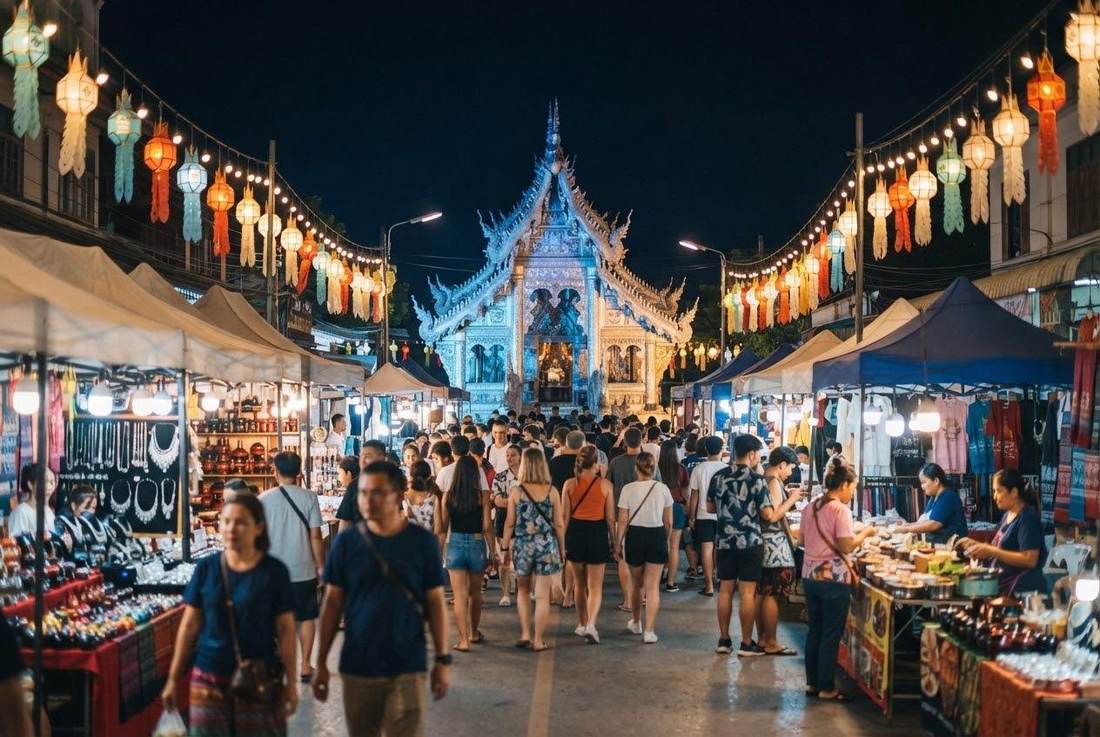
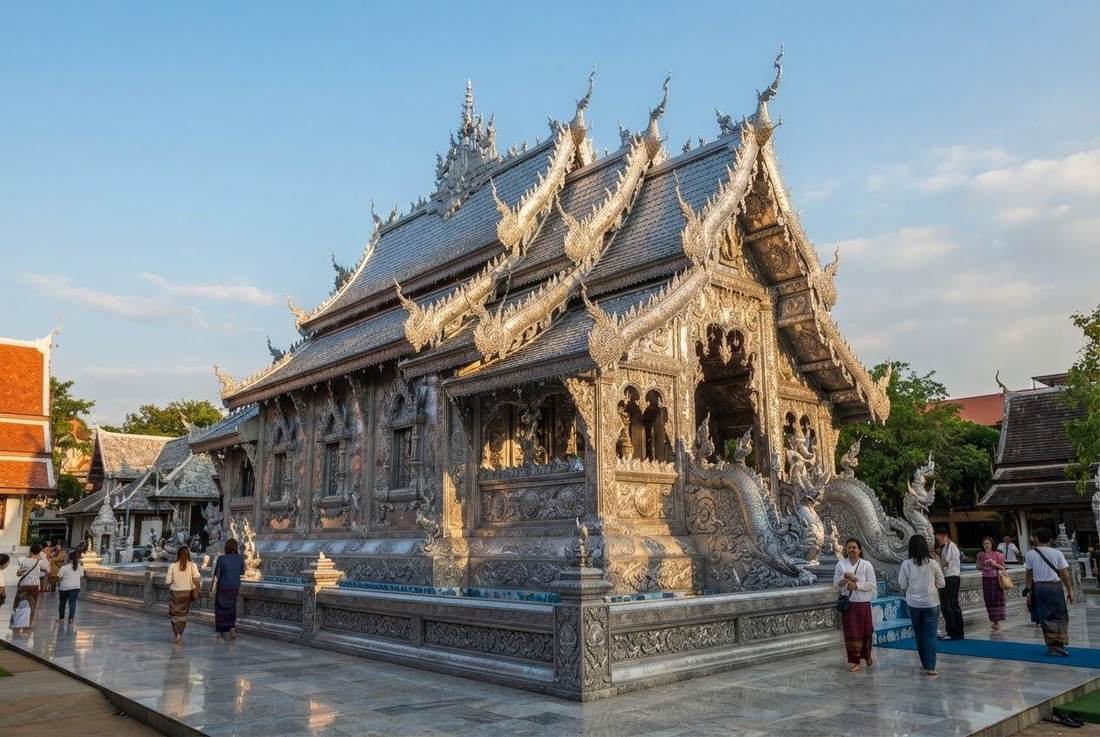
A slightly calmer market on the silversmiths’ street south of the moat, with the Silver Temple lit up.
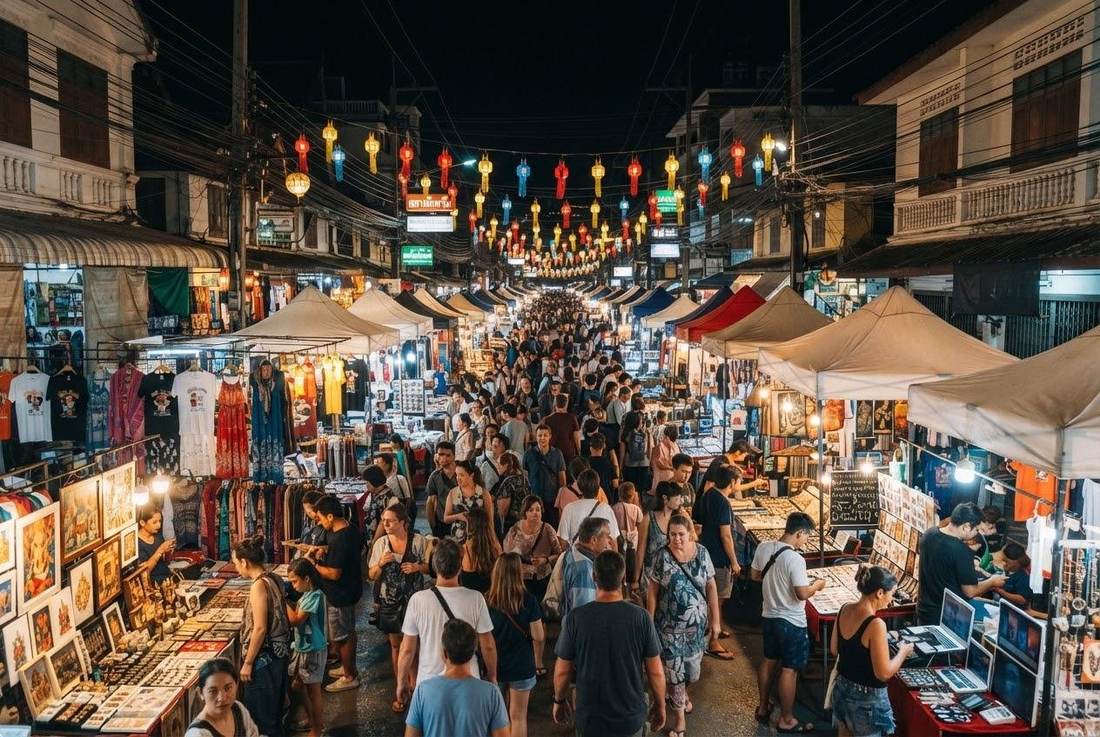
Stalls, food halls and bars fill Chang Klan Road every evening.
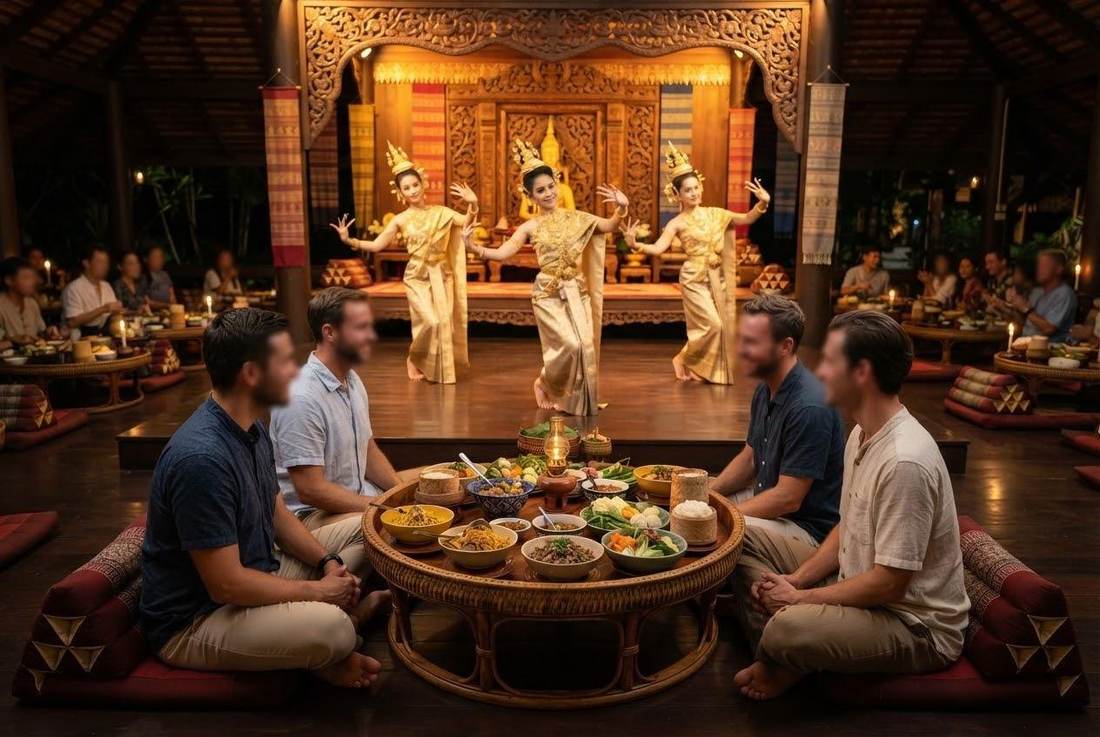
A traditional northern Thai dinner served on low round trays, with classical Lanna and hill-tribe dance, at the Old Chiang Mai Cultural Center.
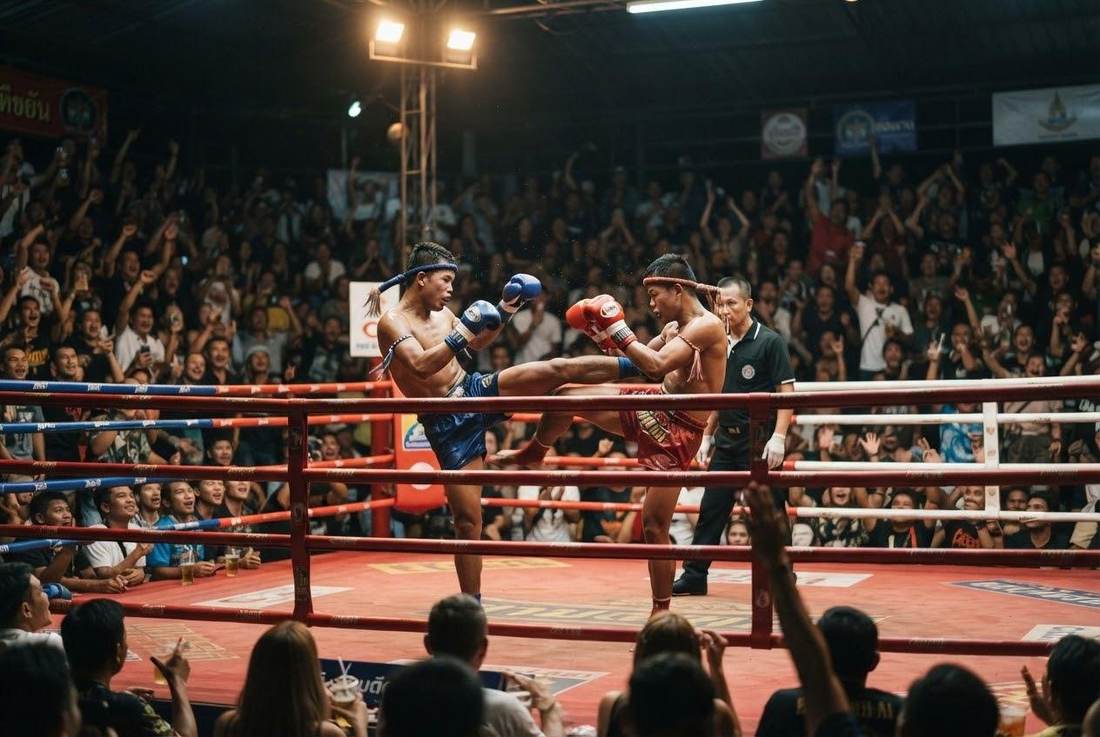
Several stadiums around Tha Phae Gate and Loi Kroh Road hold regular Muay Thai fights, with loud music and a buzzing crowd.
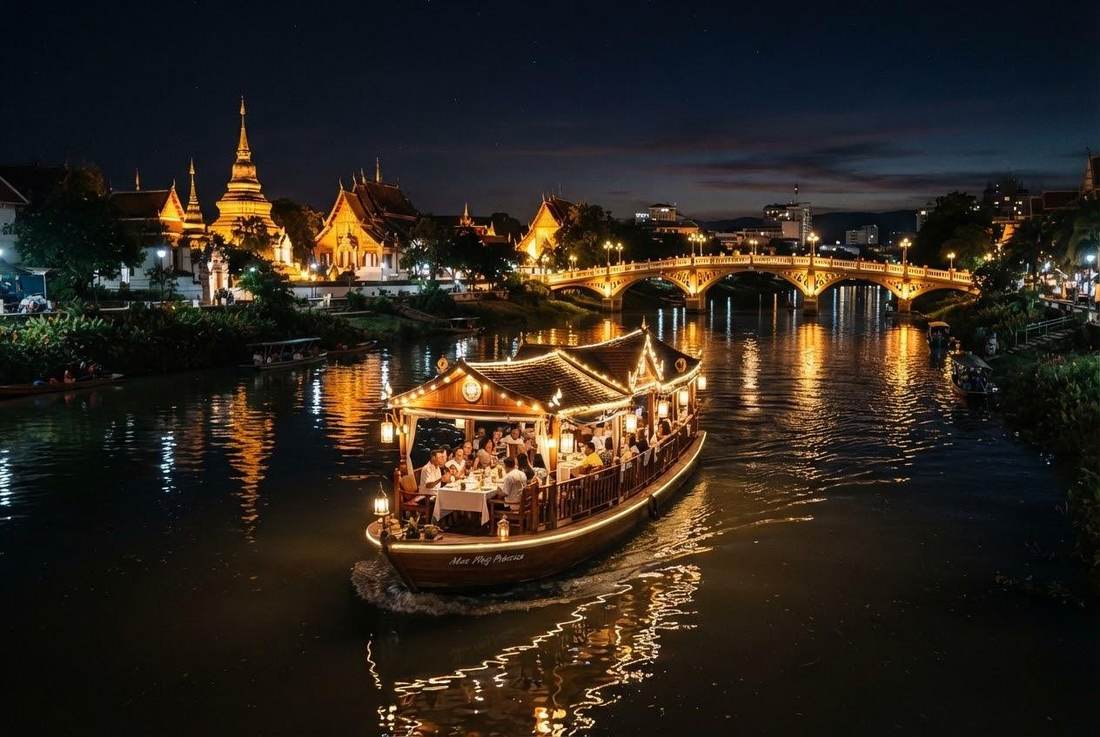
A relaxed evening boat trip with dinner, past riverside houses, temples and bridges lit up at night.
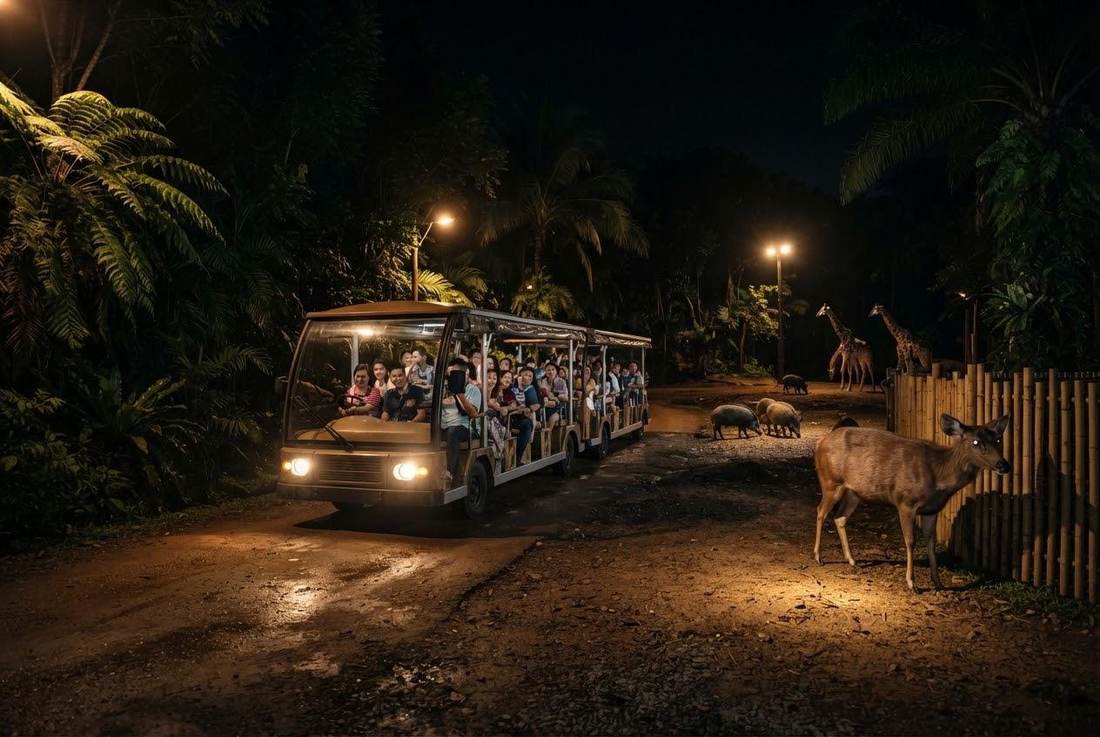
A night-time tram ride among animals roaming open areas, plus a lakeside light show.
Festivals, races and big events in Chiang Mai worth planning your trip around.
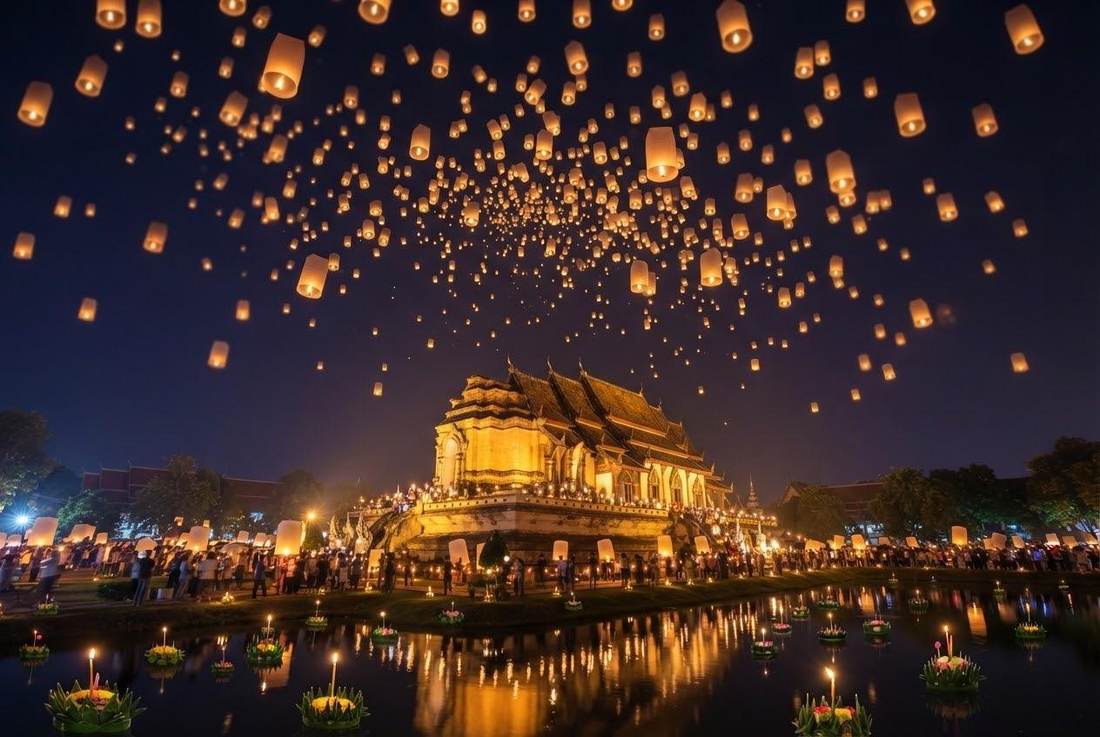
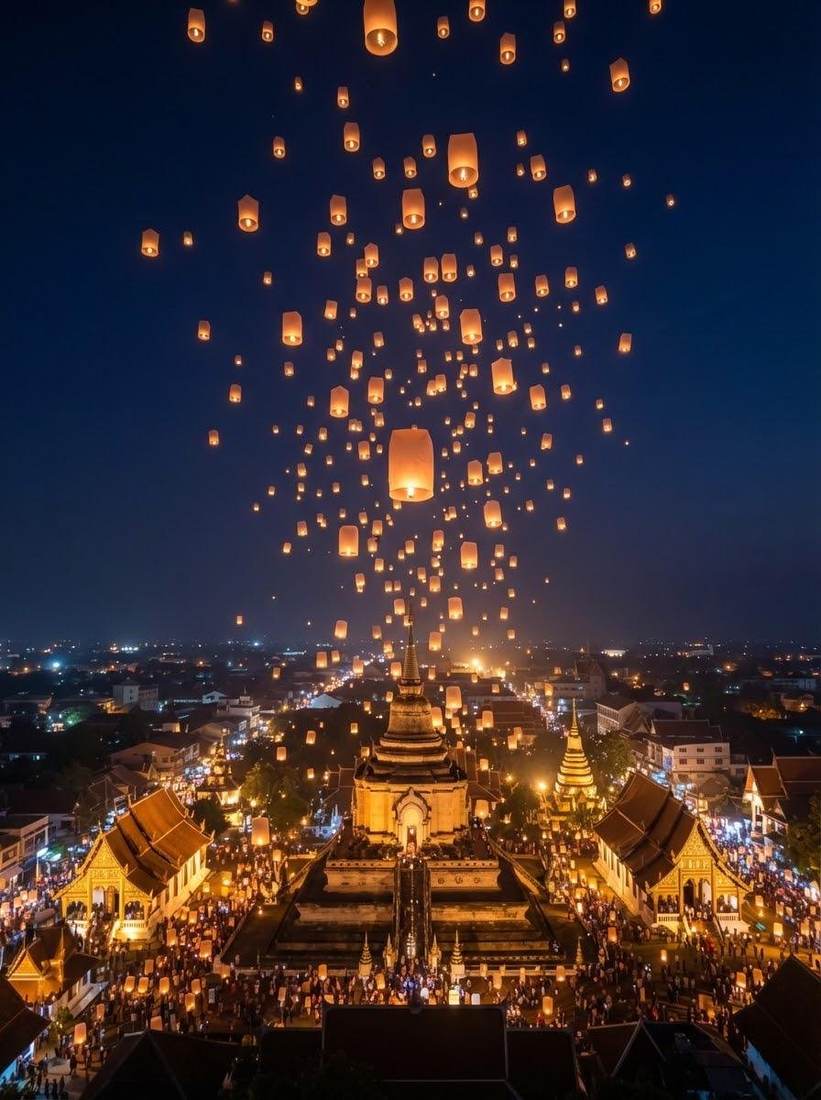
Chiang Mai’s most magical nights. Lanterns and candles fill the temples, giant illuminated floats parade from Tha Phae Gate on the 24th and 25th, and people float krathongs on the Ping River. The full-moon night, 24 November, is the peak.
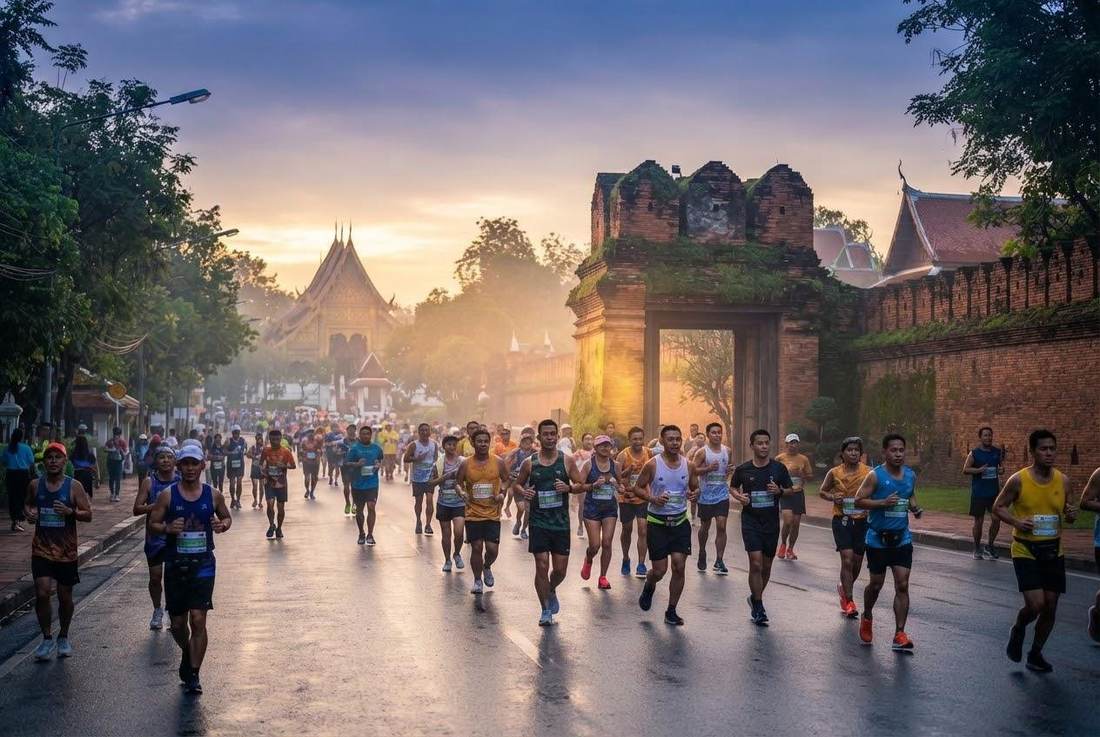
The city’s marathon starts and finishes at Tha Phae Gate, with full, half and shorter races through the old town in the cool morning air.
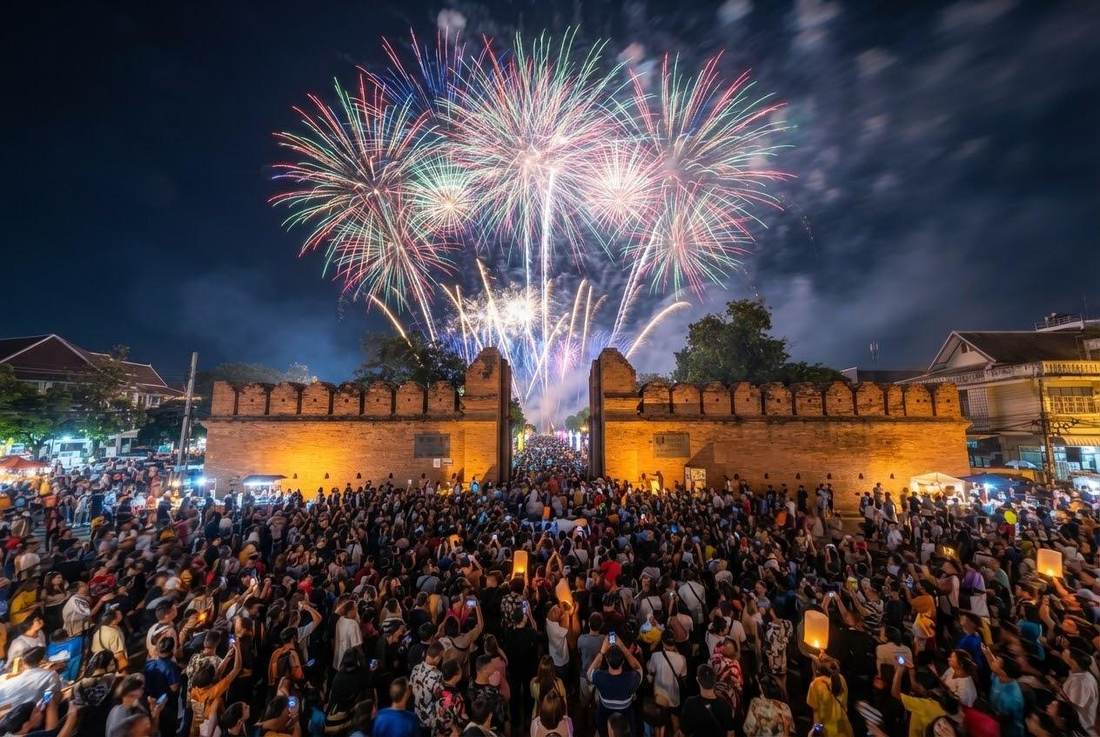
Crowds gather at Tha Phae Gate and along the river to count down to 2027, with music, food stalls and fireworks.
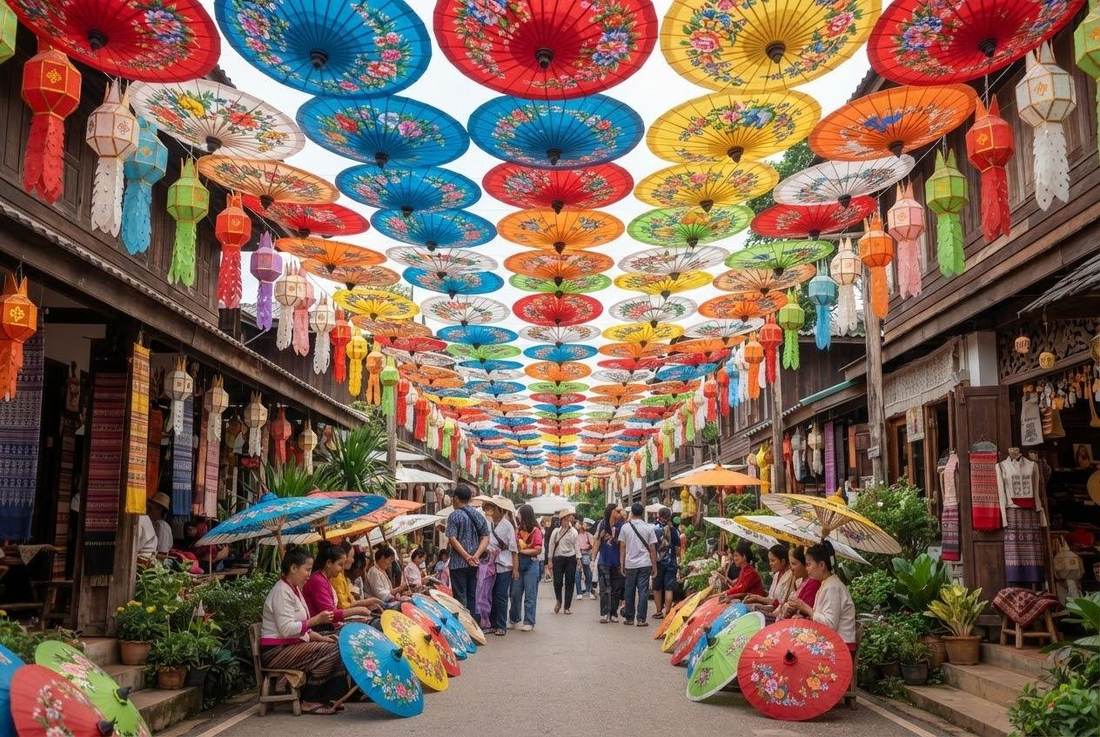
The umbrella-making village of Bo Sang, east of the city, celebrates its craft with painted umbrellas, parades and a local fair. Usually held over a weekend in the middle of January.
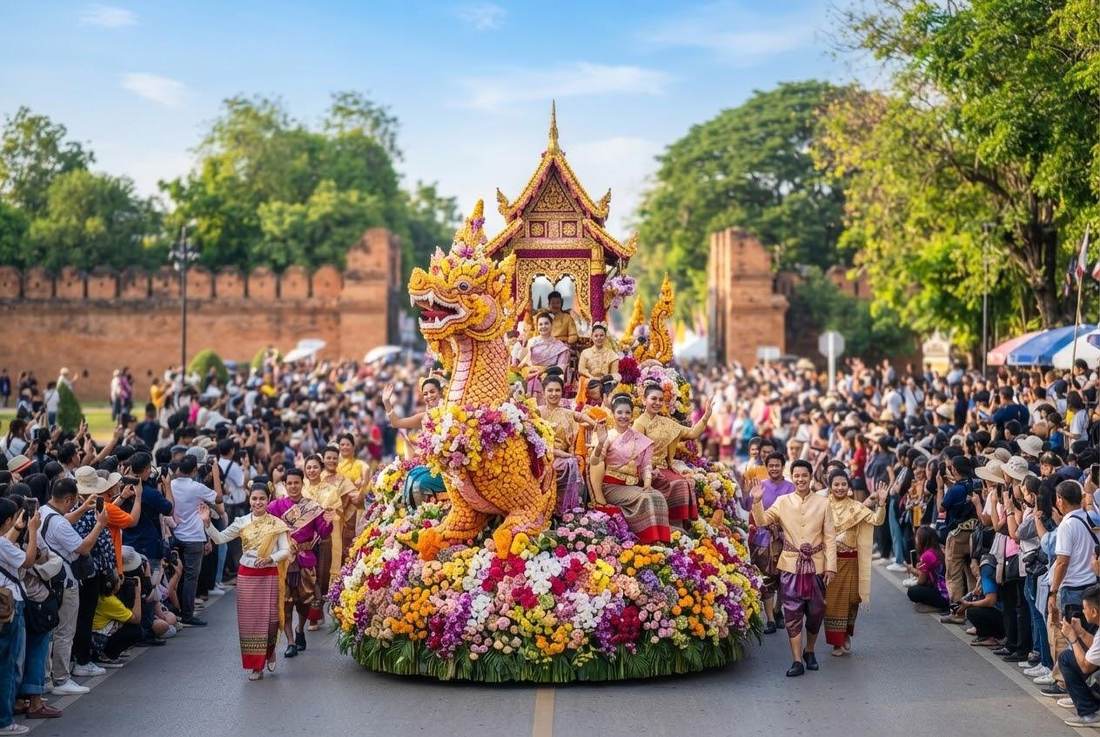
Flower-covered floats parade from Nawarat Bridge to Suan Buak Haad Park, which fills with flower displays and stalls for the weekend. Usually held in early February.
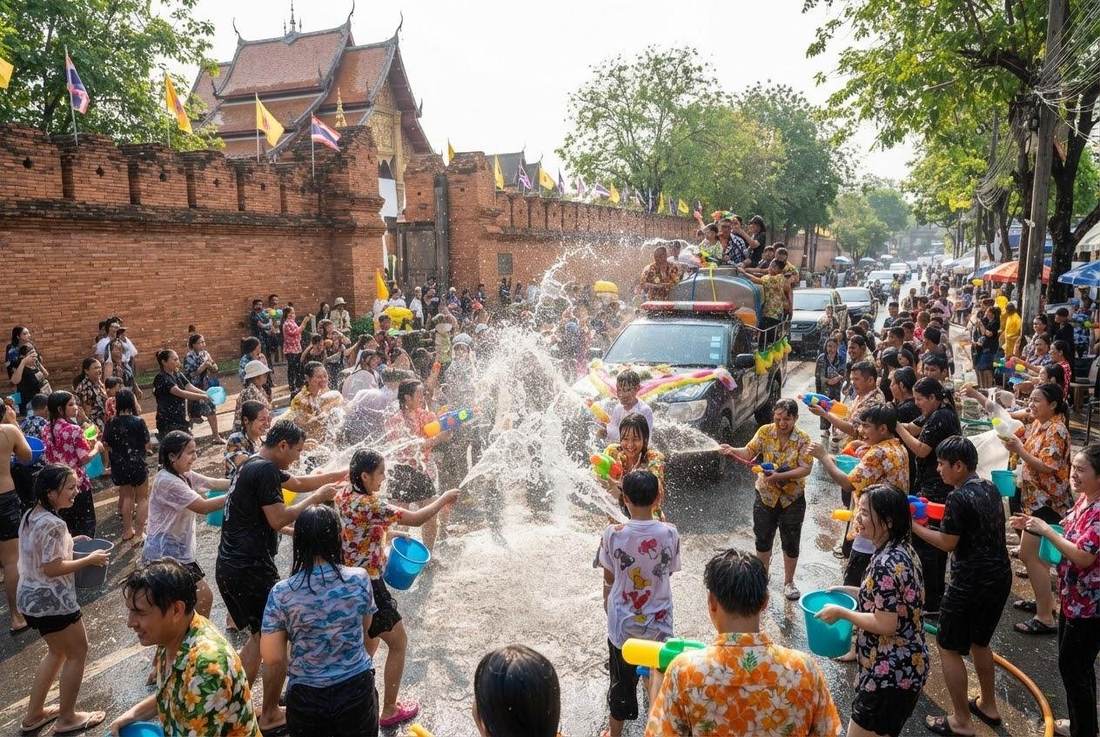
Thai New Year, and Chiang Mai has the biggest celebration in the country. The whole moat becomes a giant water fight, with parades and temple ceremonies too.
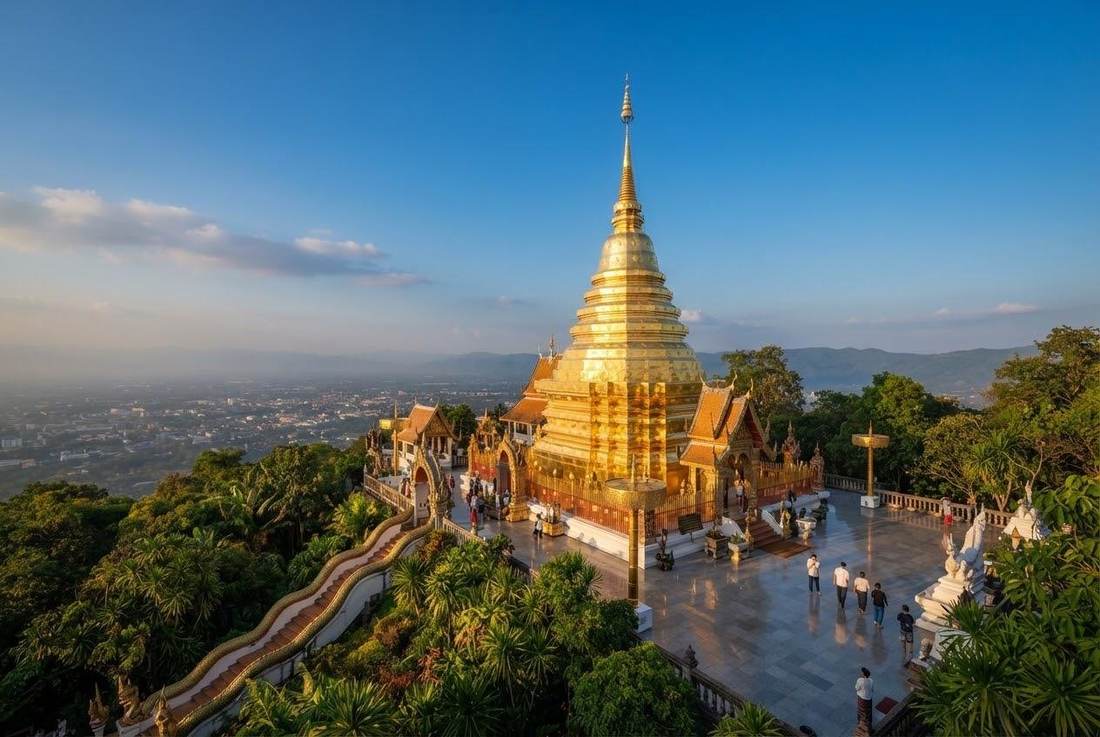
Chiang Mai’s famous golden mountain temple, reached by a 300-step dragon staircase, often paired with the forest temple of Wat Umong.
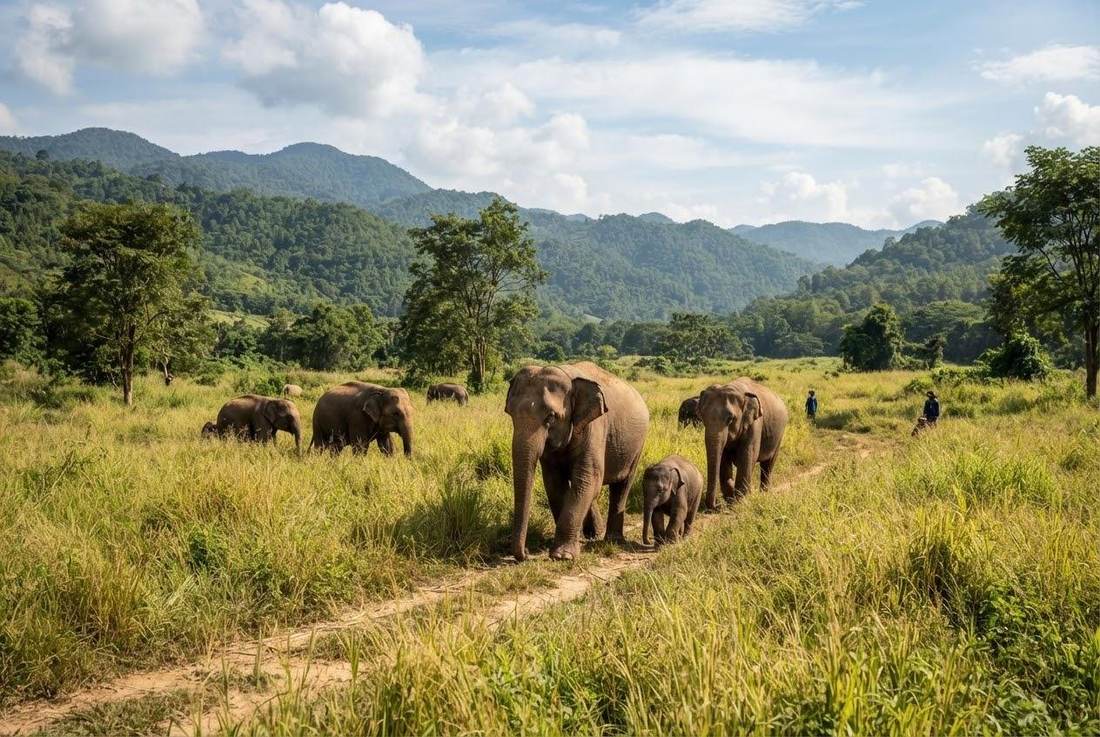
The most respected rescue sanctuary near Chiang Mai. You watch and feed rescued elephants roaming freely: no riding, no shows.
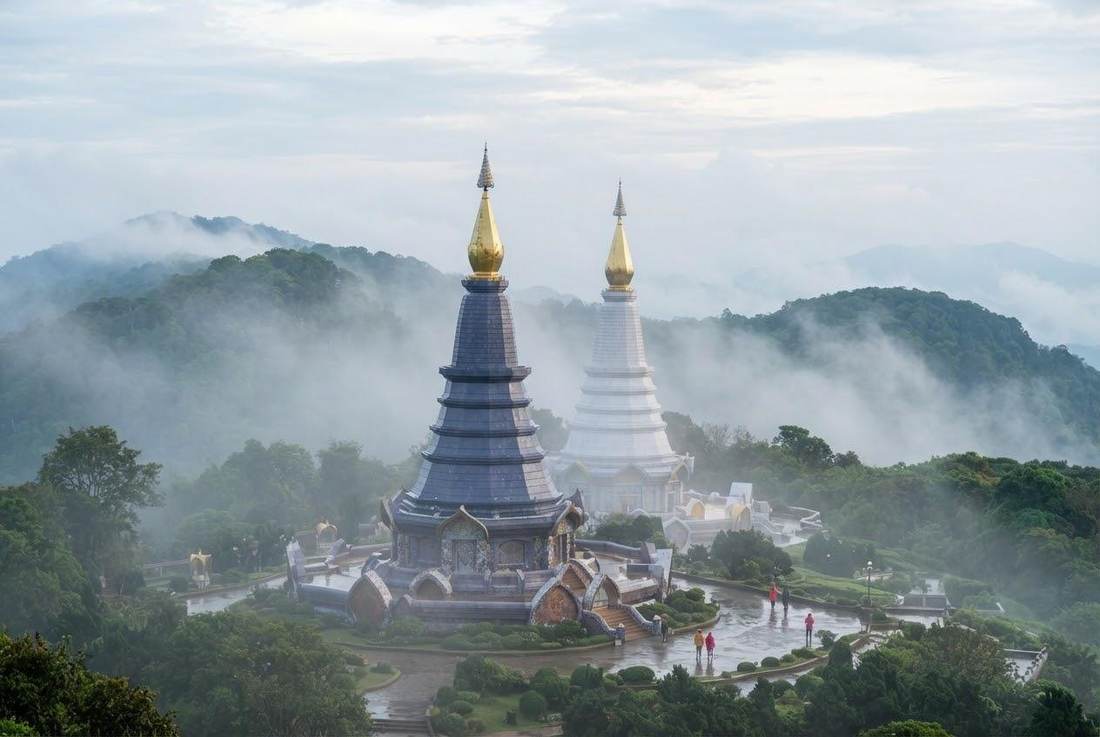
Thailand’s highest peak, the twin royal pagodas, waterfalls and a hill-tribe market in one day.
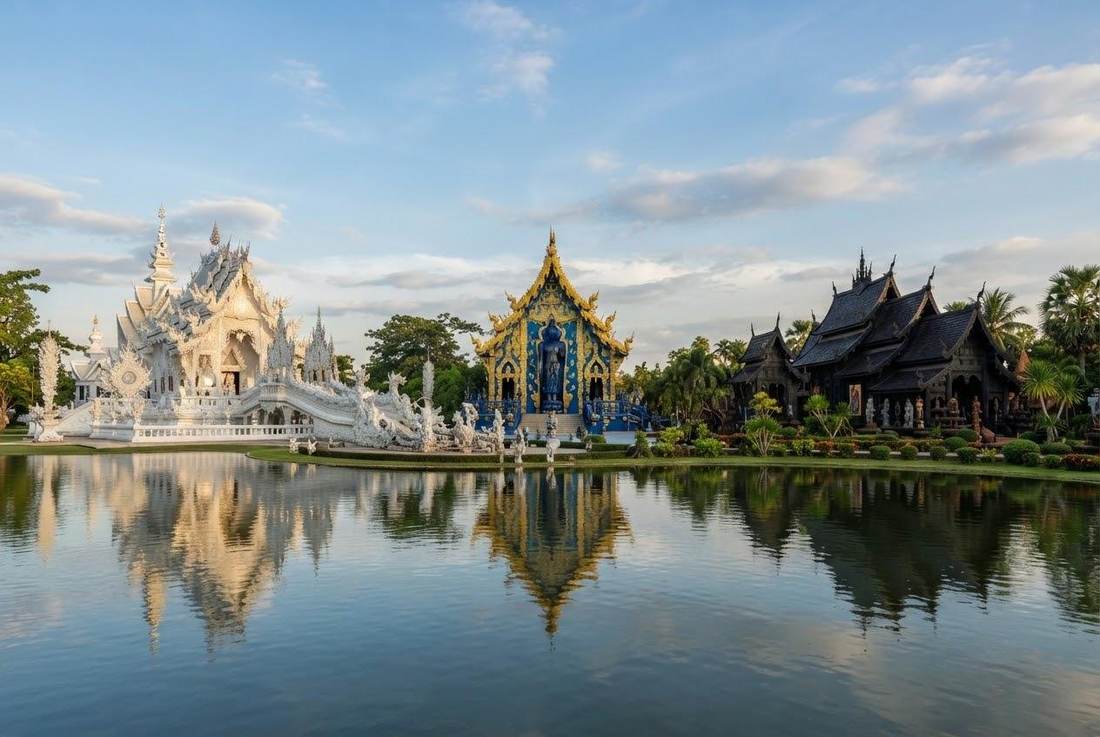
A long but rewarding day to see Chiang Rai’s three most famous sights.
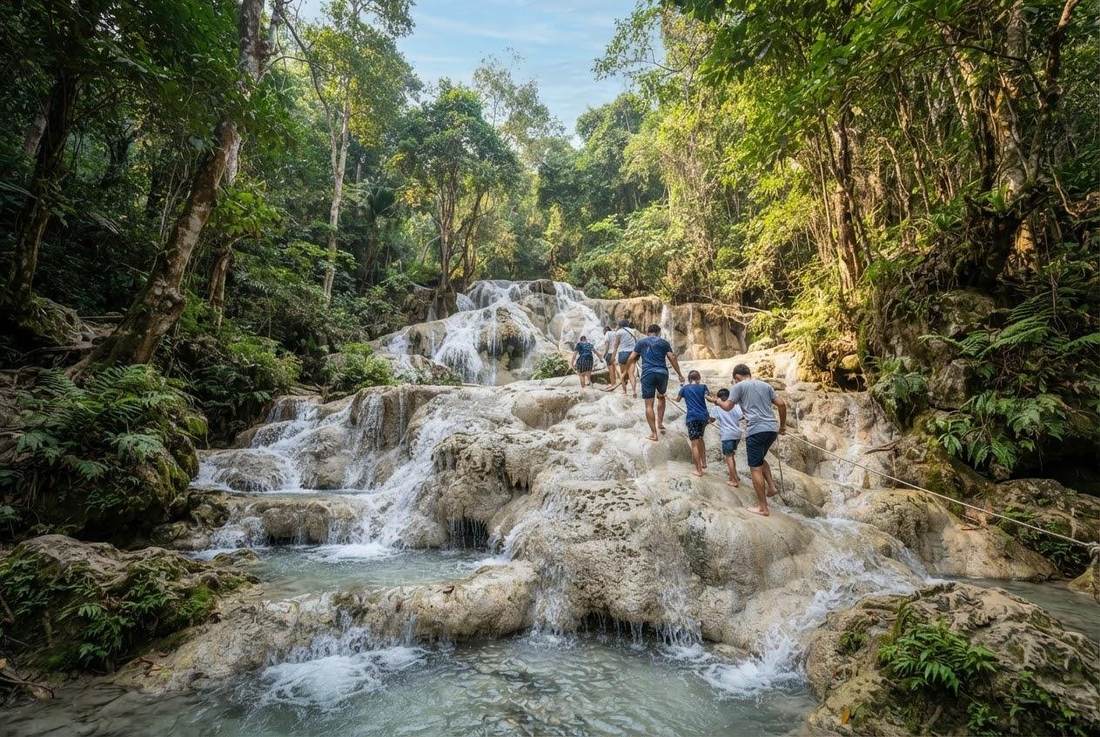
Walk straight up a waterfall on grippy mineral rock, with a spring pool at the top.
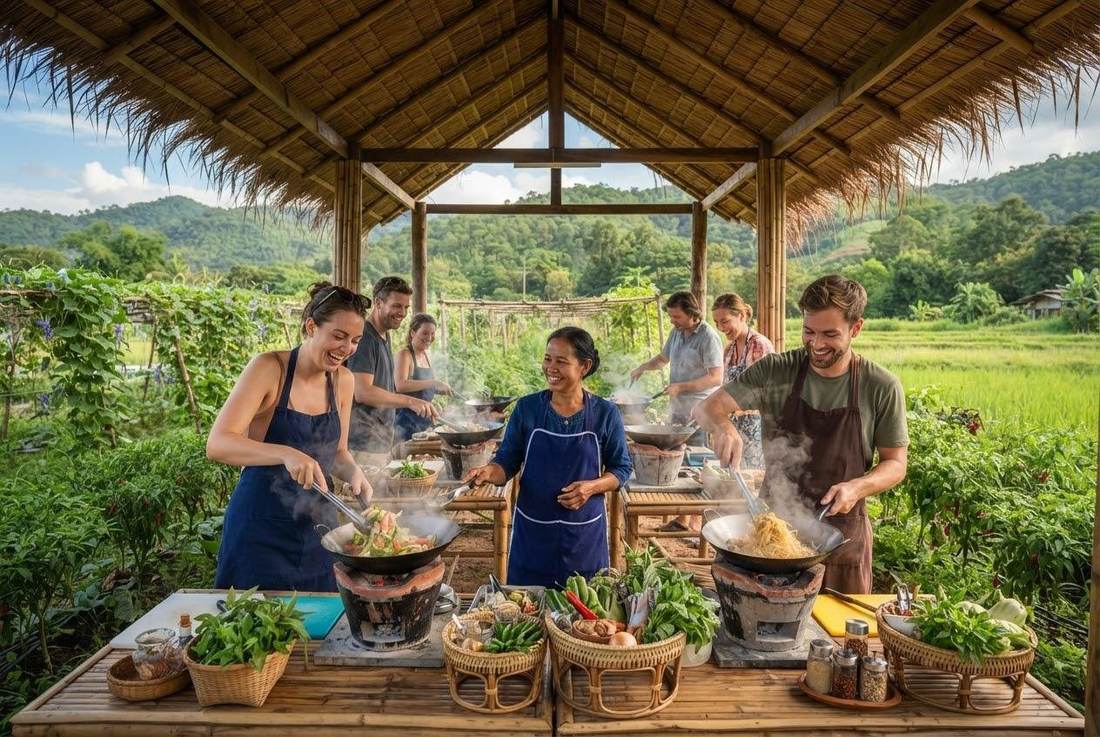
Market tour, fresh herbs from the farm and six or more dishes to cook and eat.
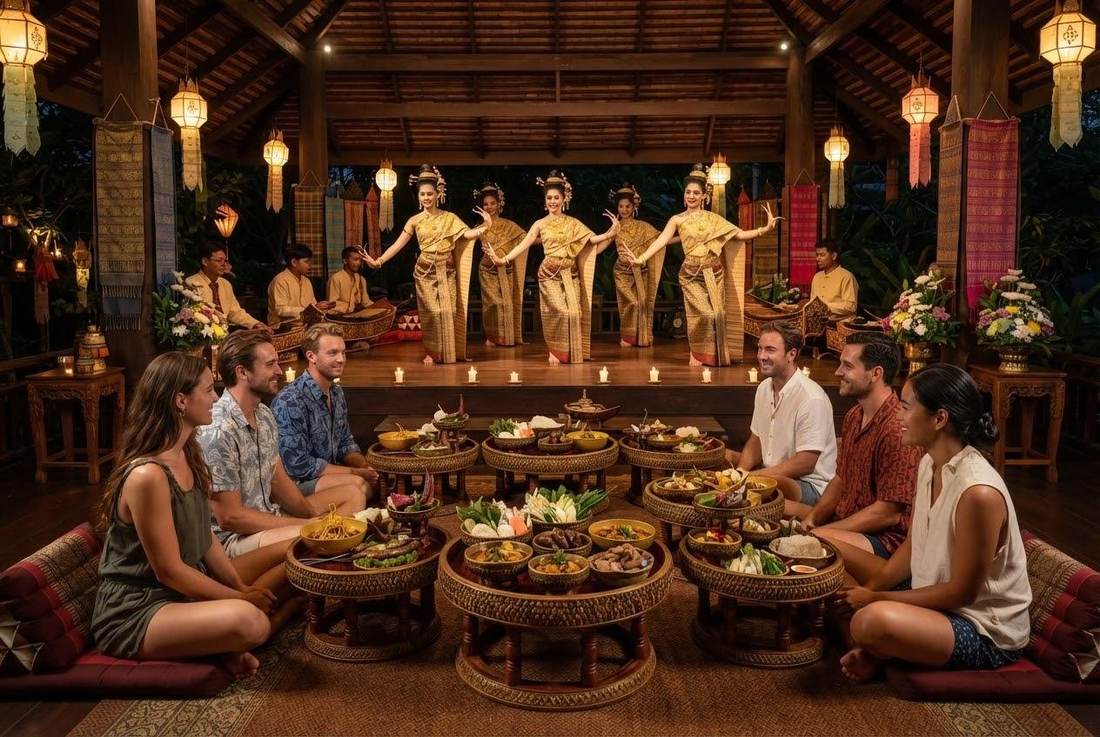
A traditional northern Thai dinner with Lanna dance performances.
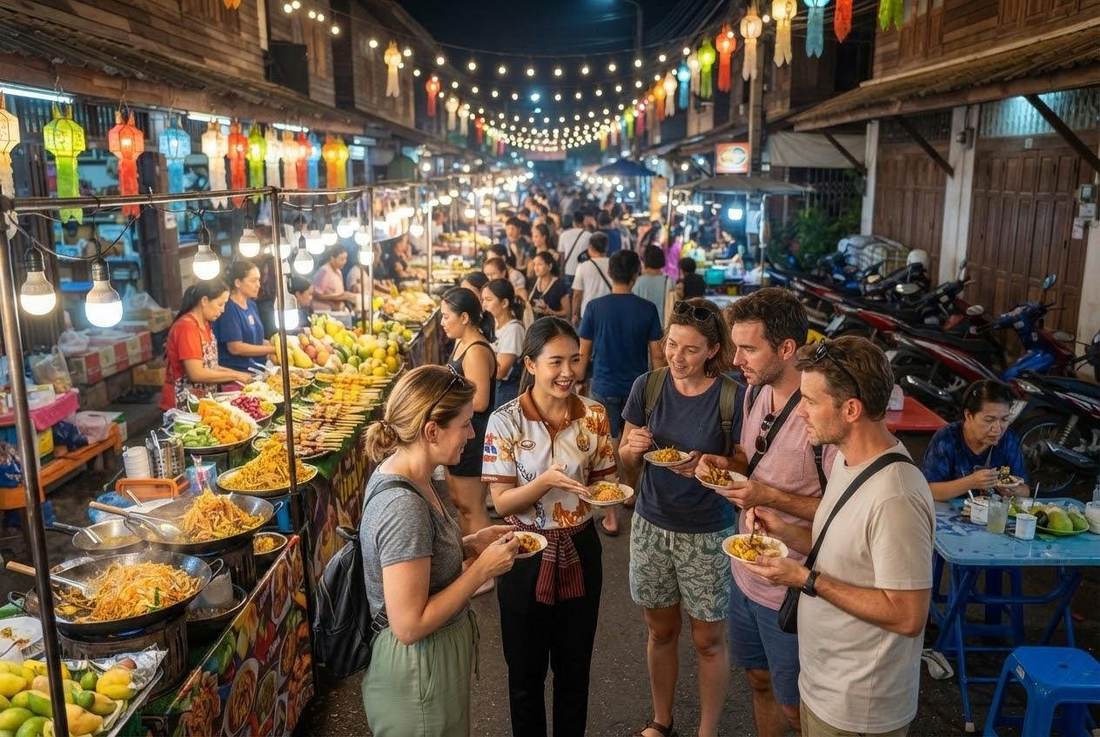
A guided evening of markets and stalls, tasting khao soi, sai oua and northern snacks.
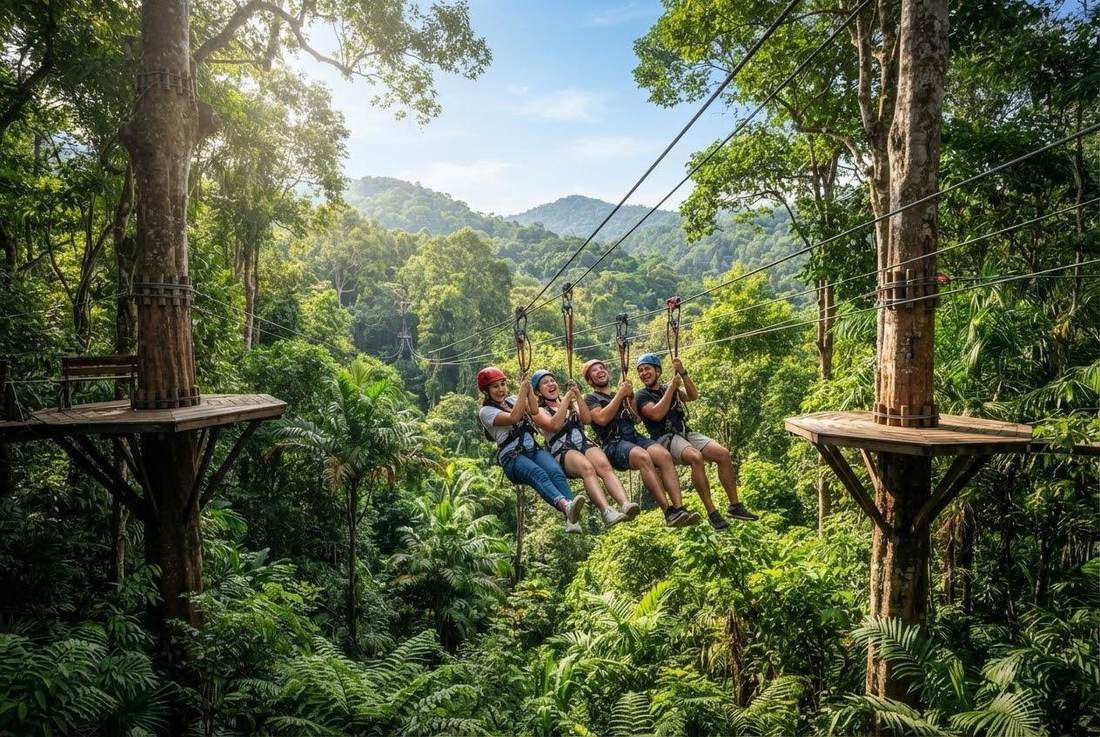
A long zipline course high in the rainforest canopy near Mae Kampong.
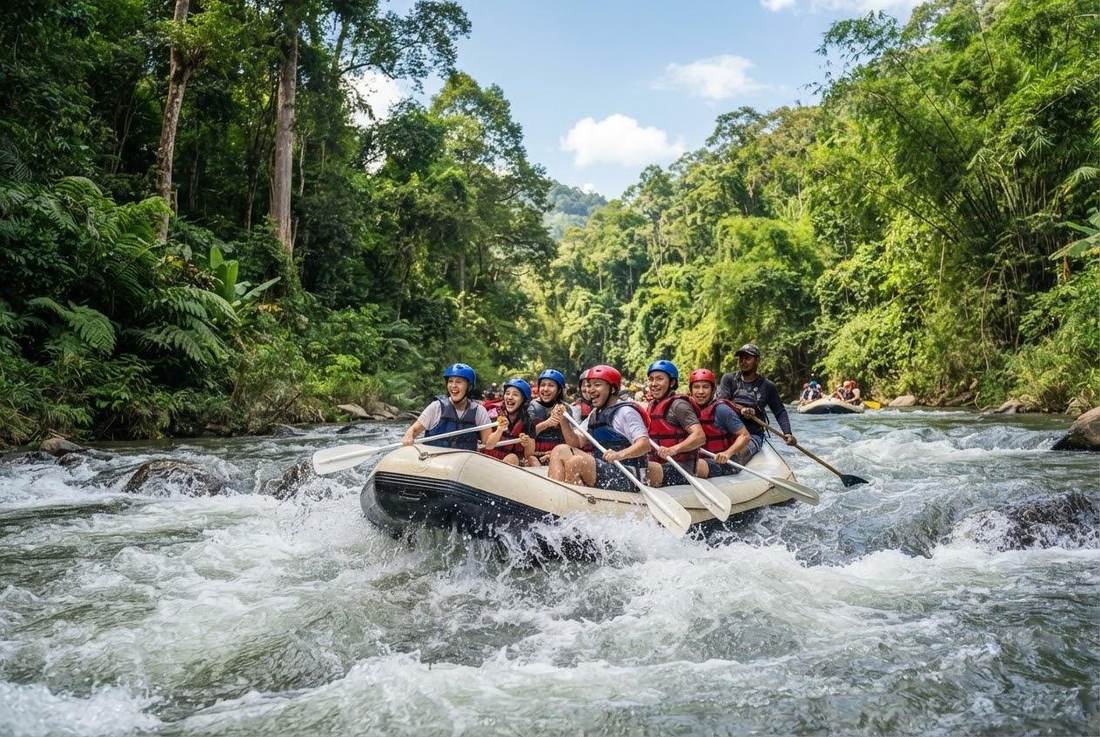
Rafting through jungle rapids north of the city, best in the rainy and cool seasons.
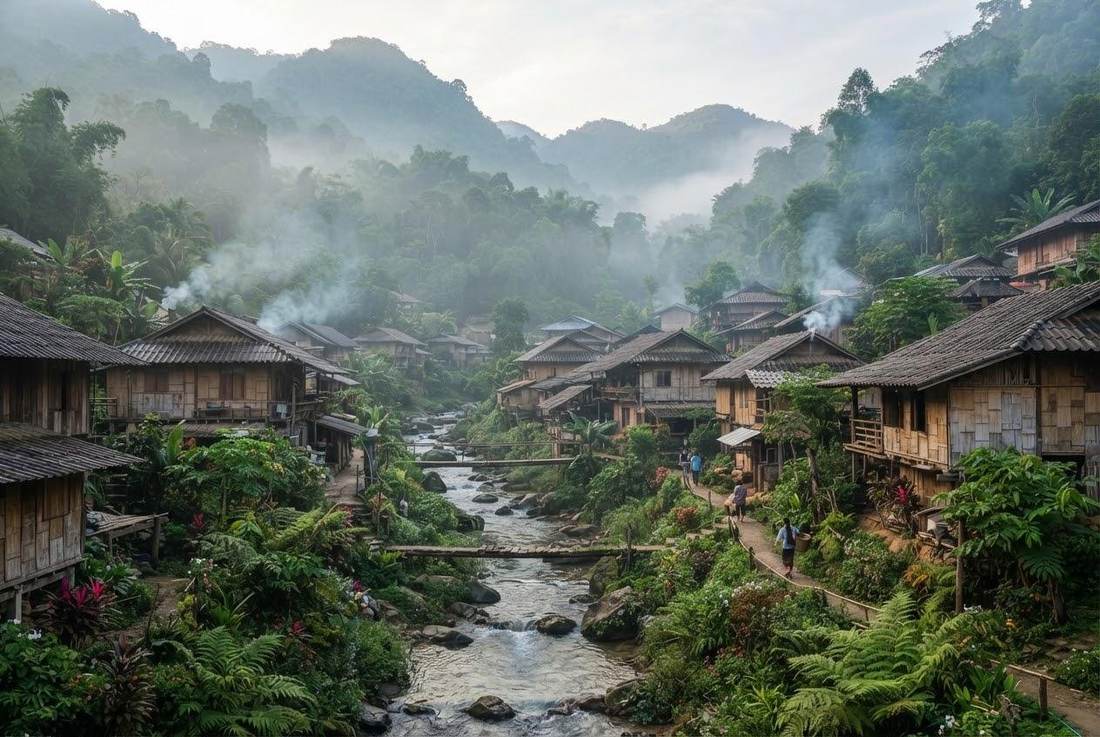
A misty mountain village of coffee farms and wooden houses, often combined with a waterfall walk.
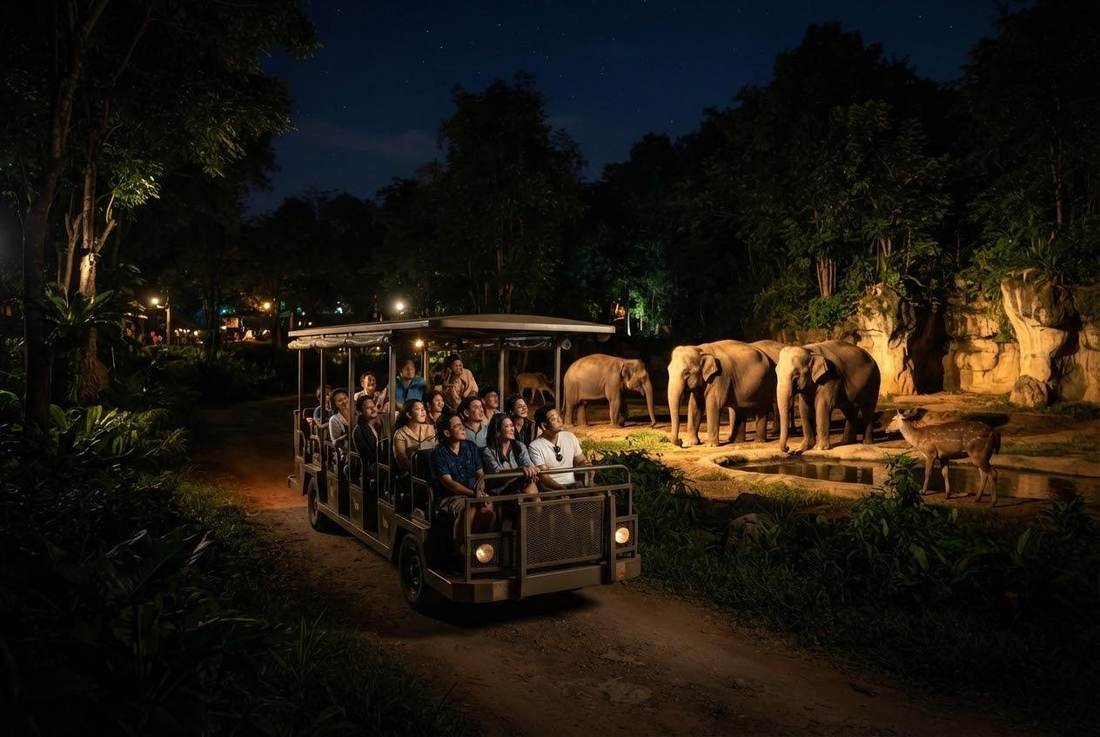
Tram rides through open animal areas after dark, plus a lakeside light show.

Inflatable obstacle courses, slides and ziplines over a flooded quarry lake.
Tap the one that matches your trip. You’ll get the best areas and what they’re like.
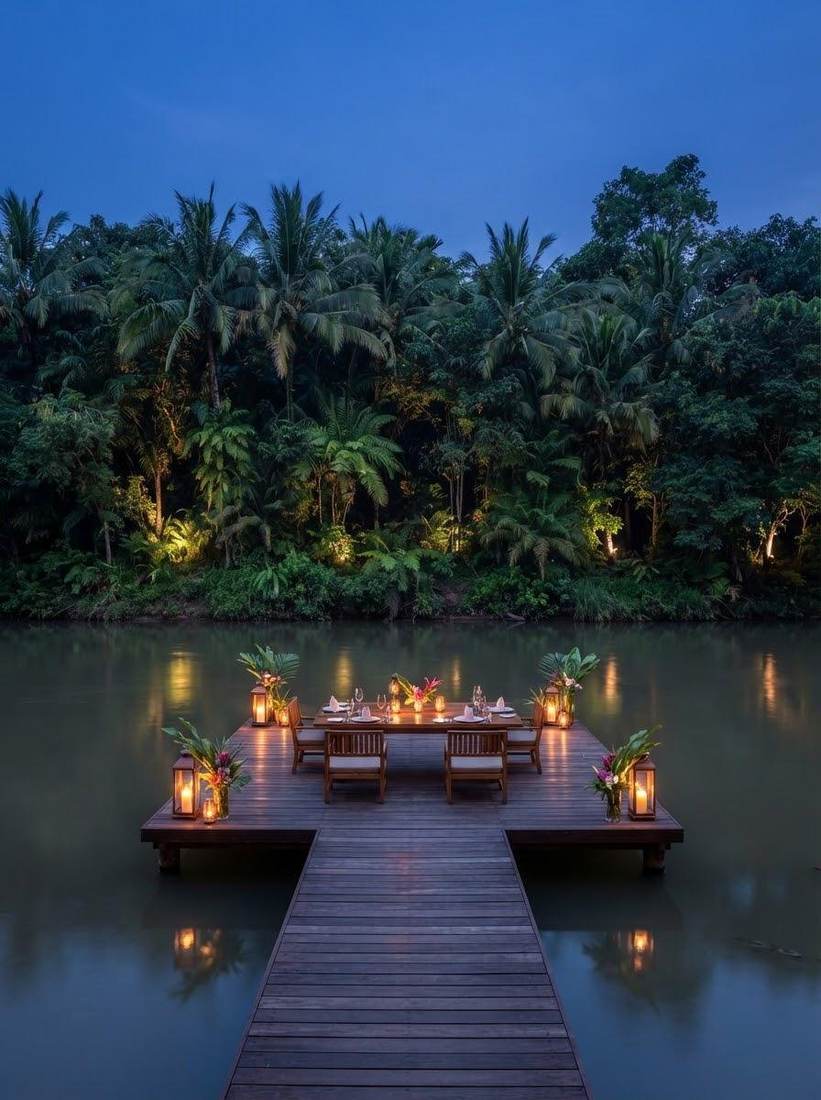
You want atmosphere, a special hotel and calm evenings, with good dinners rather than a party.
Best areas: The Riverside for boutique resorts, or a Lanna-style hotel on a quiet Old City soi
What it’s like: Teak houses, gardens, pools and river views, with candle-lit temples a short ride away.
Do together: Riverside dinner with live music · Doi Suthep at sunrise · khantoke dinner show · spa afternoon
Usually skip: The Zoe in Yellow bar corner if you want quiet nights.
🚕 Safety tip: red songthaews thin out late at night and rarely use a meter. Skip the haggling and use a ride-hailing app like Grab or Bolt to get back to your hotel.
Riverside guide → Old City →Planning when to visit Chiang Mai? The cool season, the smoky burning season, Yi Peng and Songkran all change crowds, hotel prices and atmosphere. Here’s a simple guide.
Quick pick: First visit and want the nicest weather → aim for November–February. Want lower prices and green scenery → June–October. Love festivals → time Yi Peng & Loy Krathong (full moon in November) or Songkran (April). Sensitive to smoke → avoid March and early April.
Full moon of the 12th lunar month — 23–25 November in 2026
Chiang Mai’s most famous festival. Temples glow with candles and paper lanterns, giant illuminated floats parade from Tha Phae Gate, and thousands of people float candle-lit krathongs on the Ping River. Mass sky-lantern releases happen only at authorised, ticketed venues outside the city.
Effect on travel: Hotels, especially in the Old City and by the river, sell out months ahead and prices rise sharply. Roads around the moat and bridges close in the evenings.
Best areas during Yi Peng: Old City for the parades and temple lanterns, or Riverside for krathong floating by the bridges.
💡 Book your hotel as early as you can, and check the official lantern rules before buying any lantern.
Mid-April (13–15 April, with celebrations for several days either side)
Chiang Mai has Thailand’s biggest Songkran. The whole moat turns into a giant water fight, with buckets, water guns and music, alongside quieter temple ceremonies and parades. Fun if you want the full experience; hard work if you want to stay dry.
Effect on travel: Hotel prices rise, traffic around the moat is very slow, and some shops close for a day or two. The Old City is the wettest zone.
Best areas during Songkran: Old City if you want to join in, or Nimman / Santitham if you want to dip in and out.
💡 Book hotels early. Carry a dry bag for your phone.
Early February (usually the first weekend — dates announced each year)
A colourful weekend when flower-covered floats parade from Nawarat Bridge through the city to Suan Buak Haad Park, which fills with flower displays, stalls and music. A gentle, family-friendly festival in the best weather of the year.
Effect on travel: Busy around Suan Buak Haad Park and the parade route on the Saturday morning; the rest of the city is normal.
Best area: Stay in the Old City — the park is in its south-west corner, so you can walk to the parade.
💡 Get to the parade route early on Saturday morning for a good view.
| Month | Main event | Effect on travellers |
|---|---|---|
| January | Bo Sang Umbrella Festival | Crafts and parades in Bo Sang village, east of the city |
| February | Chiang Mai Flower Festival | Flower parade and displays at Suan Buak Haad Park; busy weekend |
| February – April | Burning season | Smoke from seasonal fires can cause poor air quality; check the AQI |
| April | Songkran | Huge water fights around the moat, higher hotel prices |
| May / June (dates move) | Inthakin City Pillar Festival | Flower offerings at Wat Chedi Luang; some alcohol restrictions on Buddhist days |
| November | Yi Peng & Loy Krathong | The busiest, most magical week of the year; book months ahead |
| December | Peak season | Cool, clear weather and the highest prices; book early |
Planning rule: Festival periods mean higher hotel prices and more atmosphere. If you want quiet temples and easy walking, avoid Songkran and the peak Yi Peng nights. If you want the full experience, book early and stay in the Old City or by the river.
Only at authorised venues and at the times set by the authorities, which are announced each year. The big organised releases are ticketed events outside the city. Releasing lanterns anywhere else can bring a heavy fine.
Yes if you want the energy and don’t mind getting soaked for three days. No if you want a calm first visit focused on temples. Many people love it; first-timers sometimes find it overwhelming.
From roughly February to April, farmers burn fields and forest fires start in the hills. Smoke can make the air quality poor, sometimes very poor. If you have asthma or are travelling with young children, check the air quality forecast before booking.
Tap any tip for the short version. Practical stuff that saves you a bad first day.
The Old City is the safest default. It’s compact and walkable, full of temples, cafés, markets and guesthouses at every price, and the Sunday Walking Street runs right through it. You rarely need transport for the first couple of days.
It depends on your trip. Nimman is better for specialty coffee, modern restaurants, bars and malls; the Old City is better for temples and walking everywhere. Many visitors split their stay: a few nights in each, as they are only 10 minutes apart.
Walk inside the Old City, and use the Grab or Bolt apps for anything further, with the price fixed upfront. Red songthaews (shared pick-up trucks) are cheap for short hops; agree the price before you get in. There’s no metro or skytrain.
Nimman has the liveliest bars, live music and clubs, led by Warm Up Café. The Old City has live jazz at the North Gate Jazz Co-Op and the backpacker bars at Zoe in Yellow, and the Night Bazaar area has rooftop bars and live blues.
November to February is cool, dry and the most popular time, with Yi Peng and Loy Krathong in November. From February to April, smoke from seasonal burning often causes poor air quality. June to October is green and rainy, with fewer crowds and lower prices.
Prices are illustrative estimates and change with season, demand and promotions. Always check live rates on Booking.com or Agoda before booking. Prices jump around Yi Peng and Loy Krathong in November and over Christmas and New Year.
 Booking.com
 Agoda
 Expedia
 Trip.com